‘All’s Fair’ Director on Season Finale’s Wild Twists, Kim Kardashian’s Evolution and Season 2

[This story contains major spoilers from the season one finale of All’s Fair, “Interior Law Offices.]
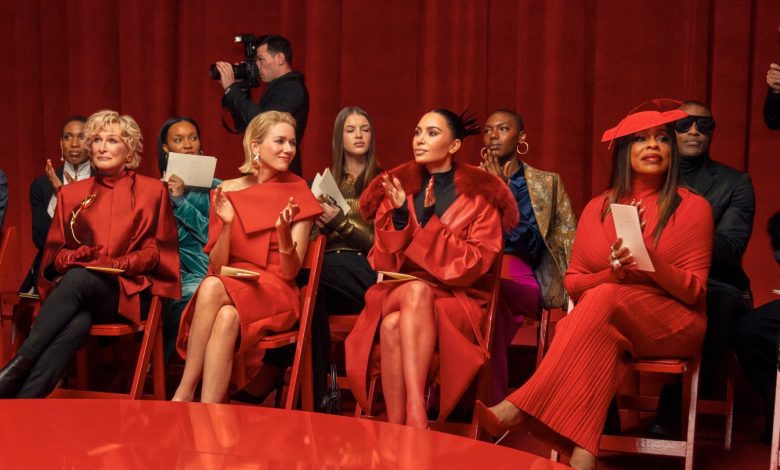
All’s Fair has been adjourned sine die, reaching the dramatic conclusion of its divisive first season this week. Ever since the glossy Hulu legal drama debuted last month — to the worst reviews of über-producer Ryan Murphy’s career — the series has been equal parts lambasted and praised for its heightened depiction of an all-female firm of high-powered divorce lawyers played by Kim Kardashian, Naomi Watts, Niecy Nash-Betts and Glenn Close, and one very bitter arch-rival attorney played by long-time Murphy muse Sarah Paulson.



“So many different people on social media are seeing themselves,” executive producer Anthony Hemingway, who directed four of the eight episodes, tells The Hollywood Reporter. “A group of female lawyers who have a group chat hit me up and were raving about the show. They of course understood the fantasy of it. They were like, ‘None of us dress like that, but we are into it.’ They were inspired to want to elevate their own lives. People are also feeling seen as a single mom. I just love that the show is impactful.”
Following the spicy dialogue around launch, All’s Fair was quickly renewed for a second season and will resume production next spring in Los Angeles. (Any publicity is good publicity, after all.)
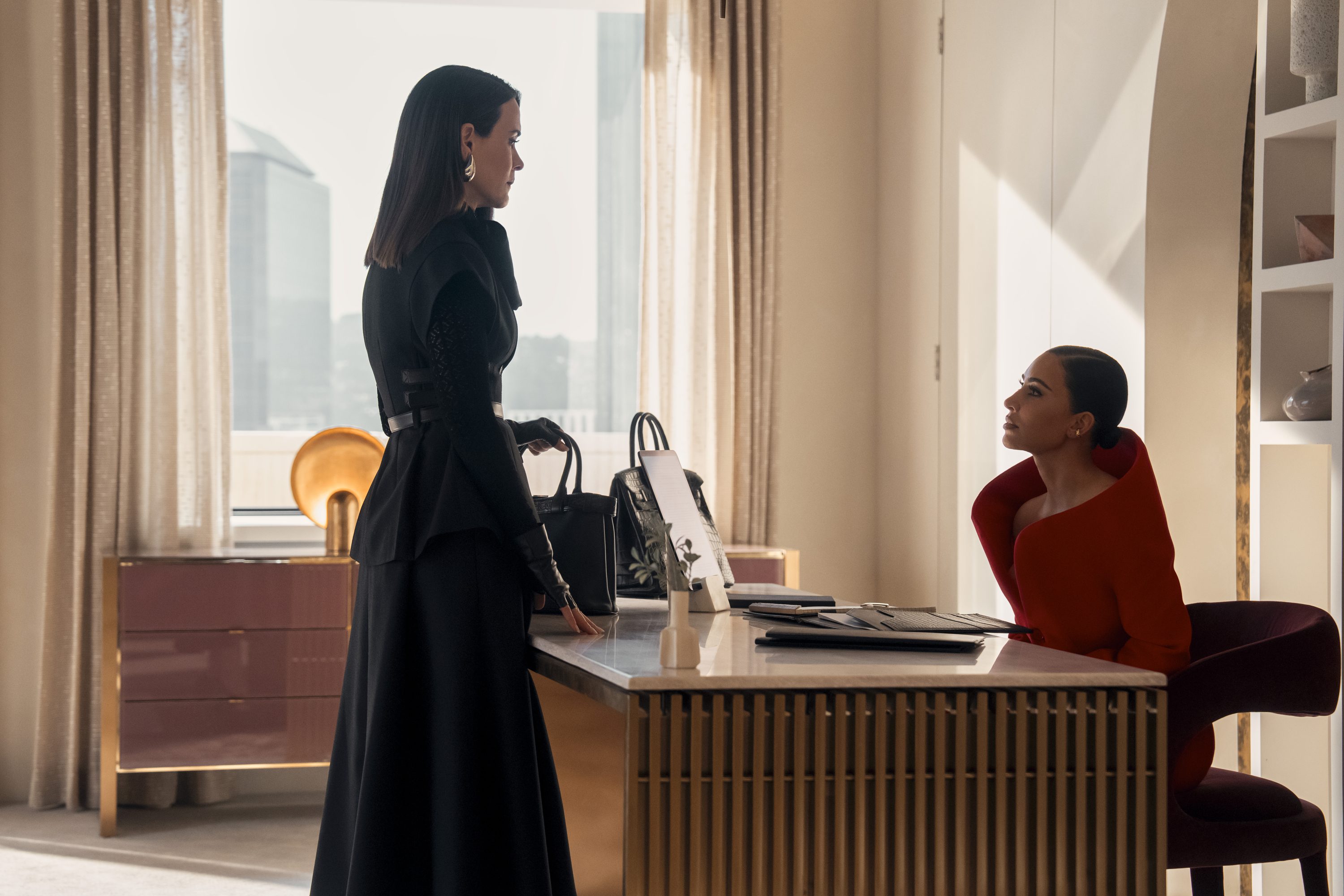
In keeping with the show’s absurd plot twists, the final two episodes of season one came straight out of left field. Having just made up with Allura (Kardashian), Liberty (Watts) and Emerald (Nash-Betts) a couple episodes earlier, Paulson’s Carrington “Carr” Lane suddenly reveals to her therapist that she has fantasies of killing the women who left her to start their own firm a decade prior. After an ill-advised affair with Allura’s sex-addict ex-husband Chase (Matthew Noszka), who actually ended the dalliance on his own accord, Carr plots to infiltrate her old nemeses’ law firm — which just so happens to be looking for a new partner — and destroy it from the inside.
Carr knows she will have a hard time convincing her former enemies to let her join their firm. But what Carr does not anticipate is for Dina (Close), her longtime mentor and name partner at the rival firm, to privately reveal that she will not vote for her to join the partnership. “They smelled on you something that I couldn’t smell until now,” Dina tells Carr. “A deep and terrifying sociopathy. My love for Allura and Liberty and Emerald was deep and maternal. But for you, Carr, I realize now I have only ever felt pity.”
In retaliation, Carr somehow manages to convince Allura, Liberty and Emerald that Dina — who has been dealing with the recent loss of her husband — is no longer of sound mind. Just as Dina begins to question whether she has begun to lose her metal faculties, the authorities arrive to arrest Dina in the murder of Lloyd Walton, the man who was accused of drugging and sexually assaulting Emerald and then found dead earlier in the season.
Below, Hemingway — also an executive producer of Boston Blue and just wrapped production as a director on the season finale of the upcoming American Love Story — catches up exclusively with THR to discuss Carr’s homicidal turn and farcical impersonation of Allura, what kind of direction he gave first-time scripted series lead Kardashian after she struggled to emote in character, and how showrunner Murphy has handled the polarizing reaction to All’s Fair.
***
Carr has emerged as the unexpected protagonist of this first season. Her grudge against the other women began as soon as they left her out in the cold a decade ago to start their own firm, but her psychological and emotional issues began long before those women left her. How did you make sense of what motivates her and what makes her tick?
It was fun to create an environment and space that allowed Sarah [Paulson] to be vulnerable and take big swings. So much a part of my job is to make sure I insulate them all and give them the safety net they need to go in and soar. Sarah and I go way back. We have known each other for over 20 years, so she trusts me to guide her and I trust in the work she puts into her character. That girl works harder than most I know, and she’s so gifted because every nuance that character had was created [by her]: the voice she played with, her mannerisms, her history of being a cutter. In the last episode, you heard Dina share that [Carr’s dad killed him] with Liberty, who did not know.
That’s the interesting thing about the dynamic of family — the family you choose versus the family you’re born with. In either capacity, there are things in that family dynamic [where] there’s an evolution of discovery [over time]. You don’t always know everything about every person, even parents who birth children. You go off in life and create your own life, so to watch Sarah do so much work and really build that character was enjoyable to watch. I’m in awe of her talent and her skill. We got to really craft something super rich and complex and complicated that not only makes entertainment great, but connects to humanity and a reality that can be received or something can be taken away from it.
Sarah delivers some crazy monologues this first season — ranging from the absurd (about her pussy, her kitty-cat that died when she was 5) to the terrifying (when she’s telling her best friend and therapist about still wanting to kill everybody at Grant, Ronson, Greene). What kind of direction did you give Sarah for the monologue at the end of episode eight?
Again, that speaks to a person’s traumatic experience. Sometimes you never understand or really know why. It may take an evolution or lifetime to really figure it out. As we got into the end of [episode] eight, that was another layer of the character we were peeling, that was looking at a dark place. I went a little genre just to really underscore it and make it impactful. I knew it would live in the space of Ryan Murphy world, because of everything else he’s done and I’ve done with him. I really encouraged Sarah to go dark, and we found moments of her stillness that were haunting and sitting on an edge of unpredictability. If you rewatch it, I have her literally look into the barrel of the lens because now it’s like she’s looking at the audience or just herself, and it’s really making this thing come alive.
Carr also has some ridiculous role-playing sex scenes with Chase where she’s playing his boss and he’s the secretary, and she’s the nurse and he’s the fireman. But Carr seems genuinely hurt when Chase accidentally calls her Allura by accident while having sex. Do you think she has fallen for him, or has she just been looking for another way to get back at Allura?
A little bit of all of it, but it came from that trauma of wanting to be loved and have this beautiful, hot, sexy man be into her. Even from a human place, what does it feel like to be desired, to be loved? It’s all that from the character’s personal place, but [she’s] also just thinking about the revenge she was setting forth. There is a want to get back or prove herself [to the other ladies], because she had to fight. Being interviewed [to join their firm], she’s having to put her own pride aside and go in there and prove herself.
Dina privately revealing to Carr that she didn’t vote for her to join Grant, Ronson, Greene and that she would actively campaign against Carr joining the firm really felt like the straw that broke the camel’s back. Carr has a momentary breakdown, and then gathers herself and comes up with that master plan to make the other ladies think Dina is losing her faculties, but it’s not obvious how much of the evidence that was presented was actually doctored by Carr.
It’s so multilayered, so it allows people to have their own interpretations. Where Dina was in that moment — after spending her whole life dedicated to the work and her relationship with her husband that she just recently lost, and going through her stages of grief — allows us to examine the human condition. From Carr, of course, there’s the trauma that she’s continuing to deal with and unpack to hopefully find the healing. To have a conversation with the mother figure in your life that you’ve learned so much from, that you also use as a North Star for your career, and for that to blow up in your face in the blink of an eye — how do you deal with that? You see the complexity of that dynamic. I think Crystal handled it so beautifully, obviously with the collaboration of Sarah and Glenn.
The first time we spoke, you teased that episode eight was your favorite, in large part because Carr dresses up as Allura for her job interview at Grant, Ronson, Greene. What kinds of conversations did you have about creating Carr’s impersonation of Allura, which — let’s be honest here — is really an impersonation of Kim Kardashian?
I’m laughing and cheesing from ear to ear because I’m reliving the moment right now. It was hours of hysteria — laughter, laughter, laughter, all bundled in love. Kim herself was having to be completely vulnerable in this moment, because this is clearly a metaphor in how we look at [famous] people’s personal lives [like hers]. She needed to be in a space [where] she felt protected. And, of course, equally on the other side, Sarah needed to be aware of what the character needed to do, but not be afraid to do the work. That’s what both of them clearly understood. We’re all adults, we know we are telling a story, and that’s what makes us excited about the work we get to do.
I remember in a couple of the rehearsals allowing Sarah to come at it from different perspectives as we found the balance of what we really wanted to execute. [After] preparing and knowing what we were going to do, we discovered a lot in the moment. I remember a couple things Sarah did, and I encouraged her to keep going. There was one take [where] every mannerism or gesture that Kim would do in her performance, Sarah imitated. Not only the vocal work, but all the physicality. Kim even was on board and a part of the conversations, telling Sarah, “You look good with black hair. Keep it dark.”
It was such a great fun environment and set to be on because we all knew the assignment and showed up to deliver. This show has created such a following already, and it’s really exciting to be a part of it from the inside. I’m second generation just like Kim. I’ve grown up in this industry, and I’ve been around so much and seen a lot, and I love the newness that I get to experience.
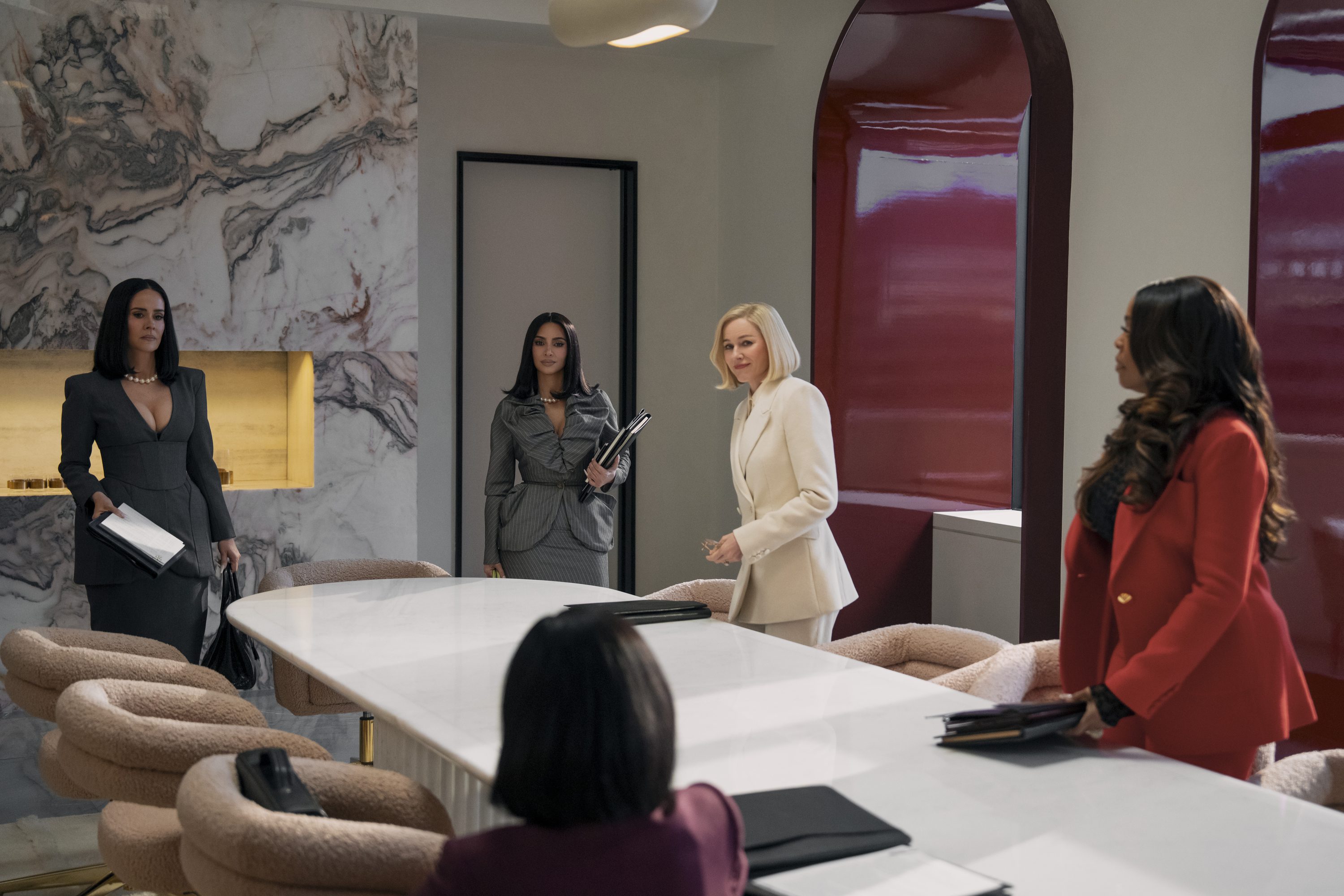
You also mentioned the last time we spoke that you worked closely with Kim on emoting in certain emotional scenes, which was initially difficult for her since that she had little acting experience prior to leading this show. How did you direct her in those kinds of scenes? Do you remember which scenes you were talking about?
There were a couple. One of them for time and story reasons got cut; the first one we had worked on. It was when, at the end of the pilot, she goes to Dina and asks her to represent her. So in episode two, I had shot scenes where we got more into the conversation, and it was Allura sharing her story. But the decision came to be less expositional and [we decided on] seeing [her tell that story] along the way. So it got cut, but it was a great opportunity to collaborate with her on being vulnerable and finding how to be safe.
We can’t forget that they’re playing characters. They’re not themselves, regardless of the similarities, because we all, as artists, pull from our own lives. So it was awesome to work with her on that, and to understand her [lower] level of experience, but also see the depth and desire of wanting to learn and evolve and grow into it. All I could ask for from any actor is to come in open and allow me to support them and give them the space to create and perform.
The next [emotional scene] was episode three, where the girls find out the information on Chase and his addictions. [I told Kim] it’s like, “how does it feel if you built this life with someone you love, and you are of a certain age, and your significant other is much younger than you? What does that already say about you as the character? And how do we create this experience [for you as the character] to give a viewer to then take it and find themselves in that?” So that the character would have somewhere to go [in the arc], we created a canvas of allowing her to navigate different levels of emotion over the course of the season.
She’s so smart, so creative. She, of course, brought her own [experiences] allowed her to tap into the beautiful work she’s done with Allura. It was also exciting watching all the other stars support her and give her encouragement, and give her things to think about from an actor’s perspective. We got to become friends, I think? I really love her as a human being.
The show, despite the negative critical response, has been renewed for a second season. What kinds of conversations have you had with Ryan Murphy about the next chapter of this story? Do you know where the next season will pick up?
Very little. First of all, it’s hard to even imagine where the show is going to go, but Ryan is in the lab. He is definitely cooking up something super juicy and exciting. He’s excited about that exploration, and I don’t know that he even fully has it right now, but I know he is excited about where he’s starting. He started to let me peek under the hood, but that’s it.
How has Ryan handled the way TV critics have talked about the show?
He is so excited and happy on how it has landed with the world and the people who he made it for. He made it for everyone, and he’s super happy to see that its success has answered his dream and desire.
***
All episodes of All’s Fair are now streaming on Hulu.
HiCelebNews online magazine publishes interesting content every day in the TV section of the entertainment category. Follow us to read the latest news.