[This story contains major spoilers from the series finale of Bel-Air.]
Back in 2019, Kansas City native Morgan Stevenson Cooper made a bold move by releasing his vision for re-imaging the trailblazing sitcom The Fresh Prince of Bel-Air. Though the series premiered back in 1990, it remained a present force available on multiple streaming platforms — so most people saw no need for a reboot. Fortunately for Cooper, his vision resonated with the Fresh Prince himself, Will Smith. And with that huge endorsement and collaborating force, Bel-Air boldly premiered Feb. 13, 2022, on Super Bowl Sunday, on NBC’s then-new streaming service Peacock.




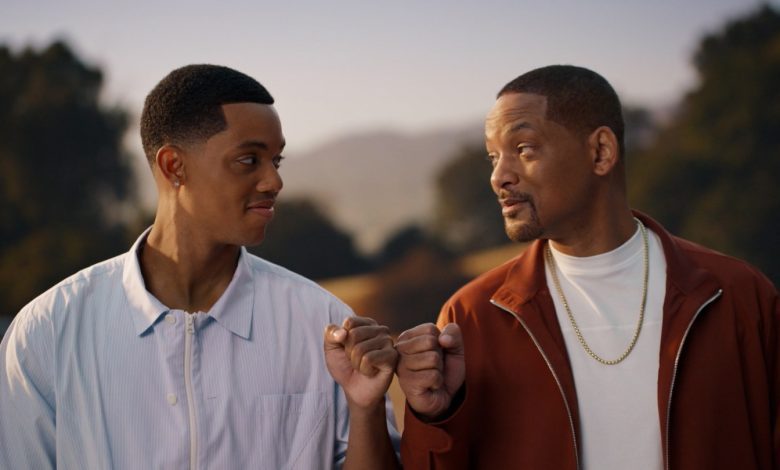
Now four seasons and 38 episodes later, the series’ newcomer cast of Jabari Banks, Olly Sholotan, Coco Jones, Akira Akbar and, of course, Adrian Holmes, Cassandra Freeman, Jimmy Akingbola and Jordan L. Jones as the beloved Will, Carlton, Hillary, Ashley, Uncle Phil, Aunt Viv, Geoffrey and Jazz, resepctively, has also concluded. And to close it out, Oscar winner and global box office star Smith showed up in a cameo in the final minutes to reassure the younger Will that making mistakes is just a part of life.
“Trust me, you’re going to mess some things up and do some dumb shit. But you’re human — you’ll learn, you’ll grow,” says Smith in the cameo. “Life goes by fast, man, try to enjoy the ride.”
To further calm young Will’s worries about returning to Philly as an Ivy Leaguer to Penn — and fearing losing the person he’s evolved into in his years away in Bel-Air — the seasoned Will reassures him of a bright future ahead. “I’ll let you in on a little secret: we’re going to be alright,” he says as they overlook Los Angeles and fist bump.
Written by Bel-Air showrunner Carla Banks Waddles and directed by Cooper, the ending is a moment filled with “gratitude,” Cooper tells The Hollywood Reporter. “These past six, seven years since getting the show off the ground have been such a beautiful whirlwind — creating something that ultimately stands on its own.”
From day one, he says the goal was always “to create something from the heart, something that felt inspired that I think defied the expectations of many re-imaginings or reboots.” That success comes from the fact that “this idea wasn’t born in the C-suite. It was born in my head driving down the 71 Highway in Kansas City. That type of inspiration and of creative output can always be felt in the texture of a project.”
It wasn’t an easy process, however. “We were a COVID production in season one,” he recalls, noting the challenging era. “Everybody just showed up every day to do their best work. So I’m just very proud of the commitment this cast and crew showed since day one.”
Now, he says to have ended the series on such an emotionally resonant note is a blessing. Below, he speaks to THR about directing Smith for the first time, as well as what he hoped to achieve with Bel-Air — and what he refused to compromise along the way — as well as reflecting on the legacy and responsibility Quincy Jones and Smith entrusted him with.
***
This was your first time directing Will Smith. How did you calm your nerves?
I’ve always handled pressure well. That’s one attribute that has helped me in my career. When it’s high pressure, high stakes, I like and enjoy those environments. I’m from Kansas City. Being from the Midwest we love those moments. We focus on the work and don’t let the moment overwhelm by taking it shot by shot: Show up organized and prepared, ready to do the job. When you’re ready and prepared, that instills confidence to be able to do it. And when you’re confident, those nerves start to melt away.
When you started this journey and got to the development process, what were your non-negotiables? What were some principles you were never willing to compromise?
I’ve never been asked that before. What a great question. That the show start in West Philadelphia, on location. That was something incredibly important to me, that we give context to Will’s life before he got to Bel Air. If you think about that journey, that was always a missing link. The original Fresh Prince pilot picks up with Will knocking on the door and we’re in Bel Air. What was his life like before? What was the environment he woke up to, what were the sounds he woke up to every day? Giving that context makes the whole series work, because we understand what his life was like. So that was an absolute non-negotiable.
Casting was a non-negotiable for everyone. If we don’t cast this right, it doesn’t work. The show falls apart if one member of this family is miscast. Everyone in the pilot, we had to be confident with a family who are not only phenomenal actors, but phenomenal people. The only way I think to tell a great story about a family is that they actually have to be a family. That element was another big non-negotiable.
Growing up with the original Fresh Prince, what were the things you most wanted to explore that resonated with you as an adult male that perhaps didn’t resonate with you as a child?
From the beginning, I always envisioned this show coming full circle. That Will goes back home. Think about having to leave your environment to develop new skills to gain more insight, to widen your perspective. It’s that transformation that only comes by leaving and being able to acquire all those new perspectives, and then being able to bring that back to where you’re from. That’s such an important thing in life we were able to explore. To see a young man whose life changed through experiencing a new environment, and being around his family and growing with his family.
It’s not a story about a young man who goes to a new environment. It’s like a software update for our brains [like] when we travel, right? Once you have that, you’re able to come back to your environment where you’re from with a completely new way of existing that can help somebody else, that can help widen other perspective. That story is incredibly important to me, and I know it was incredibly important to the writers room.
It’s also redefining success. So many of the themes in the ’80s and early ’90s were about getting away from the hood, with success being measured by how far you could get away. In the finale, it’s about how much it’s given Will and what more Will can give it.
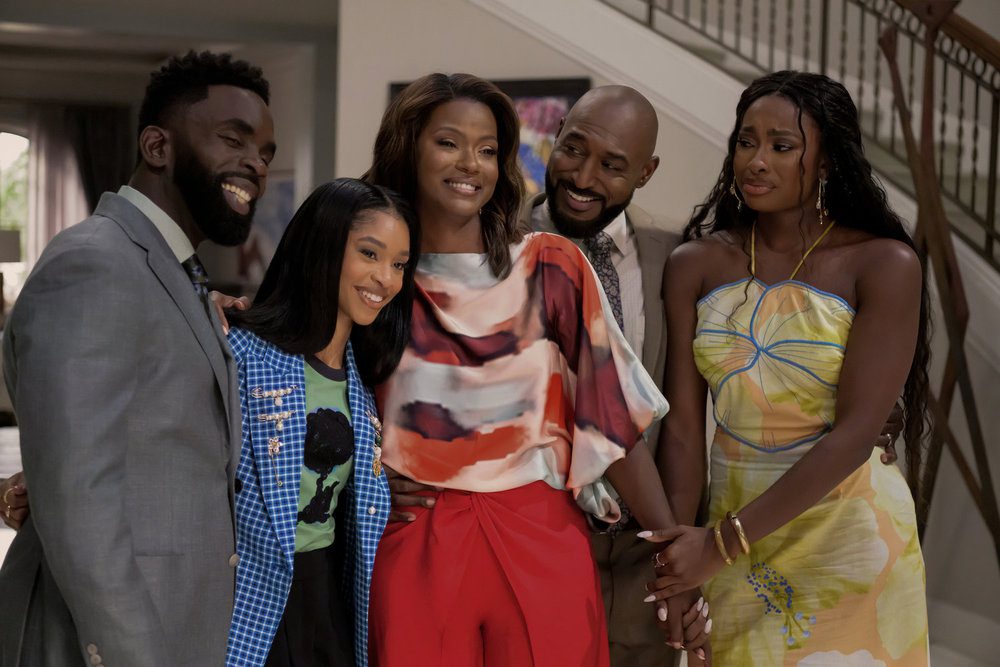
We’re so much stronger together as humans. I’m really proud this show has stayed committed to the importance of family and community. At the core it’s about empowerment, community and family. For that to be the messaging of a show is big. People will write or DM me, or I’ll see feedback online of them just saying. “This is a show I watch with my family every single week, and it brings us together. It’s something we talk about in the barbershops.” Or, “Oh, my son wanted to start a business because Will started a business.” It takes us out of this mindset where we have to do everything ourselves. Like, when you have family, you can’t fail. And it’s so much bigger than just making $10 million.
When you have family, you are stronger. You have community, you have groundedness. Now more than ever, we need those messages. And to do that in a way that’s fly and vibrant, in a way that is handcrafted was also really important to me when we started. Another non-negotiable was that this had to feel handcrafted in the way it’s shot and lit. I needed the lighting to look like Italian Renaissance paintings. It’s very intentional, all these details of how we built the show.
When Fresh Prince debuted, hip-hop-oriented scripted TV shows didn’t exist. It emerged in an era where hip-hop was still being shunned by the mainstream. Fresh Prince acknowledged that hip-hop was here to stay. By making Hillary a culinary influencer, and bringing in elements like owning a cannabis shop, that Black athletes are not just people who put a ball in a hoop or run a football down the field, Bel-Air does something similar. All those things add nuance and context to how Black people are living today. The series paid homage to those things that came before, with the point of understanding that those are the tools necessary to create a bigger and better world.
This show is a reflection of the world, but also a reflection of what the world could be. Changing the narrative was also very important. Programming can get stuck in this cycle of regurgitated narratives. This is forward-thinking. There’s a futurist element that was incredibly important for this show to work that was embedded in the DNA. It’s always done through the context of character. And that’s something I’m really proud of. Carla [Banks Waddles, showrunner] did such a phenomenal job of honoring the vision from all of the decisions being birthed from a place of character, and not box-checking. Shows can get caught up in box-checking. But, what are we saying with these choices? When you have a show driven by choices inspired by and coming from writers’ honest experiences, it translates. I’m really proud of how much we were able to do that with this show.
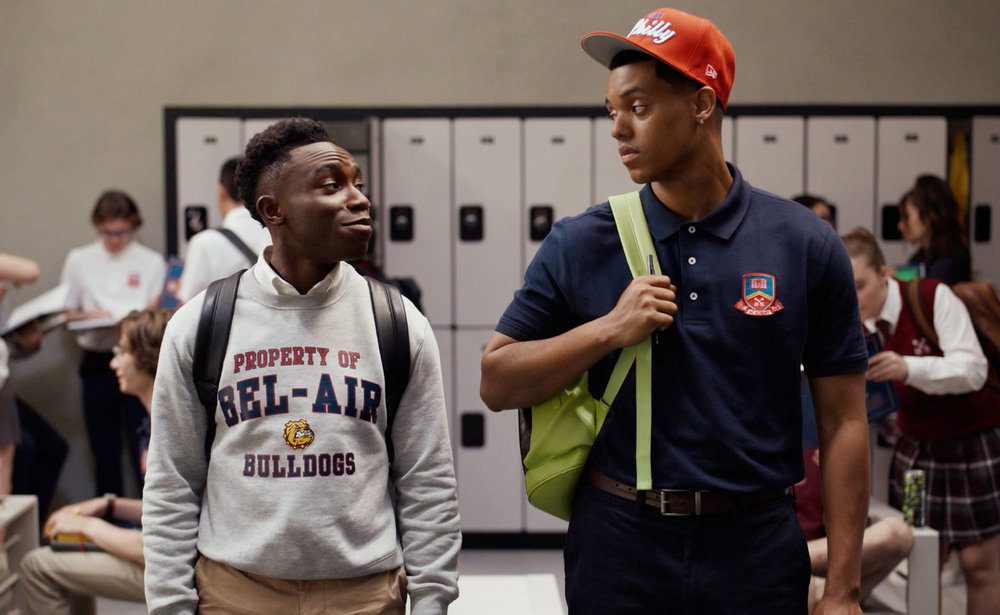
Talk about expanding the representation of Black men and Black manhood. When the show premiered, it addressed Phil and Will’s bond with familiarity because Will had an experience Phil related to more. But there was this gulf between him and his biological son Carlton because his son was living a life he knew nothing about. He and Will grew up playing basketball, Carlton grew up with chess and lacrosse. Can you talk about those different layers. as well as bringing a new understanding to Geoffrey as well.
I don’t have a fancy answer. I guess my answer is a reflection of real experiences. I feel so often the narrative around Black men on screen is the same narrative: it’s one- or two-dimensional. Here, we’re going to give you three, four, five dimensions, because that’s our existence and that had to be reflected. When they’re reflected, we can further the conversation in our community. Outside our community, we can have a dialogue of honest reflection. It’s not only an honor to be able to do that, it’s a responsibility to create from that lens. That is also something uncompromising and a throughline in all my work.
Geoffrey’s such an interesting character because I didn’t want there to be a Geoffrey character when we were developing it. I told Will that. We were on set of King Richard developing the show while he was shooting. He would do a take, come back in the tent for 15 minutes, and we would talk. We were trying to crack Geoffrey because I was like, “I don’t like the idea of there being [this butler character].” It just made me feel really uncomfortable. And he was like, “Just stick with it.”
I watched Top Boy and just starting to learn more about the Black experience in the UK and the deep history of Black people in London, I was able to reimagine Geoffrey as this really complex human being who has a side that’s very tender and loyal, and he’s a supercomputer. Geoffrey doesn’t miss anything. But also, there’s another side. There’s a darkness within him. He has a yin and yang, so to speak. And that complexity is beautiful.
Quincy Jones passed away last year. A big reason why Will Smith could come and do a Fresh Prince is because Quincy Jones was able to open that door. Then Will in turn was in the position to do that for you.
I met Quincy Jones when I first came to L.A. in 2019, right after we finished the deal. There was a screening at CAA, and I met him that night. I met Clarence Avon that night, too. I remember sitting with Quincy and him saying, “I’m passing you the baton.” When I made that short film, Will could have easily sued me. Instead, he gave me an opportunity to adapt this into something massive. What a blessing. It’s such a lesson in the importance of opening doors, and how far back the branches can reach.
I think about Jabari Banks, Olly Sholotan and these kids who now have an opportunity to open doors for other people. This whole human experience thing becomes so much more rich and vibrant through opening doors and planting new seeds. Hopefully by the end of my life, those branches will continue. But it all started again with Quincy. I feel like a branch of history in a way. It’s just an extension, and everything is connected. So Will is somebody who I have an immense amount of respect for. He’s a friend, a mentor, and somebody who believed in this since day one. He reached out before we even had 10,000 views. He loved it then, and we got to see it through to the finish line. I’m so thankful. God is so good.
All four seasons of Bel-Air are streaming on Peacock.
HiCelebNews online magazine publishes interesting content every day in the TV section of the entertainment category. Follow us to read the latest news.