Berlin Rising Star Luna Wedler on Discovering Acting: “It Became My Great Love, Almost an Addiction”

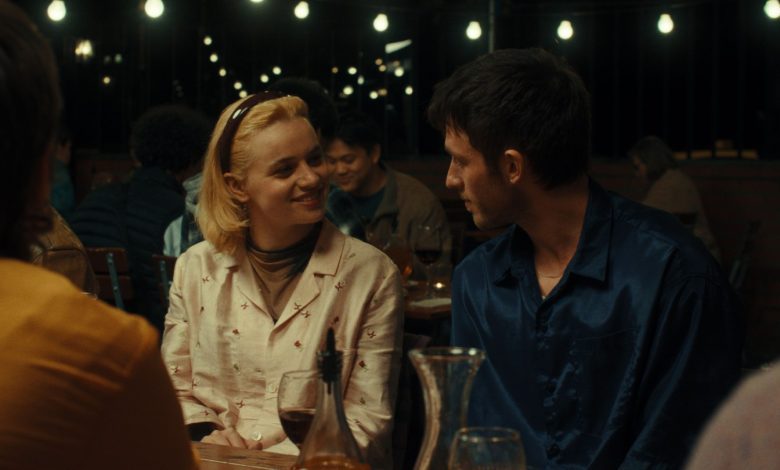
In the oldest cliché of the business, Luna Wedler has spent a decade becoming an overnight success.
At 26, the Zurich-born German actress is suddenly everywhere — on streaming platforms, on festival red carpets, and, last fall, on the stage of Venice’s Sala Grande, where she collected the Marcello Mastroianni Award for best young actor for her powerful turn in Ildikó Enyedi’s triptych Silent Friend. The moment felt less like a breakthrough than a coronation, the European industry finally catching up with a performer who has been quietly proving, film by film, that she can do just about anything.


Wedler fell into acting almost by accident. At 14, she tagged along with friends to an open casting call in Zurich and landed a role in Niklaus Hilber’s Amateur Teens. “I never had the dream of becoming an actress,” she tells THR. “But it became my great love, almost an addiction.”
From the outset, she gravitated toward emotionally demanding material. Her first lead role, in Lisa Brühlmann’s Blue My Mind (2017), cast her as a teenage girl spiraling through sex, drugs and bodily transformation — a performance that announced both her fearlessness and her intensity.
If Blue My Mind marked her arrival as a serious talent, The Most Beautiful Girl in the World (2018) made her a star, at least in Germany. The modern Cyrano de Bergerac remake flipped the gaze onto Wedler’s Roxane, or Roxy — sharp, funny, and defiantly contemporary — and seemed to position her as the country’s next rom-com sweetheart.
Instead, Wedler swerved. She chose projects with darker political and psychological edges, from Christian Schwochow’s Je suis Karl (2021), in which she plays a terrorism survivor drawn into a far-right movement, to Netflix’s techno-thriller Biohackers, one of the streamer’s first German global hits, where she starred as an obsessive medical student uncovering ethically dubious genetic experiments. As Wedler puts it: “When people ask me about my political opinions, I just say: Watch my films.”
With a small but telling role in this year’s Berlin Panorama entry Allegro Pastell, and a full slate of auteur-driven projects coming up, Luna Wedler looks ready for her close-up. Even if she’s hiding a dirty secret: “I’d love to do a proper action film.”

Luna Wedler
© Vincent Forstenlechner
You started acting when you were still a teenager. How did it all begin for you?
That’s a good question, because I never had the dream of becoming an actress. It was never really in my head at all. I was 14, growing up in Zurich, and there was a big casting for a feature film. Some friends of mine went, and I thought, okay, I’ll just go along. I don’t know what drew me there. I did the casting, got the role, and to this day, I say it was my rescue. At 14, you’re a bit lost, you don’t really know where you’re going, and I’m incredibly grateful that I found a passion I didn’t even know I had. It became my great love, almost an addiction.
What do you remember about that first experience in front of the camera?
Honestly, I didn’t think that much about it. And I think that’s something beautiful. Being able to throw yourself in. That’s what acting means to me: Listening and falling. I’m a very intuitive actress. Of course, I feel pressure, then and now, but that joy is still there. I was so lucky at 14 to discover something that I still find incredibly exciting and interesting to do.
What really shaped me afterward was [my first lead role in] Blue My Mind (2017). When I look back, I see this young Luna who already knew how to fall deeply into emotions, but couldn’t regulate them yet. I didn’t know how to switch off, how to come back out of a role. Now, ten years later, I can do that much better. I can say, okay, I go in, but I can also come out again. That’s something you learn over time. It’s beautiful to be able to throw yourself in, but you also have to learn to control it. Otherwise, it can become dangerous.
Your performance in Blue My Mind is very intense and emotionally extreme. How close was that role to where you were in your own life at the time?
Very close. In the film, I play a young girl growing up, and I was exactly the same age at the time. I didn’t really know who I was either. The body plays a huge role in the film: Being a teenager, love, sex, all the things I was also trying to understand then. The character, Mia, and I really grew together. I always say I grew up with my roles, and I’ve learned a lot from them.
I first noticed you in The Most Beautiful Girl in the World (2018), a big German romantic comedy take on Cyrano de Bergerac. Your character, Roxy, feels completely on the other side of the scale from Blue My Mind. Was that a conscious choice?
Yes, they are completely different. At that time, it was simply my first German film and my entry into the German industry. I wasn’t really thinking yet about strategy or direction. I read the script and found it extremely funny. I knew Cyrano de Bergerac, and I loved how fresh and modern the adaptation was. The message of the story was very important to me.
My character, Roxy, was also very close to me. At that time, the image of women on screen still felt old-fashioned, cliché. Roxy was refreshing. She was cheeky, loud. It was something new and I really liked that. And of course it was exciting. It was my first big German film.
Luna Wedler’s breakout role in Germany was in ‘The Most Beautiful Girl in the World,’ a modern-day adaptation of ‘Cyrano de Bergerac’
Tobis
There was a lot of hype around the film and around you. How did you experience that moment?
It was crazy, really crazy, but I didn’t fully get it at the time. Which I think is a good thing. This job comes with fame and attention, but that’s not something I’m aiming for. I love acting, that’s the core of it for me.
I really realized how big [the film was] at the Berlin premiere. I arrived thinking we’d just watch the film, and suddenly there was a huge red carpet, tons of photographers. I remember looking at my press agent and wanting to leave. I hadn’t expected it at all. But because I never put that pressure on myself, I think I was able to deal with it. From that point on, though, things really took off.
After that success, you didn’t just do a dozen rom-coms. Did you actively resist being typecast?
There was a moment when I had to be careful. You get put into boxes very quickly, and that could have happened to me. I think it’s important — and sometimes risky — to say no. Even if that means not working for a while. I’ve just been incredibly lucky that I’ve been able to choose from scripts and also say no, which isn’t a given in this profession. I said no quite often. That probably helped. And I have a great agent.
When I read a script — and I know this sounds like a standard answer — it really is about intuition. It has to touch me, surprise me, irritate me, even confuse me. One of the reasons I love acting and film is that they create empathy and help us understand the complexity of human beings. I want to dive into worlds and people that at first might feel foreign. I don’t want to repeat myself, and I don’t want to continue outdated role models. I want to play women and people we may not have seen like this before. A script has to do something with me, that’s the main thing.
Luna Wedler in ‘Je Suis Karl’
Courtesy-of-Berlinale
Many of your projects, including Je suis Karl and Biohackers, have a clear political dimension. Is that something you consciously look for?
Very much so. I try to express my political stance through my films. As artists and filmmakers, we have a responsibility. Film creates empathy, connects people, shows cultures, sparks discussion, and reflects society. That’s one of the main reasons we make films. When people ask me about my political opinions, I often say: Watch my films. That’s my stance. This also applies to women and female roles in a patriarchal world — we have a responsibility there too.
Are there roles you would reject outright because of how women are portrayed?
Yes. If something doesn’t feel contemporary anymore, I won’t do it. Of course, in historical films, things were different, but even then, the woman shouldn’t just be a cliché — the blonde, the housewife, whatever — but a human being. I grew up with a lot of early-2000s films that shaped me, too, with all the princes and protectors. But that’s just not reality. If I read something and feel it’s repeating those clichés, I don’t want to do it.
What drew you specifically to Je suis Karl and Biohackers?
Je suis Karl is still incredibly relevant, especially with the shift to the right in Germany and globally. The film has real force and shows things people don’t want to look at. When it came out, some said it was exaggerated, even though we’d just seen the storming of the U.S. Capitol.
Biohackers was my first series, and a Netflix series on top of that. At the time, it was one of the first German Netflix shows. The topic fascinated me, diving into medicine, biohacking, and body hacking. It was also frightening what I learned, but I liked the idea of staying with a character for a longer time and experiencing that serial rhythm.
Luna Wedler in ‘Biohackers’
Netflix
The show had a huge international reach. How did it feel knowing your work was suddenly being seen all over the world?
Netflix is another league. You know a lot of people are going to see it. Even now, years later — season two came out four years ago — people still ask me on Instagram when season three is coming. [There are no plans for S3 of Biohackers. ed.] But I learned early on not to turn that attention into pressure. I know I’ve done my work. Once it’s out, I can only hope it resonates. And then I’m just Luna again.
Winning the Marcello Mastroianni Award for best young actress in Venice last year for Silent Friend was a major milestone. What did that moment mean to you?
That’s when I really understood what being overwhelmed feels like. I had zero expectations. Just being in competition in Venice was already huge. Working with [director] Ildikó Enyedi on that film was incredible. When I found out I’d won, I could hardly believe it. It’s a beautiful recognition— really overwhelming in the best way.
How has your approach to preparing for roles changed over time?
It’s still very intuitive and personal. It depends on whether the role is historical or fictional. With historical figures, there’s a lot of research—reading, photos, videos. With fictional characters, I build a backstory, meditate, and spend time in the character. Sometimes I keep a diary. I reread the script again and again. And I talk a lot with the director. In the end, though, you have to jump in. Once you’re on set, something happens that you can’t control—and that’s the magic. That’s what’s addictive for me.
Luna Wedler
© Vincent Forstenlechner
What still frightens you as an actress?
I think many actors have the same feeling of insecurity. Sometimes I think I can’t do anything, even after so many films or series. But I don’t think that’s only unhealthy. I’d be worried if I weren’t nervous or afraid. You just learn to turn that fear into excitement.
On my birthday, I realized I’ve been doing this for ten years. That’s not nothing. But it still feels like I’ve just started. I’m still excited on the first day of shooting. It’s not a given that I get to do this. Of course, there are downsides, but I’m incredibly grateful and hope the wave keeps going.
When you look back, what are you most proud of?
That’s a big question. Hmm…I think I’m most proud of that 14-year-old Luna who didn’t really know where she was going. And now I can pat her on the back and say: You did something right.
What would you still love to do that might surprise people?
Probably a good comedy or a real action film. I play a lot of serious, psychological roles, so that would surprise people. I’m actually quite physical and sporty, and I’d love to do something that involves training— maybe a fighter, a boxer, a dancer. I’d also love to play someone I really don’t like, something darker or unsettling. Or Fantasy. I’m very open. I just want to play and try everything.
What’s next for you?
We just finished [Alina Marazzi’s] The Girl with the Leica, about the photographer Gerda Taro, and Eurotrash by Frauke Finsterwalder — Frauke is great, I love her! — and then we’ll see what comes next.
HiCelebNews online magazine publishes interesting content every day in the movies section of the entertainment category. Follow us to read the latest news.