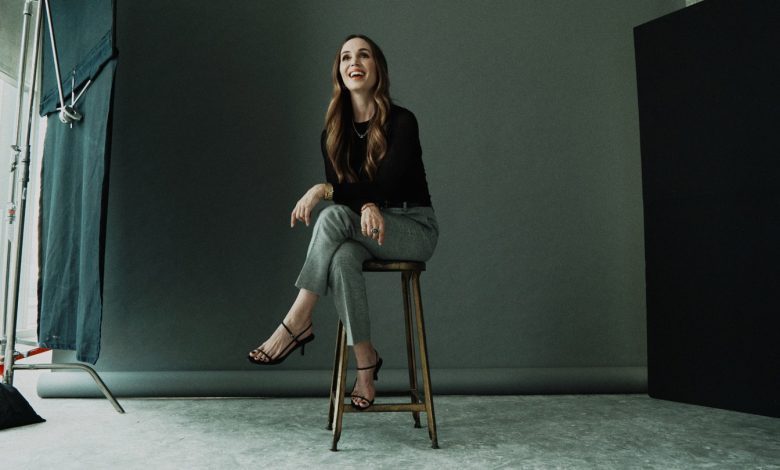
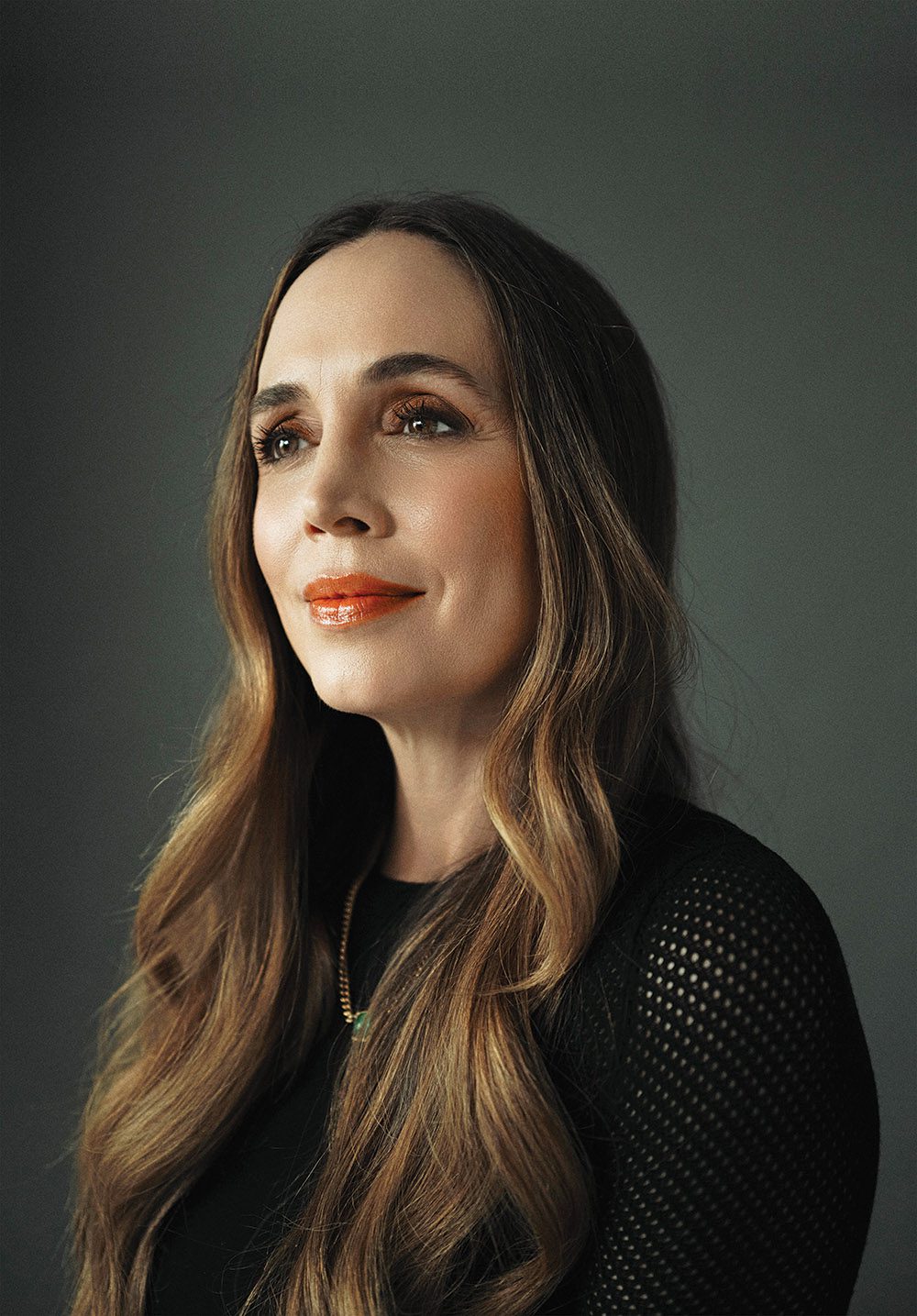
With the help of psychedelics, personally and professionally, Eliza Dushku wrote a Hollywood ending all her own.
The veteran actress, best known for stealing scenes as feisty outsiders like ass-kicking Faith in Buffy the Vampire Slayer and sharp-tongued cheerleader Missy in Bring It On, is actually no longer an actress. She retired from that hustle in 2017, bringing an end to a 25-year career that began as a happy accident when a 9-year-old Dushku accompanied her brother to an audition in their hometown of Boston only to trip and fall in front of casting directors. They were so smitten that they ended a three-month search and cast her in 1992’s That Night opposite Juliette Lewis.
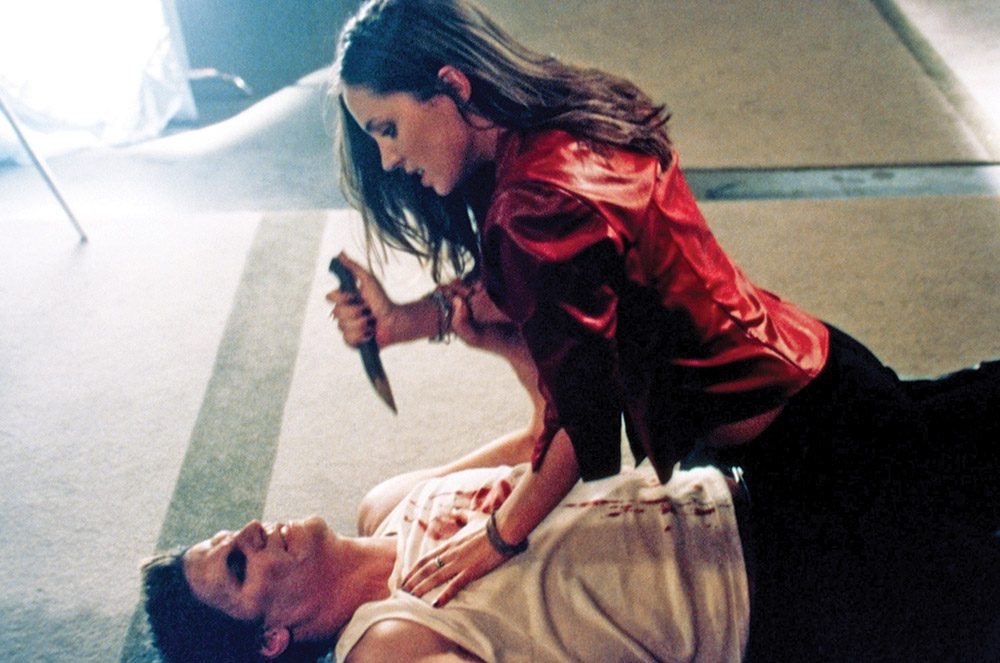
She soon found herself on movie sets with A-listers like Leonardo DiCaprio and Robert De Niro in This Boy’s Life, and Arnold Schwarzenegger and Jamie Lee Curtis in True Lies. At 17, she eyed a pivot back to Boston to study at Suffolk University (where her mother taught) and even had a dorm room picked out when she was offered an arc on Buffy. Three episodes became 20, and then came the spinoff Angel and the high school cheerleading comedy Bring It On with Kirsten Dunst. “I couldn’t get back to school long enough to figure out what my new career would be, so I kept acting,” explains Dushku, who reteamed with De Niro in City by the Sea and kept booking at a fast and furious clip with roles in Jay and Silent Bob Strike Back, Wrong Turn, Tru Calling, Dollhouse and Hulk and the Agents of S.M.A.S.H. “I had many beautiful experiences. Certainly, I also had many harder experiences, which I’ve talked about, but I would be remiss if I didn’t truly highlight all the incredible people that I met and worked with.”
Those challenging moments surfaced amid the #MeToo movement when Dushku shared on Facebook that she was sexually assaulted on a film set at age 12. Separately, she sued CBS and won a substantial settlement for facing sexual harassment on the set of the drama series Bull. In 2018, to confront the trauma of those experiences, Dushku, with the aid of two therapists, consumed MDMA and psilocybin in a therapeutic session as part of what she described as “a mental health deep dive.” When the session ended, a new life began.
“I very quickly connected to the awareness that I was not living my highest purpose and that I could no longer live the life I was living,” says Dushku, who has history with life-altering moves: In November, she celebrated 17 years of sobriety. “I didn’t know at the time what that would be, but it was wild how clear and what a moment of truth that was for me.”
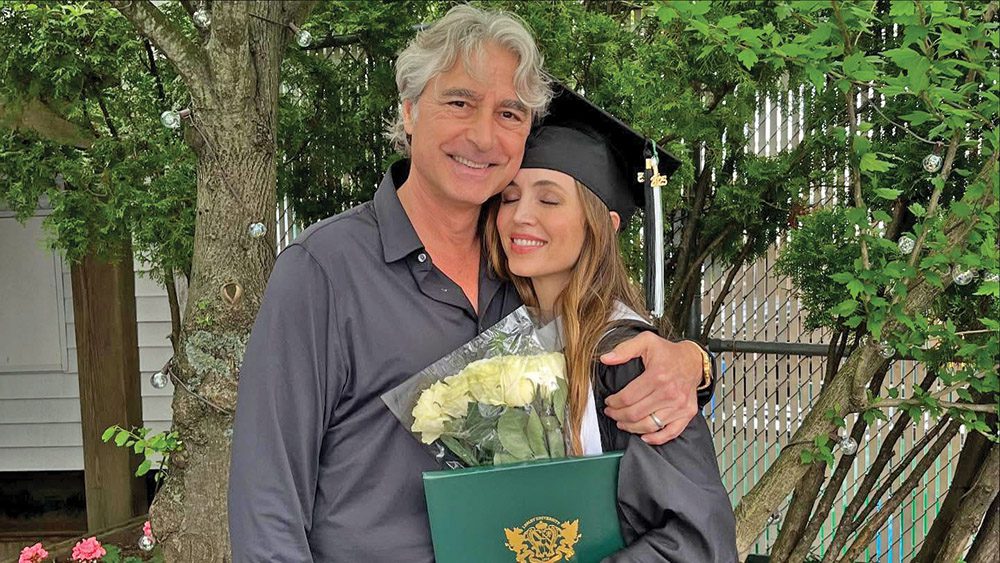
A new path and purpose led her back to Boston, where she graduated from Lesley University with a master’s degree in clinical mental health counseling with a focus on addiction, recovery and trauma in addition to receiving a certification in psychedelic assisted therapy through a California university (as it’s not yet legal in Massachusetts). “Graduating with my master’s degree feels like more than an achievement — it feels like a deep calling realized,” Dushku shared on Instagram this summer with a carousel of photos that reflected the richness of her new life surrounded by other grads, her husband and their two young boys. “True growth, energy, and passion — manifested.”
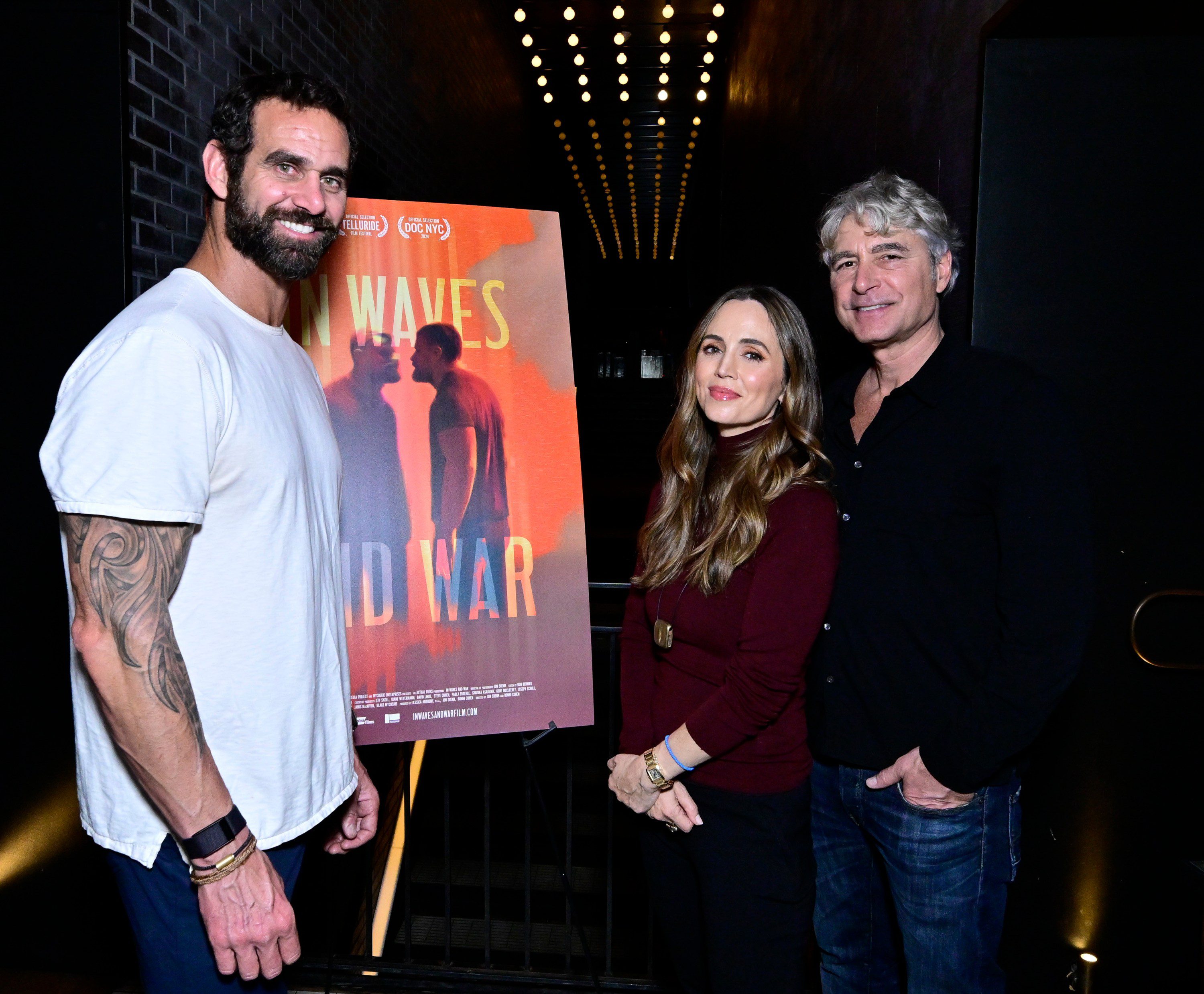
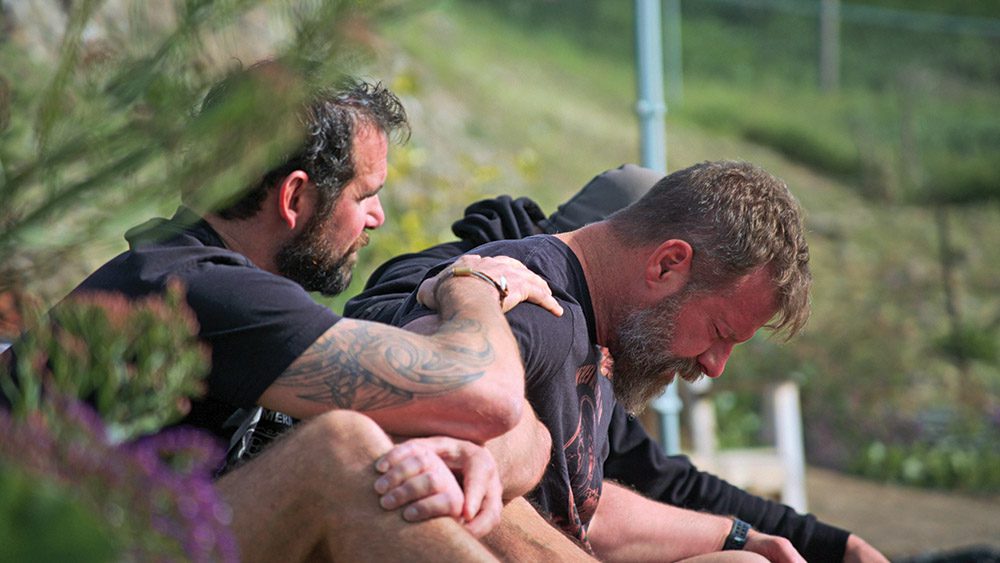
Another passion offered a return ticket to Los Angeles last month. Along with that husband, Intercontinental Real Estate Corp. CEO and philanthropist Peter Palandjian (recently named one of Boston Magazine’s most influential Bostonians), Dushku is executive producer of a new Netflix documentary, In Waves and War. The film, now streaming, follows three Navy SEALs as they grapple with the trauma of war. After exhausting other options, they eventually make the trek to Mexico for psychedelic therapies that help them heal. Dushku is so psyched about the film and the transformative properties of psychedelics that she agreed to do this interview, even if it meant sacrificing some hard-earned privacy. She even removed her The Row heels to settle in on a sofa on PMC’s terrace for what turned out to be an hourlong conversation covering the highs and lows in Hollywood, her fight to help legalize psychedelic therapies and why a doctorate is also in her future.
What does it feel like to be in L.A. as this new version of Eliza Dushku?
In the airport to make the trip here, I posted on social media because I wanted to capture the surreal moment of flying back to a place where I lived and that was my world for so long. But I left this world and completely changed course and changed careers. To be back now as these two worlds combine is wild and also kind of great. I’m so grateful for my 25 years in the movie business. I never want to sound like I’m dismissing the amazing opportunities that I had, but this feels different in a way because it’s so vitally important.
It’s such an important film that makes me want to scream it from the top of the Hollywood Hills. It’s also an important time in our society for us to reconceptualize what it means to heal and become whole, how that is possible and what it can look like for people. We should be fighting for each other, especially for those who have served for us. Psychedelic therapy is not a panacea. It’s not a magic bullet that will work for everybody, but it should absolutely be available and be an option. This movie beautifully combines what psychedelic therapy is and what it isn’t, and we’re able to see it through the perspective of the vets themselves.
How did you come to be involved with the film as an executive producer?
I want to be clear to say that we didn’t start this movie. We have an amazing independent film community in Boston and we’ve made a lot of connections there with other producers in the New England area. Many of those friends have their fingers on the pulse, and someone brought the movie to us. The filmmaking team — [directors Bonni Cohen and Jon Shenk and producer Jessica Anthony] — needed more funds to finish it, especially for the CGI, which was so important. We have all these old ideas of what a psychedelic trip looks like, just think of those kaleidoscope images from the 1970s. And this needed to bring the vets’ stories to life in a way that reflects more what the experience looks and feels like in a profound way. God bless my husband who is an amazing philanthropist that cares about societal issues and that’s one of the many reasons why I adore him. We were able to help them finish the movie.
I’ll be honest, the last thing I wanted to do was step out in a public way and do press again, because I’ve spent the last 10 years really pulling back and cultivating this other life where I’m not the focus of attention. I’m the therapist. I had a moment that required me to ask myself whether this was important enough to step back in and use my platform and whatever connections I have to help bring attention to this film and this therapy. The answer: absolutely. Maybe part of the reason I had my career during the first part of my life was that I’m now able to spread a message and shine a light on this important work.
One thing that I learned from looking through old interviews you did at 18 and 19 years old is that you always said that at some point you wanted to go back home and enroll in college. Getting cast on Buffy interrupted that goal the first time, but you finally did it.
It just took me a couple extra decades. I’ve told this story a million times but I tripped and fell at my brother’s audition when I was 9, and that caught the attention of the casting directors and I eventually got cast in my first movie. That happened just a few blocks from where I live now. My brother always wanted to be in the business, and he’s making films now with his husband. They live in Brooklyn and they did their second film and it’s amazing. It stars Beverly D’Angelo and it’s about bridge. My brother’s mother-in-law ran the biggest bridge club in Boca Raton, Florida. The movie is in post now. But yeah, it just sort of happened that I became an actor in the first place.
Your first part was in the Juliette Lewis movie That Night?
Yes. After that I played Robert De Niro’s daughter in This Boy’s Life, followed by True Lies. I kept booking these roles. My mother was a political science professor and when we first got the call to come to L.A. for a screen test, she hung up the phone and said that it wasn’t the life she wanted for her 9-year-old daughter. But my brothers stepped in and said that it could be a free trip to L.A., so we made the trip thinking that I wouldn’t get the part. It certainly was never pushed on me. But when I started getting these roles, we thought it was an interesting, unconventional thing and we’re sort of an unconventional family. I mean, my mother was a socialist, feminist Mormon.
I kept working until high school and after, I enrolled at Suffolk University in Boston. I had a dorm room picked out but then I got offered three episodes on Buffy. That turned into a season, so I couldn’t get back to school long enough to figure out what my new career would be, so I kept acting. Again, I had many beautiful experiences. Certainly, I also had many harder experiences, which I’ve talked about, but I would be remiss if I didn’t truly highlight all the incredible people that I met and worked with.
You’re still in touch with a lot of industry friends?
Yes. After spending 25 years in this town and working in this industry, I’ve had so many fascinating, enriching experiences. I have been open about this, but then I eventually hit a point in my experience with addiction when my life became unmanageable. For many years, I was functioning but as so often is the case with addiction, I got to a place when it became more and more unmanageable. There was something in me that signaled that something wasn’t right. When the #MeToo movement came about, I disclosed my personal experiences [of being the victim of sexual misconduct]. I didn’t expect that to be such an immediate catalyst for what became the beginning of a journey to process what happened and what I needed to heal from. It kick-started a mental health deep dive, and as I described in a Boston Magazine article, that led me to [experiencing psychedelic therapy].
How did that change your perspective?
I very quickly connected to the awareness that I was not living my highest purpose and that I could no longer live the life I was living. I didn’t know at the time what that would be, but it was wild how clear and what a moment of truth that was for me. I moved back and the path just kept revealing itself to me. I enrolled back at Suffolk as a sociology major. I ended up transferring to Lesley University with a focus on holistic psychology and more integrative therapies. The path became more clear. From there, I was able to do my psychedelic assisted therapy certification through a university in California. That, combined with my own personal experience, allowed the full picture to reveal itself of how I could apply myself in this new career path. I completed my master’s degree with a focus on addiction, recovery and trauma, and the door opened for my current job at Home Base, the Massachusetts General Hospital and the Red Sox Foundation’s organization for military vets and their families. Just a few months ago, I was promoted to clinical and program development specialist for psychedelic assisted therapies.
What’s the day-to-day?
We’re starting with ketamine assisted psychotherapy, which is currently the only legal psychedelic therapy. Our leadership is extraordinary, as is the head of addiction psychiatry at Mass General. Everyone is very clear on the focus that we’re not winning the battle with mental health in this population. There’s an epidemic of veterans dying by suicide on a daily basis and we need more tools. We are sort of in the vanguard phase right now of helping propel this work forward. It’s such an honor to wear my badge every day and feel like I’m part of such an important institution.
Do you remember the initial reactions you fielded when you told people about this career switch after having that moment of clarity?
I’ll be honest, it can seem a bit overwhelming when someone shares that sort of experience. One of the caveats that come with psychedelic healing is that people often get healed and want to tell everyone about it, and that can sound almost as if they are proselytizing and trying to get other people to do psychedelics. That was never my goal. It’s one of the reasons why I was drawn to really digging deep into doing the work of becoming a trained professional. I wasn’t just spewing my own anecdotal circumstance and experience. I’m a super nerd about the neurobiological aspects of this work and understanding how these medicines go in by looking at a [Functional MRI] of a traumatized person to watch psilocybin enter the subject. You can watch the brain activity go from the amygdala up through the brain to the prefrontal cortex, and our human brain has the ability to distinguish the difference between a perceived threat and a real threat. This is not all woo-woo. There are, dare I say, spiritual aspects for people who have transcendent and powerful realities, but it’s beautiful to be able to connect that with the science. We know that this creates that neuroplasticity or the ability for the brain to make new neural pathways. I’m obsessed with the neurological and the physiological pieces of this therapy.
It’s obvious you’ve done the work and studied. Was it hard to apply yourself to school after having had a career as an artist?
No. Both of my parents were teachers. When my kids are a little older, I am going for my doctorate. I love school. I really do. I’ve found something that I’m wildly passionate about, and I’m so happy when I’m doing this work and when I’m learning how I can help and serve. You hear people say that when they’ve found their passion, it never feels like you’re working a day in your life when you love what you do. You wake up every morning and are thrilled to go to work. My husband recently said, “Babe, I see when you get up to go into the clinic, you have a skip in your step.” I really, really do. I love my life and the opportunity I have to serve and do this work.
As an actor, there was an intimacy in the work, but with this, I really get to remove myself and just fully be there for someone else who is taking that elevator down to explore and heal. Suffering is a part of our human experience, and it’s really hard to suffer alone. The beauty of being there for someone is that it’s invigorating to help. It fills me with such passion and purpose.
Is there anything you miss about your old life?
People ask me all the time if I miss it. And I don’t. Again, not because it wasn’t fulfilling. It was, and I did it for 25 years. I’ve met people who point out to me that I have lived these two lives, and I value both of them. But I think that was part of my story and now I get to do this other life, and it’s beautifully rich.
Do you consider it a closed chapter? If I google your name, it says “retired actress Eliza Dushku.”
Oh yeah. Yeah. I will not be in front of a camera again unless it’s in some capacity that is in service of my new work and passion. That’s what makes this movie so special, is to be able to come back and shine a light on people like Marcus and Amber and those who appear in the film. It’s so timely and important and necessary to have this movie enter as many homes and hearts and minds as possible.
When your children are old enough, what movies or TV shows will you show them? Like, what would you play that is a favorite of yours or that shows the full range of what you could do?
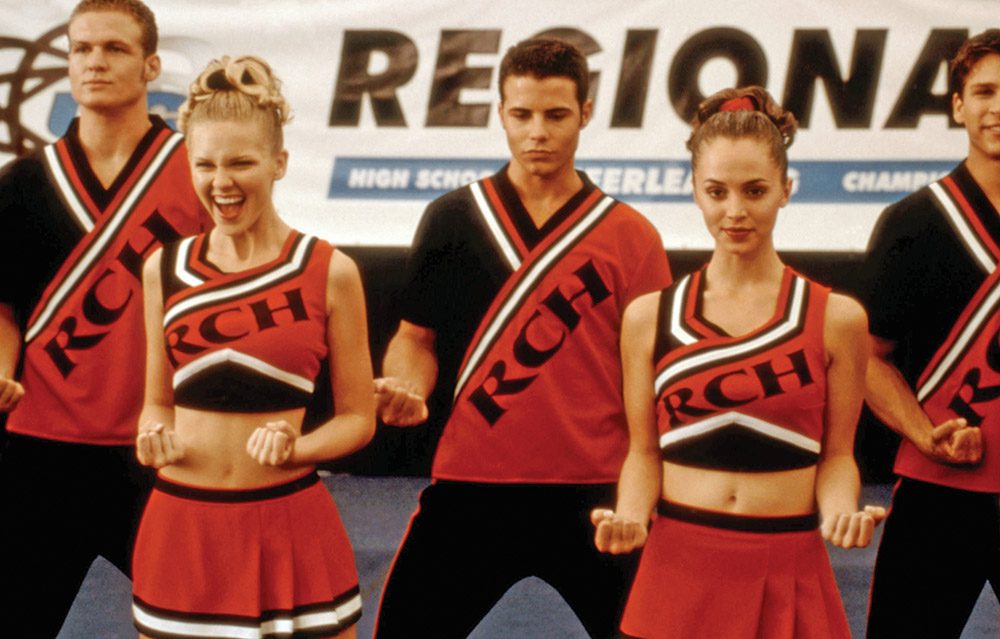
This summer, my husband gave them quick glimpses of a couple scenes from Bring It On. They were perplexed and thoroughly confused. But it was fun to see mom bouncing around as a cheerleader. They thought it was interesting and kind of sweet and funny. I have nieces and nephews who range from teenagers to early 20s. For them, obviously Buffy was such a rite of passage. It has become such a salve for so many and a reminder of what it can be like to survive high school and adolescence. It helps people find themselves. Again, that’s one of those roles that I’m so grateful for. I’m so grateful that I could play a part in something so much bigger than me. It’s so iconic and still reaches people in a way that touches humanity. I’m really attuned to the fact that a piece of my former career and a series like that was therapeutic for so many, and in some way, I was already doing kind of therapeutic work.
Faith has become known as such a badass and a beloved character but when she was introduced, there was some blowback and not everyone was happy to see her shake things up in Sunnydale …
If I tie in my work that I’m doing now and look back at it, Faith represented some really dark shadow parts of being human. In some ways, people were drawn to her while others had strong reactions, like, “No, you can’t come in here and shake things up in beautiful Sunnydale.” Not that there weren’t issues happening there already. But what my character represented very much correlates to the shadow and how scary that can be for most of us because we are conditioned in society to sort of push that down and exile those parts of us.
When I think back on the time the show was on the air, it represents such a time of a monoculture. Buffy was so dominant and the cast became so famous. Obviously it was such a different time pre-social media, but I’m curious what your relationship to fame was at the time?
Honestly, I don’t think about it in that way. For me, I was 17 and 18 years old. I’ve said this before about the character, but there were elements that were art imitating life and life imitating art. There was deep trauma in Faith’s backstory. There was something deeper going on. As we talk about with the veterans featured in [In Waves and War], you create a persona for yourself that allows you to feel safe and fight the demons, thinking that you can kill them and move on. But we know that’s never really the case. You can’t outrun the demons. You’ve got to feel it to heal it.
So much of the business has changed with consolidation, cutbacks and the production exodus. If someone was considering making a change and leaving the industry, what would you tell them as someone who is now on the other side?
Contrary to what people might think, I do not think that every person should go out and do psychedelics. That is not what I’m preaching. But I do recommend that you tap into the inner knower that is inside each of us. What do you love? What brings you joy? Where do you find the most authentic expression of yourself? Who in your life allows you to be the most true? In some ways, we’re all on this big mysterious journey of self and finding out who we really are and what we want to be. In many ways, that ties in with the concept of the series Dollhouse that I did, though we never quite got there. Who am I versus all these other people or all these parts of society, family or circumstances? When you strip it all away, what does that voice tell you?
Dollhouse marked a shift for you in that you worked closely with Joss Whedon on developing it and got a producer credit. What do you remember about your time on the show?
I thought, “Wow, it sounds like a fun idea to play a different character every week. Who do you want me to be today?” Maybe there’s a correlation with just having been an actor but today I look back at that time as a trauma response. “Who do you want me to be?” It’s people-pleasing. “How can I shift and be a chameleon and adapt so that I can be loved and be safe?” It’s all about seeking safety, right? The initial concept was kind of like a lightning bolt and we were both so excited to try and make that show. I’ve heard a lot of people say that it would’ve worked better today in a streaming era because it was maybe a little too meta for network TV.
Are you still friendly with Joss?
It’s been a few years. We’ve sort of lost contact.
I’ve talked to a lot of actors or industry professionals who leave the business, and it’s always interesting to hear what they like to watch and stream today and whether they can really enjoy it or if they spend too much time thinking of the actual work. What are you watching?
I love watching movies and shows now. I just love being an observer. My husband and I spent so much of the pandemic and my pregnancies watching shows and just connecting to whatever we can. It is such a beautiful way to connect with humanity; those cords that are touched when a show is well done. But I don’t watch and go, “I wish I could play that role.” I’m glad it was someone else doing a night shoot and not me.
I want to end with something you said earlier about going for your doctorate. This chapter is still unfolding and there’s more to come for you professionally. Do you have any idea what the focus will be? More psychedelic therapies?
I think so. Three weeks ago, I went to Tijuana, Mexico, to join six former Special Forces operators. In a short time, I got to know these six men and women and be with them while we stayed in the same home that they received their treatment in. I have had experience with other psychedelic medicines, but Ibogaine is so different and really unique. People are going to be learning more and more about it. There was a $50 million research bill in Texas that was signed this year. It’s a powerful medicine that can go in and profoundly, physiologically, psychologically and emotionally heal wounds across all of those categories. It’s really interesting to be at the table and continue to learn how these medicines work and how they can help.
There’s a lot of work to be done, and I’d love to be a part of it moving forward as we figure out a new framework given this new modality. How do we tap into the sacred wisdom of these medicines and learn from the people in Gabon who have used this medicine for thousands of years? I don’t know what my doctorate will be at this moment, but I know it will involve how can we learn from the wisdom of the past and bring that into now. Blending the old with the new is something I’m super passionate about. It’s such a rich and fertile space to be studying and learning. There’s just so much work to be done, and it’s all right here so I won’t be lacking.
The other funny part of all this is that it’s not a “me” space. Even when we talked about doing this interview, I didn’t want to do it at first because this work isn’t about me. But I do recognize that you have to sort of take what you can get in terms of spreading awareness. If this is something that I am able to use to direct more people to look at this space, and again, see the movie, then I’ll do it. You don’t have to listen to anything that I say about psychedelics in this entire article, but if you watch the movie, think about it. Is this something you can get behind? The next time that you go vote, will you vote for this research and be a part of the solution? That is the mission, and I’m happy to play my part in it.
HiCelebNews online magazine publishes interesting content every day in the celebrity section of the entertainment category. Follow us to read the latest news.