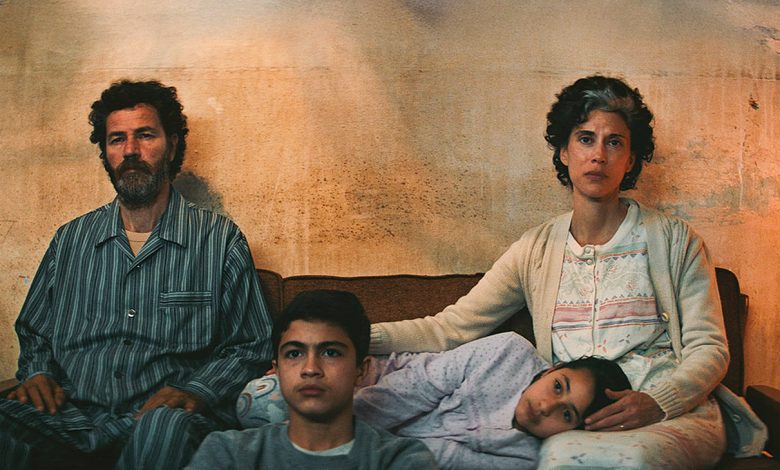
When Cherien Dabis‘ All That’s Left of You, which she wrote, directed and starred in, premiered a year ago at the Sundance Film Festival, she considered it a rousing success. They were given a slot at the sought-after Eccles Theater, received a standing ovation and landed strong reviews. “And then, we struggled for months,” she says, despite winning more than 20 awards since Sundance. The movie traces the fallout of the displacement of Palestinians in 1948, also known as the Nakba, through the lives of one family, and an act of violence they suffer at the hands of the Israel Defense Forces. It didn’t secure a buyer at the festival. “We really wanted a mainstream distributor, which was maybe naive because no Palestinian film has gotten that. But then I felt really empowered, like, ‘All right, I’m just going to have to learn distribution.’ ”
Dabis eventually partnered with Watermelon Pictures, a distributor that describes itself as “rooted in creative resistance,” and picked back up on the fest circuit starting with Telluride. On Jan. 6, Dabis will bring the film to the Palm Springs International Film Festival. Here, she speaks to THR about what she’s learned from the long road.


Movies from Israeli and Palestinian filmmakers, like No Other Land and The Voice of Hind Rajab, have been recognized critically and with awards but also struggled to find mainstream distribution. Do you feel as if you’re in good company?
The bottom is falling out of this industry. All kinds of films are struggling to be seen. That doesn’t make me feel better, but it did show me that the business model doesn’t really work.
What was the first seed of an idea for this movie?
It came back in 2014. I wanted to tell a story about the devastating impact of the Nakba for Palestinians. My father was exiled in 1967, and it took him many years to get foreign citizenship just to be able to go back and visit his family. I watched him get older and more disillusioned and angry about the situation, and I saw how his health suffered as a result. I was looking at my intergenerational trauma and going, “OK, what do I do with this?” But I was a broke indie filmmaker, so I was like, “OK, I need to get into television and fill the bank account before I do this.”
Can you talk about how the current war affected the film?
We prepped the movie for five months in [the West Bank], then suddenly everything came to a halt and we had to evacuate. We were always going to shoot 10 percent in Cyprus, so we started there hoping we’d be able to go back to Palestine. Luckily my cast had Israeli citizenship — they’re Palestinians living in Israel proper — so they were able to travel. My production designer has a Jerusalem ID, which makes it hard for him to get out. Every time we were looking to travel him, he was stopped and interrogated, so he ended up working remotely through FaceTime.
Do you find that Palestinian films have roadblocks in looking for financing?
No. The financing came together really quickly. There was a lot of support and public funding for this story in Europe and the Arab world. Americans are still the gatekeepers [in Hollywood], and there are some people who do not want the dominant narrative about this region to be challenged. Speaking authentically about our lived experience is seen as threatening. From the Palestinian point of view, that is deeply painful.
This story appeared in the Jan. 2 issue of The Hollywood Reporter magazine. Click here to subscribe.
HiCelebNews online magazine publishes interesting content every day in the movies section of the entertainment category. Follow us to read the latest news.