The first movie I ever saw in a theater was E.T. I was about five years old. I can’t recall every detail of that day — the popcorn, which parent I was with, or if I was wearing my favorite blue sneakers — but I remember the feeling. I remember how deeply it moved me, how much love and fear and pain and joy I felt for this strange little alien. My relationship with cinema was born in that moment: a sense of connection that lingers long after the credits roll.
As time has passed, I’ve come to understand how difficult it is to create that response in an audience — how many elements must align. The cohesion of narrative, the depth of character and performance, the risk and originality of direction, the dynamism of cinematography, the power of sound. And all of it must respect the audience, trusting their intellect and instincts.




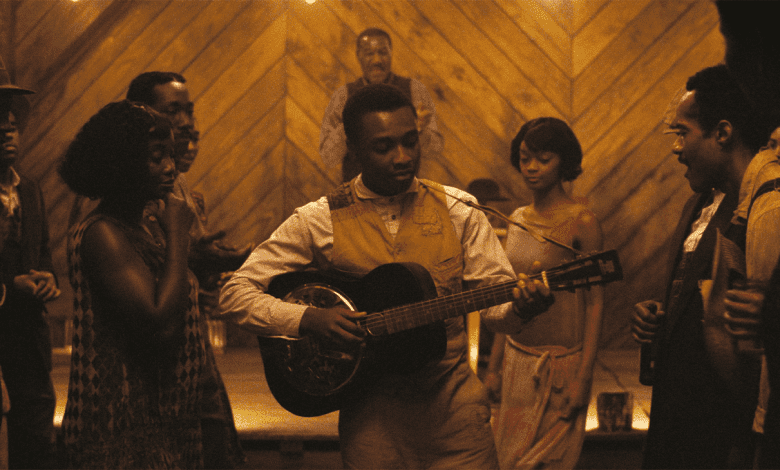
That intense feeling I had at age five in Spielberg’s epic, extraterrestrial tale, I can say I have felt only one more time in my life: When I watched Ryan Coogler’s Sinners. I never even realized it was the cinematic experience I had only ever had that one time, till I had it again as a 40-something actor/writer.
I didn’t get to have the experience many say they had when Black Panther was released, because I was in it. I knew we were making something special; I knew Ryan was brilliant. I knew it would be something we would be proud of, but you cannot anticipate that type of response. I was amazed by its impact here in the US, in Africa, and in the world, but I never got to encounter it as intended. As an audience member, in the dark, surrendering.
That’s what Sinners gave me. I was that five-year-old girl again, staring at the screen in awe and wonder. Lost in a world that had a firm grip on me: mind, imagination and soul. Completely under its spell. Except now I was also an artist able to appreciate the brilliance of the craftsmanship, while completely entranced by the magic.
I realized that I had never been affected by the various elements that make up a story the way I was watching this film. I had never been swept into a world by the sound that engulfed me, the cinematography that fed me, the sharply drawn characters that filled me with a myriad of complex emotions, the narrative that caused me to lean in, riveted by what could possibly happen next. It was utterly singular.
The courage it took for Ryan to make this film does not go unnoticed. We are not in a time in our sector where originality is encouraged, let alone produced. The unapologetic, uncompromising power of this narrative makes it something of dire importance to the artist of today. We needed that reminder, that example. That permission slip. That we must push for our stories told, our way. And this was truly Ryan’s way. (That should be a class at film schools.)
Many try to place it in some neat genre. Horror? Really? That term does not even come close to embodying all this film brings to the fore. Musical? It is a film in which music lives, breaths and feeds the narrative, but a musical? What, like Cats? Absolutely not. Sinners did what art that comes along very, very rarely can do: It created its own genre. Stop trying to categorize it, you’re wasting your time. It is above categorization. The allegory of the vampires, plus the exploration of music and sound. The way racism is not just a theme but an atmosphere, crippling and omnipresent. The love story and coming-of-age story at its core. All this fused into a piece of cinema that stands entirely on its own.
And it did that thing that very few films do anymore. In an era where we have “seen it all.” It sparked conversation. Original thought. Passionate arguments and self-investigation. It caused reflection and a deeper belief in what can be achieved when we defy the norms and follow our true selves. It brought something back to life in our cultural energy, stripping away our jadedness, replenishing something we did not even realize we’d lost.
I had to watch it more than once. I felt there was so much it was conveying, there was no way I could absorb it all in one sitting. I went to IMAX on a Monday afternoon at 4pm, the only time I could get tickets! It was packed. Every seat occupied. This was during the time they added IMAX screenings, so this was actually a theater reserved for Mission: Impossible. This film about Black twin brothers in the Deep South in the 1930s who opened a juke joint. And it paused Mission: Impossible screenings at the IMAX. “Selah,” as they say in the book of Psalms: think on that.
I watched it, even more consumed by the experience, some moments, like that iconic scene in the Juke Joint, truly feeling like we were engulfed in the rivers of fire streaming across the screen. After the film, we all applauded and then sat, collectively glued to our seats, unable to let go of that shared feeling still washing over us, that feeling of a great story that we wished we could immediately watch again for the first time.
Outside in the lobby, amidst my new community, I met a young man, Robert. This was the sixth time he watched it. He was inspired, aflame with that childlike joy I too was experiencing. We were collectively aware, we were in a moment. One that does not come often. Where a movie takes you somewhere, changes you, and never lets you go.
I do not know where to start with this Ryan Coogler. I told him when I first met him that I was proud of him, though I didn’t know him. I know him pretty well now, having shot two films and gone through unspeakable tragedy with him, and I am still so, so very proud of him, even more so.
In my more hyperbolic moments, I think of him as the M.L.K. of film. He has broken us into a new domain; he has mainstreamed the unapologetic, authentic, epic, global Black experience. He has made millions upon millions of people feel seen and heard. And done so while excelling at the old Hollywood game that we as Black people have often been excluded from. And he has done it all with the gentlest, kindest, most fair-minded spirit you are ever going to encounter. And all before the age of forty.
The legacy he will leave will be unprecedented. And will cause others to stand in their power, and tell their stories without apology. And the world will be better for it. But what we cannot forget is that he made one of the most singular pieces of cinema we have seen to date. He reminded us all what the power of this medium can do. He created something from nothing that cannot be put in one box.
It is genre-defying, it is humanity-affirming, and it is culture-enriching. Reminding us all of our collective power, story and struggle. And above all, it did what only great, great cinema can do, something I never imagined how much I needed in these difficult times: It made me feel like a five-year-old again, watching something magical, new and full of wonder, causing me to believe again, as I did back then, that anything is possible.
Danai Gurira is an award-winning actor, writer and Tony-nominated playwright, who has starred in multiple Marvel franchise films, The Walking Dead and can next be seen in Michael B Jordan’s The Thomas Crown Affair and with Denzel Washington in Here Comes the Flood.
HiCelebNews online magazine publishes interesting content every day in the movies section of the entertainment category. Follow us to read the latest news.