Hollywood Insiders Unite to Fight for Future of Industry With Launch of Creators Coalition on AI

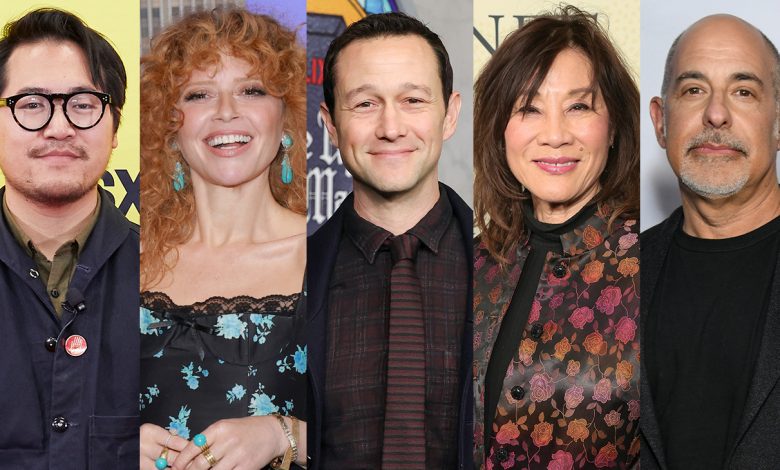
As Hollywood continues to grapple with the threat and adoption of AI, a group of 18 industry insiders have banded together to form the Creators Coalition on AI. The effort, a first of its kind, is backed by the signatures of more than 500, a diverse list growing by the hour that includes Oscar winners, filmmakers, show runners, writers, below-the-line talent and creative professionals from all corners of the business.
Known as CCAI, the group launches with a mission to serve as “a central coordinating hub to upgrade our industry’s systems and institutions.” It will do so by acting as an advisory council that seeks “to establish shared standards, definitions and best practices as well as ethical and artistic protections for if and when AI is used in entertainment projects.” The work will be guided by four core pillars: 1) transparency, consent and compensation for content and data; 2) job protection and transition plans; 3) guardrails against misuse and deep fakes; and 4) safeguarding humanity in the creative process.




With the launch, CCAI has delivered a call to action that outlines where it stands: “This is not a dividing line between the tech industry and the entertainment industry, nor a line between labor and corporations. Instead, we are drawing a line between those who want to do this fast, and those who want to do this right.” The line is a reminder of the controversial motto “move fast and break things” that became popular among Silicon Valley tech firms as they pushed innovation and disruption while ignoring long-term impacts that new devices, apps, platforms and technology could have on society.
CCAI’s rallying cry states that the group is not against AI use in Hollywood — “this is not a full rejection of AI” — but rather a hope that all involved can commit to “responsible, human-centered innovation.” Per CCAI: “We believe humanity is creative enough to design a system that allows for the tech and creative industries to coordinate, collaborate and flourish but that will not happen by default. We must unite and push back against the current path and demand all parties come together to build a better system.”
CCAI founding members include Oscar winners like Everything Everywhere All at Once filmmaker Daniel Kwan, producer Jonathan Wang and CODA’s Sian Heder; talent Natasha Lyonne and Joseph Gordon-Levitt; producer and former Academy president Janet Yang; filmmakers David Goyer and Paul Trillo; cinematographer and visual effects guru Jim Geduldick; president and co-founder of National Association of Voice Actors Tim Friedlander; screenwriter Lynn Renee Maxcy; co-founder and former executive director of Humane Technology Randima Fernando; show runner, writer and creator Jac Schaeffer; director and producer Ted Tremper; Berggruen Institute president Dawn Nakagawa; and Nathalia Ramos, Alex Gardels and Nick Goddard of the Berggruen Institute’s Studio B.
The founders are backed by more than 500 actors, artists, executives and entertainment industry professionals from all corners of the business who joined as official signatories. The list includes such boldfaced names as Cate Blanchett, Rian Johnson, Phil Lord, Christopher Miller, Aaron Sorkin, Billy Ray, Natalie Portman, Kristen Stewart, Academy president and producer Lynette Howell Taylor, CAA’s Maha Dakhil, Sam Rockwell, David Lowery, Dakota Johnson, Christine Vachon, Taika Waititi, Amy Berg, Amanda Seyfried, ID-PR’s Kelly Bush Novak, Sarah Sarandos (daughter of Netflix’s Ted Sarandos), Greta Lee, John August, Liz Hannah, Todd Garner, Sarah Paulson, Todd Black, Karyn Kusama, Peter Saraf, Carla Hacken, Hiro Murai, Lulu Wang, Kirsten Dunst, Wyck Godfrey, Matt Jackson, Lilly Wachowski, Sean Lennon, Jenji Kohan, Marisa Tomei, Nicolas Berggruen and many others.
In a series of interviews with founding members, The Hollywood Reporter has learned the council formed after months of discussions in an effort led by Kwan and Wang as they saw the urgent headwinds facing the industry and creative communities.
“The biggest fear here is we can’t let the tech industry set the terms for our industry again because last time that happened, we had a streaming war and that became a bubble that popped. It ended up devaluing our stories, ruining our theatrical business model and destroying a lot of longstanding precedents and norms for talent contracts. The town invested billions of dollars, and in the end we all lost. Knowing that AI technology could be far more consequential, we knew that we had to step up and be the ones to help lead this conversation,” Kwan explained. He added that “the technology is here and there’s not much we can do to fully stop it,” but what they hope to do is set guidelines and shared standards to mitigate the risks.
The response thus far has been overwhelming — in a good way. “We’ve felt a huge collective sigh of relief as we’ve announced ourself,” Wang told THR. “There has been a grumbling discontent in our industry as we watch this technology proliferate rapidly. So just raising our hands and offering a path to collaborate has been a huge galvanizing moment.”
Emphasis on galvanizing. “The hard part about contending with AI is that the issue is so large. It’s not only looking at the underlying technology, economics, and data, it’s also understanding the broad incentive landscape and race dynamics. Because of this, it cannot be the job of any one person, guild, or studio to solve. It calls for an industry wide response to this technology,” Wang added.
The four goals CCAI introduced at launch are only a start, and additional issues will be addressed as the group moves forward, Goyer said. “We had to strike a balance between indicating the breadth of issues that must be tackled and not overwhelming potential signees with too much information. Ultimately, we felt that these four buckets were the most fundamental,” he said, noting that another area of concern is the “massive environmental impact” caused by the proliferation of data centers. What they’re providing is essentially “an action road map” that could be used for other fields outside of Hollywood, Goyer said, whether that’s education, manufacturing, healthcare, medicine, etc.
“Right now, the tech industry is repeatedly launching product after product, knowingly steamrolling over privacy, copyright and safety concerns. As a group, they’re just seeing how far they can get before they’re sued and given a legal ruling that slaps their corporate wrists. It’s a business strategy. We’re saying stop; you don’t get to dictate our future without our participation. And frankly, the entirety of humanity should be saying that,” added Goyer, a member of the WGA, DGA and PGA who said that while all those organizations (and many other guilds across town) have their own groups and negotiation needs, it’s crucial that groups share information and strategies.
The launch of CCAI is a “first step,” Gordon-Levitt explained. “What’s really great about how Dan has always talked about this is that it shouldn’t be just a few of us deciding what the positions ought to be. I certainly don’t consider myself qualified to be that dictator. We want to provide a hub and a platform for many voices to come together to have conversations and hopefully some productive conclusions about AI. We really want to invite people to get involved and participate in the process.”
Gordon-Levitt was quick to say that they hope all types of professionals get involved in the coalition, from YouTube content creators and podcasters to newsletter writers and more. “We’re all facing the same threat,” he said. “And when I say threat, I don’t mean the tech. I don’t think generative AI technology is threatening, it’s the unethical business practices of some of the biggest AI companies.” (On that note, Goyer co-wrote a few novels that were part of Anthropic’s landmark $1.5 billion settlement with with authors over books that were illegally downloaded and copied: “While a billion or so dollars sounds great, it’s too lenient a settlement.”)
Yang, who finished her term as Academy president over the summer, a move that allows her to serve organizations such as CCAI, said the grassroots momentum of CCAI reminds her of the formation of Producers United and Gold House, groups she’s also involved in. “It’s about building something from the ground up,” she said. “What happens now is that we’re hoping to continue to gather names, and with that solidarity comes more leverage and then there could and should be conversations with AI companies saying, ‘Can we play ball in the same sandbox? Can we set rules around a mutually respectful collaboration and relationship?’”
In another first, Nov. 10 saw a gathering of representatives from WGA, PGA, DGA, SAG, the Teamsters, Producers United and members of CCAI to discuss AI and how best to bring the industry together on what is needed at this urgent time. “The focus was, are we aligned? Can we get aligned? Can we agree on certain principles?” Yang explained of the meeting. “Everybody seemed to be much more strongly in agreement than we even anticipated.”
Heder, who met Kwan a year and a half ago when they participated on an AI panel hosted by the Academy, said that she became very invested in helping create cross guild conversations as she also serves on an AI committee at the DGA. “Every union, especially when they go into negotiations, are very invested in trying to protect their own members. But I think with the scope of this issue, it became very clear that it would require labor to organize more broadly. We saw that this coalition could be a hub and an organizing tool to get the unions in conversation with each other,” she said. “There was a lot of overlap in what each guild was facing. There are certain issues with these technologies that are the same issues no matter what your discipline is as an artist. If we start the conversations, we can create cross discipline standards and ethical practices for how we want to implement these technologies on our own terms.”
From the editing bay of her new film Being Heumann, Heder said that the formation of CCAI can be seen as a bright spot “in a dark time when people are feeling powerless and lost.” She added: “Gathering smart people to be a think tank to plan, problem solve and move toward a future that we can all embrace together is something that feels incredibly positive.”
Geduldick was feeling pretty positive to be included as he represents cinematographers and visual effects artists, skill sets that can be greatly impacted by AI technology. “I very much appreciate Dan and Jon because what we are trying to do with this coalition is have a breadth of positions and a breadth of representation of roles and jobs within the industry that aren’t just A-list representatives,” he said. “There are production ready tools available today and it’s moving so fast that it already feels like an overwhelming wave that is cresting above the industry.”
The announcement of CCAI was propelled by news that broke on Dec. 11, that Disney had partnered with OpenAI to invest $1 billion in the Sam Altman-run artificial intelligence platform in addition to a licensing pact for its iconic characters for use on video creation platform Sora.
“The reaction to Disney’s OpenAI deal was one of shock,” Kwan said. “A lot of people were completely blindsided. On one hand, you can say that this is just a licensing deal for the characters and that’s not a big deal, and it won’t completely change the way our industry works. But for a lot of people, it symbolically shows a willingness to work with companies that have not been able to resolve or reconcile the problems.”
Watching how the news landed led CCAI to push forward with its initiative and add signatories for its call to action. “We’ve been preparing for an announcement though we weren’t planning to announce this soon,” Kwan said. “But when we saw the vacuum of leadership in our industry and the absence of a viable force to shift the conversation away from the doom and away from the resignation that this is how things were going to go, we felt the need to step up. We wanted to show people that there are very thoughtful, intelligent people who really understand the technology that can help guide the conversation. If we don’t put our hands on the steering wheel, the default trajectory does not look good. The default path is one in which the people at the top of the tech industry are the ones setting the terms.”
Kwan and Wang may have been working on the coalition for months, but they’ve been knee deep in AI work for years. The Everything Everywhere All at Once collaborations are among the high-profile producers of The AI Doc: Or How I Became an Apocaloptimist from directors Daniel Roher and Charlie Tyrell. The film, which will have its world premiere at Sundance next month, follows a father-to-be as he tries to “figure out what is happening with the AI insanity, exploring the existential dangers and stunning promise of this technology that humanity has created.”
Lyonne has also been in the weeds with AI work, too, having co-founded Asteria with Bryn Mooser and shepherding a film project to direct titled Uncanny Valley, which will utilize some AI tools. She, too, has been surprised to see deals like Disney’s OpenAI pact. “First things first, it’s quite dicey and a little bit too loosey goosey for me that we’re making any kind of blanket deals with anybody until we have guardrails in place,” she said.
She’s also surprised to find herself as one of the co-founders of CCAI. “Who knew I was a grassroots organizer? Nobody saw this twist coming, least of all me, but I guess AI research has prepared me well on some level, or maybe it’s a lifetime spent in the arts. Didn’t know I was a hometown local until I realized that I’ve been doing this since I was four years old and the years were flying by. So, I guess that’s how it maybe happened in real time.”
But seriously, Lyonne said it’s been “inspiring and exciting” to see her peers mobilize in this way, along with some other emotions. “Other times it’s been positively harrowing to see the differences between ideas, technology, capitalism, regulations, lack thereof, fair compensation for instituted copyright law, respect for legality and IP ownership, one’s own data footprint, one’s own rights and so forth. It’s been a real wild rollercoaster to see how things keep shaking out and coming together in holistically safe ways for alignment that supports communities. In other ways, this whole thing could derail into a kind of Upton Sinclair The Jungle-type of scene. It’s very important to stay fully alert and on deck.”
On that note, Lyonne encourages everyone in the industry and beyond to rise above the feelings of exhaustion and confusion. “We’re alive in this very moment and we should continue to use our voices, our collective ideas and thoughts to keep trying to create a world that we actually want to be in so we can keep making all these beautiful movies and TV shows. We need to take care of one another and make sure that our crews, our department heads, our beloved Teamsters and all our friends are protected. We want everyone to come to the party. Personally, I am not somebody who wants to live with three people inside of a safe haven or a bomb shelter. It’s not really my vibe.”
HiCelebNews online magazine publishes interesting content every day in the celebrity section of the entertainment category. Follow us to read the latest news.