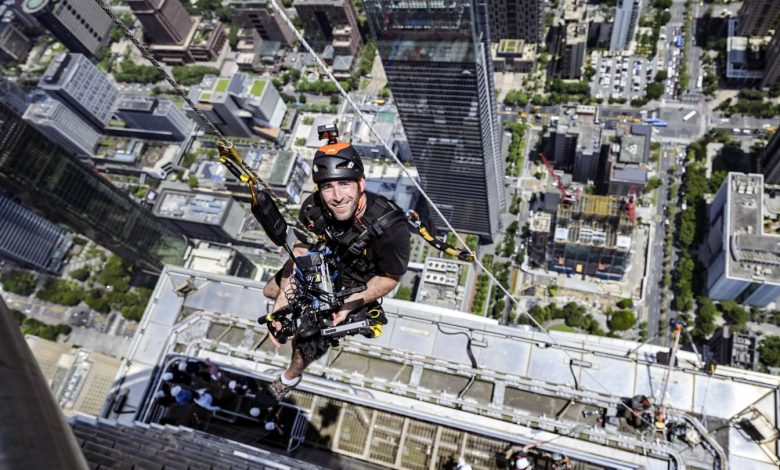
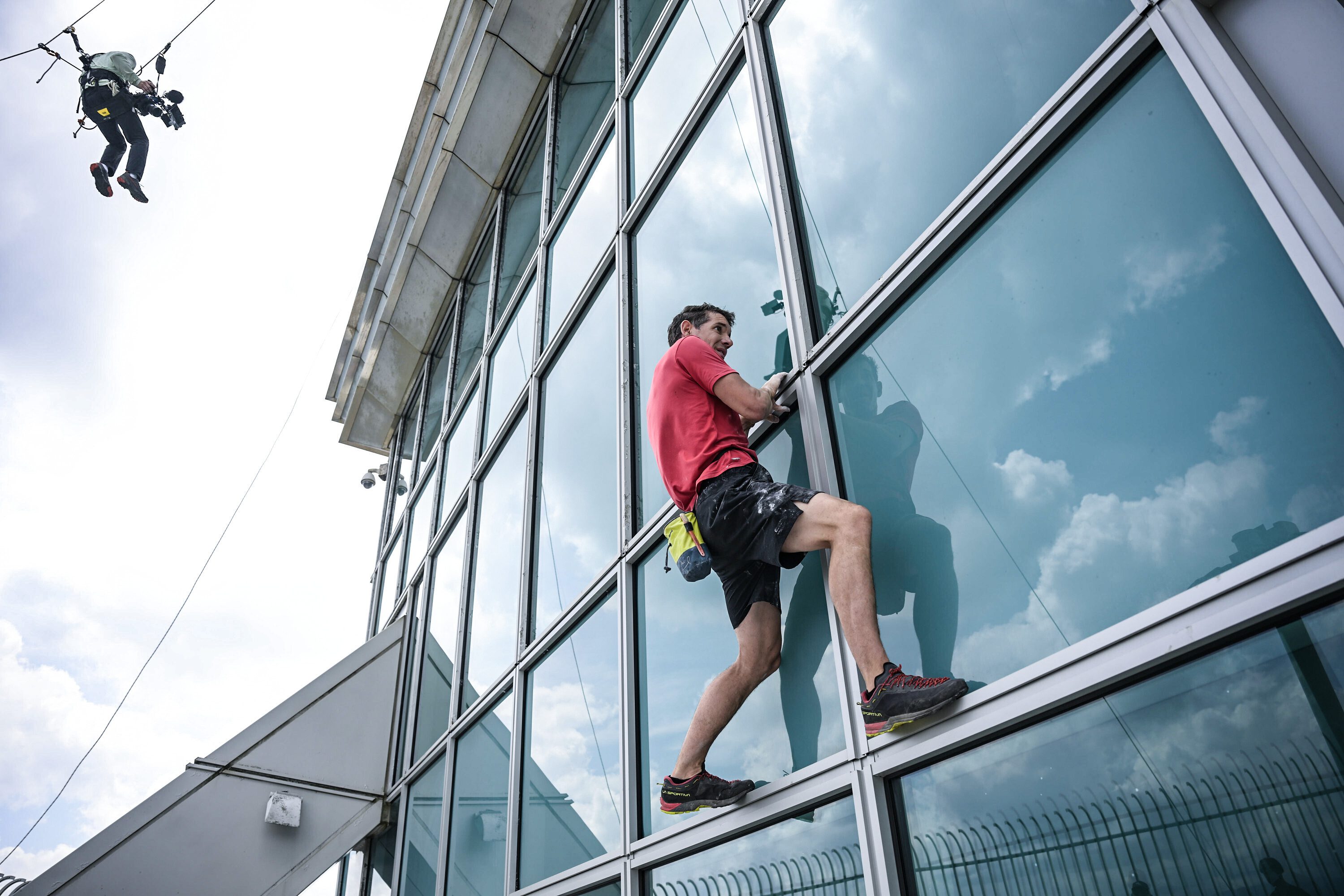
By the time Alex Honnold finished pulling himself up the 1,667-foot glass-and-steel facade of Taipei 101, the athleticism and fearlessness of his feat were viscerally unmistakable to anyone who had been tuning in to Netflix’s live broadcast for the past 90-plus minutes.
Just as apparent for veterans of live TV or climbing documentaries, meanwhile, was the depth of the production expertise and specialized cinematography required to make Skyscraper Live such a smoothly vivid experience for viewers worldwide.



“To cover 1,700 vertical feet,” says James Smith, an executive producer at Plimsoll Productions, “this was the most impressive camera rig I’ve ever seen.”
That rig — 19 camera sources distributed across one of the world’s tallest buildings, supplemented by drones, a helicopter, robotic heads and a free-hanging cable dolly — was the product of months of planning by Netflix, Plimsoll and a small army of specialists accustomed to filming people doing very dangerous things in very inhospitable places. The difference, this time, was that the shoot took place not on a remote rock face or an Arctic ice shelf, but in a densely populated city, on the face of an occupied skyscraper, with the added pressure of broadcasting it all live.
Honnold completed the climb on Jan. 24, scaling Taipei 101 from street level to the tip of its spire without ropes or protection — a feat believed to be the tallest urban free solo ever attempted. The ascent, which unfolded over roughly 90 minutes, was broadcast live worldwide as Skyscraper Live, drawing 6.2 million viewers globally over its first two days and quickly becoming one of Netflix’s most-watched live events to date.
Plimsoll, the U.K.-based production company that served as lead producer on Skyscraper Live, had already built a deep working relationship with Honnold through earlier projects, including his National Geographic climb documentaries, The Devil’s Climb and Arctic Ascent with Alex Honnold. The trust accumulated over those projects was what gave both Netflix and Honnold the confidence to mount a spectacle as daring as a rope-less skyscraper climb captured on live TV.
“Alex needs complete confidence in the rigging team,” Smith says. “He’s the most extraordinary person I’ve ever met, let alone had the privilege to work with. But we couldn’t do these things without an extraordinary crew around him. If Alex thought the rigging was even a bit sketchy, that could be playing in his mind instead of the climbing at hand. He also needs to know there’s zero chance that someone above him, god forbid, is going to do something like drop something.”
Risk management for the project was handled by Secret Compass, a specialist consultancy that has partnered with Plimsoll on multiple high-stakes expeditions. Their remit extended well beyond Honnold himself to include the camera teams, aerial units and spectators below. An exclusion zone was established around the base of the building in the unlikely case of falling objects, and safety briefings governed everything from weather thresholds to airspace coordination.
“I had more safety meetings, honestly, than I had creative meetings on this project — as you would expect,” Smith says.
Although the free solo itself could only happen once, the production around it was rehearsed in the days leading up to the live broadcast. Netflix and Plimsoll conducted full technical run-throughs with Honnold climbing the building on ropes, practicing camera handoffs, pacing and communication between teams spread across nearly a third of a mile into the sky. The climb was originally scheduled for Jan. 23 but was postponed by a day after rain left the building slick and unclimbable, leaving an extra 24 hours for either nerves to settle or anticipation to build among the crew.
To further protect viewers, Netflix built a 10-second delay into the live broadcast, an uncommon but deliberate choice intended to ensure that audiences — especially children — would not witness a real-time tragedy if the worst were to happen.
The camera plan itself was designed to balance intimacy with scale, without overwhelming either the viewer or the climber. In total, the 19 camera sources spanned fixed cameras, handheld and Steadicam operators, jib arms, a long-haul cable camera, two drone platforms, a helicopter unit and robotic cameras mounted near the spire. The mix included Sony HDC-5500 broadcast cameras, large-sensor Sony Burano units for cinematic detail, Sony FX6s, RED cameras mounted to the helicopter, Sony FR7 robotic heads and both Mavic and Inspire drones. Of those, 11 were wireless. Typically, remote rock climb features are shot on DSLRs, which are lightweight, maximally maneuverable and offer long battery life. But Netflix and Honnold’s partners were adamant about creating an immersive, cinematic effect for Skyscraper Live, so the teams adapted to the significantly bigger, high-end camera rigs.
We have about 150 crew members on this shoot, which is about the midrange for the live events we have done at Netflix so far,” says Jonathan Mussman, the streamer’s vice president of production for nonfiction and live programming. “It really takes an army.”
“But this one is very different because it’s focused entirely on a single person,” Mussman adds. “With most live events, you always have something to cut away to — replays, crowd shots, graphics, analysis. Here, all of the attention is on Alex.”
Long-lens broadcast cameras provided stable observational coverage from fixed positions like the helipad and host set. Burano operators were stationed on select floors to capture texture and detail as Honnold passed. A Steadicam and cable system added controlled movement, while drones and the helicopter delivered the sweeping aerial perspectives that conveyed the building’s scale.
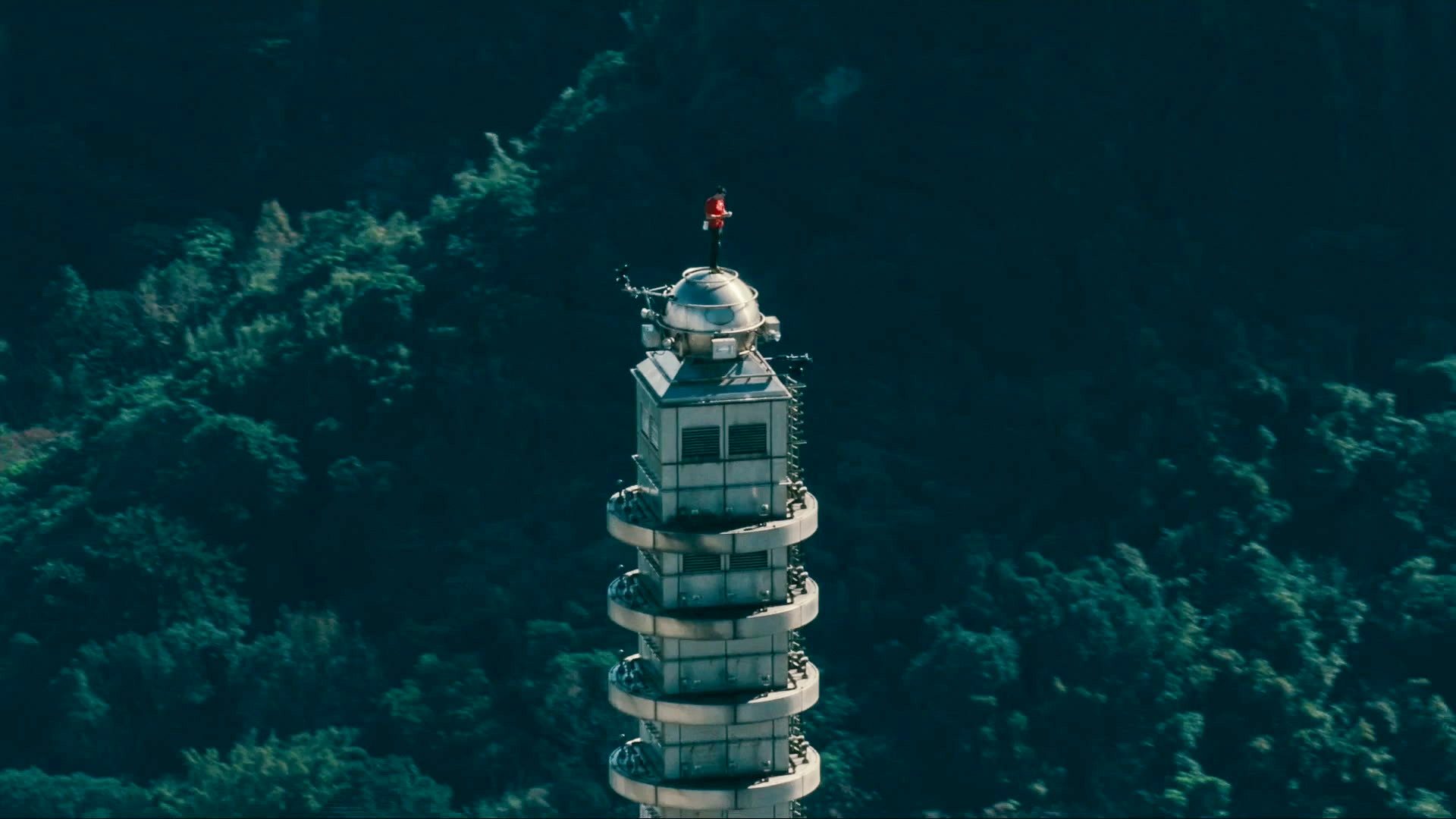
At the very top, however, no operators were present at all, ensuring a sense of sublimity as Honnold mounted the final stretch, high above the rest of the Taipei skyline.
“We had remote cameras on the top,” Smith says. “We didn’t want anyone up there to distract viewers from his feat. We also didn’t want Alex high-fiving his buddies at the top. We wanted to keep the spire entirely clean, to give you that sense of awe.”
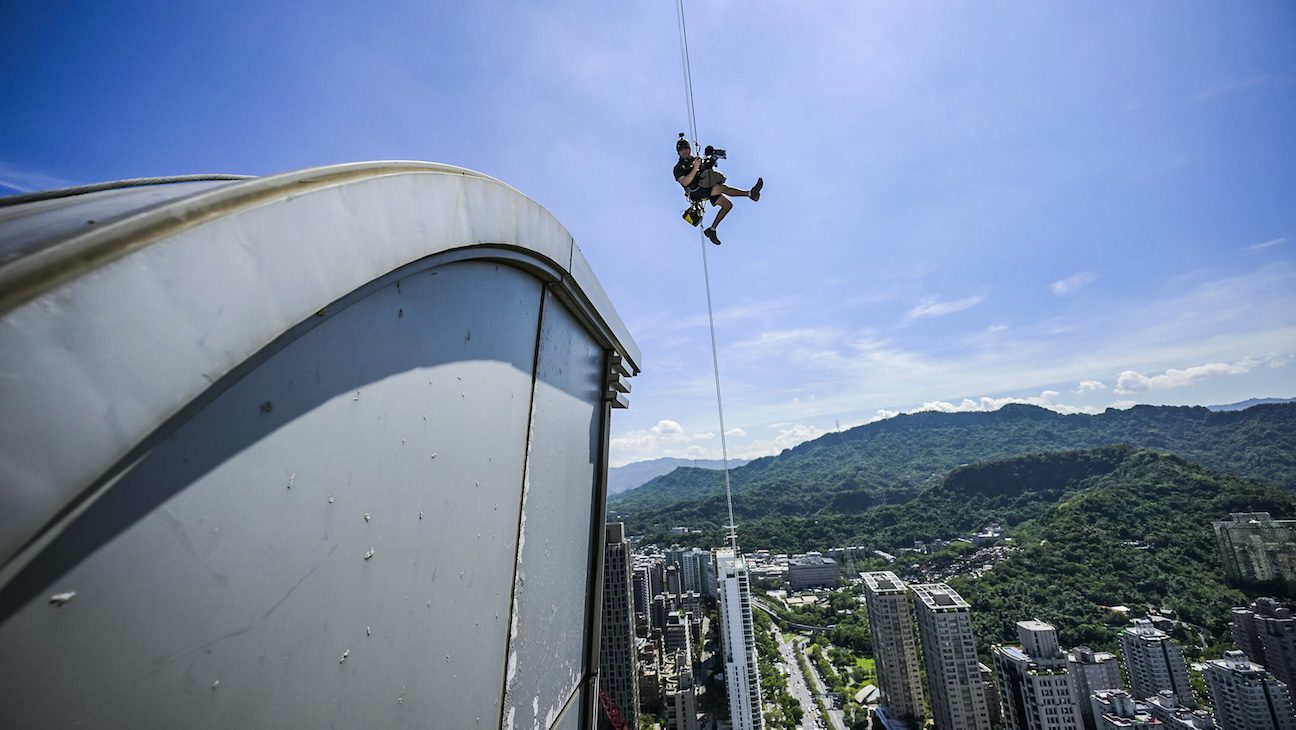
Much of the project’s technical ambition rested on the shoulders of lead rigger Waldo Etherington, who has worked intimately with Honnold since The Devil’s Climb. Etherington co-designed the entire rigging system and oversaw the installation of every stationary and robotic camera attached to the building.
The most audacious element was a free-hanging cable dolly system that carried a camera operator nearly the full height of Taipei 101.
“We have a 400-meter run, requiring a 400-meter free-hanging haul (1,312 feet),” Etherington says. “I believe it’s probably the longest cable dolly run ever done. None of the kit is designed for spans that long, so there were a lot of nuances in designing and operating that system. And working with live TV is very different from what we normally do out in nature, because timing becomes much more important.”
Altogether, the production ran nearly five miles of cable up and down the building and back to the live broadcast basecamp on the ground — all invisible tech infrastructure supporting an event designed to feel naturalistic on screen.
There was one challenge no one on the production team anticipated until Honnold began practice climbs: Taipei 101 was dirty. Each New Year’s Eve, the building hosts an elaborate fireworks display that draws nearly a million spectators into downtown Taipei. Although the facade is cleaned regularly, no maintenance had occurred since January 1, and the hundreds of fireworks that been projected off the face of the building had left behind an oily residue.
“When Alex came to start practicing, he was like, ‘Oh wow, these holds are pretty grimy,’” Smith recalls. Etherington’s team responded by rappelling the entire route, hand-cleaning every potential handhold with towels and baby wipes. “That alone was something to see,” Smith says.
Coordinating drones and a helicopter around one of Asia’s tallest buildings required close collaboration with Taiwan’s Civil Aviation Authority. The solution was strict separation: drones covering the lower sections of the building, handing off to a helicopter hovering at greater distance and altitude.
“You don’t want helis and drones in the same airspace,” Smith says. “We played it super safe.”
Honnold, for his part, was characteristically unfazed. His only stipulation — which the producers insist was unnecessary — was that no downdraft blast his direction while climbing.
The presence of office workers waving and taking selfies inside the building as Honnold climbed past them sparked anxiety among some viewers during the broadcast. Originally, the production had considered clearing the building entirely.
“One part of the plan was to create an exclusion zone along his whole route,” Smith says. “We were prepared to do that. But Alex said, ‘No, it’d be fun to have people in there.’ It was his call, and he was totally comfortable and happy to see all those people.”
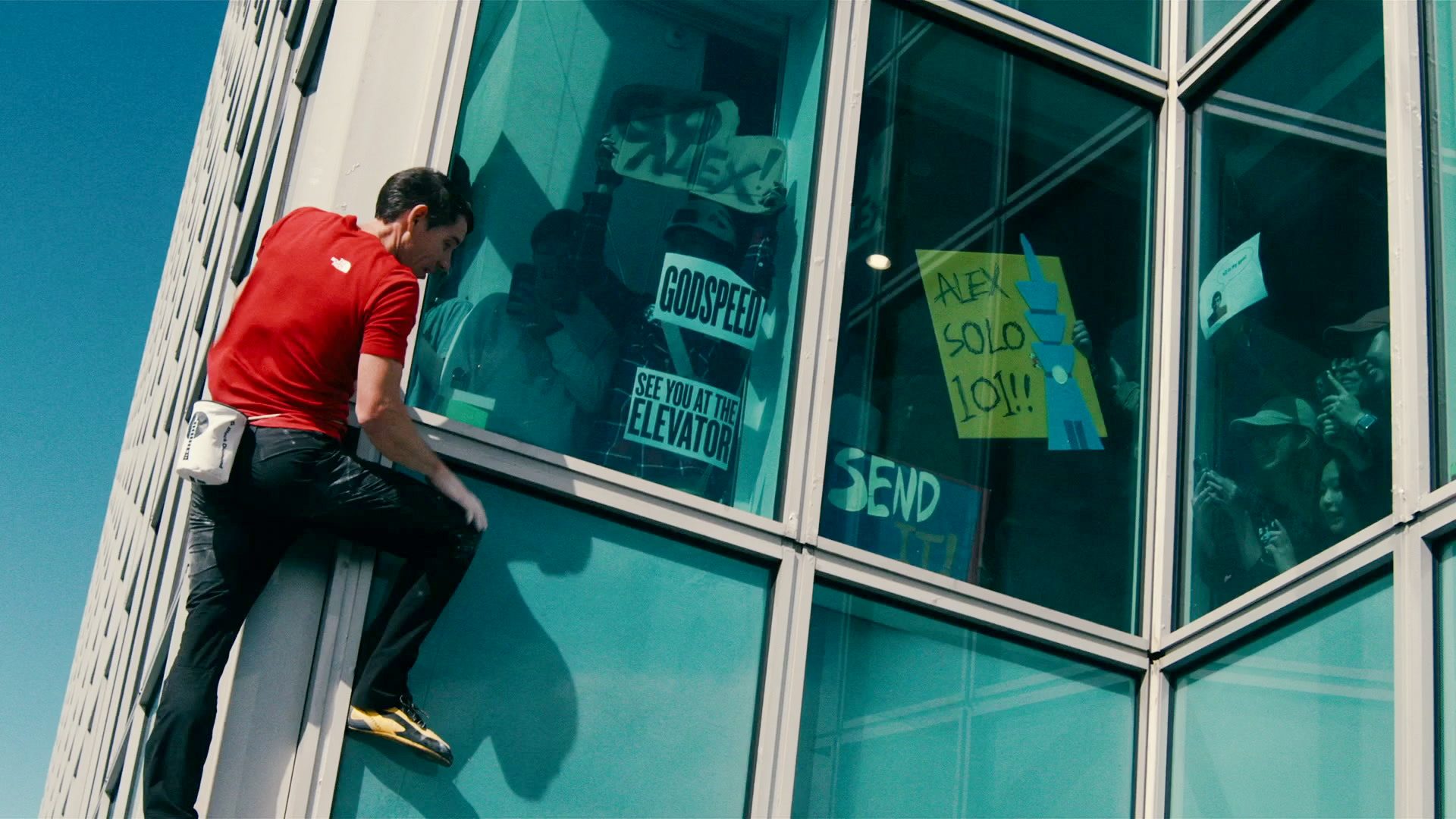
The same applied to audio. An earpiece was initially proposed strictly for emergencies — earthquakes, sudden weather changes — but Honnold readily agreed to stay connected and converse occasionally with the broadcast team below.
“We talked a lot with him about audio and how connected he wanted to be,” Mussman says.
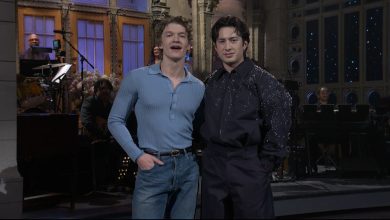
For ESPN veteran Elle Duncan, Netflix’s new on-camera host for all live events, Skyscraper Live represented a sharp departure from traditional sports broadcasting.
“This wasn’t like covering a game,” Duncan says. “There was no blueprint. It was about storytelling — about helping people understand what kind of person would do something like this, and the true mastery he has of his craft.”
After drawing 6.2 million viewers worldwide over its first two days, Skyscraper Live has remained in Netflix’s global Top 10 since. The event has far exceeded Netflix’s early expectations for both views and engagement when it originally greenlit the project, sources familiar with the project say.
“What a privilege it was,” Smith adds, “to see an elite athlete do their thing at the most amazing level — and to even have him narrate it for us a little along the way.”
HiCelebNews online magazine publishes interesting content every day in the TV section of the entertainment category. Follow us to read the latest news.