[This story contains spoilers for Avatar: Fire and Ash]
Sigourney Weaver may have built her career as Alien’s Ripley, one of the great heroines of American blockbusters, but the three-time Oscar nominee has spent decades avoiding any semblance of typecasting. Of late, Weaver has pulled off vivid performances in larger-than-life supporting parts, often with a villainous bent — as in Paul Schrader’s Master Gardener, or Bryan Fuller’s Dust Bunny, a well-reviewed new indie thriller that hit theaters earlier this month.


It’s genuinely moving, then, to see Weaver reclaim the hero mantle at the climax of Avatar: Fire and Ash. It’s already a fascinatingly physical and emotional performance, portraying the 14-year-old Kiri, adopted daughter of Jake and Neytiri (Sam Worthington and Zoe Saldaña). But here, she gets to tease an innocent romance with Pandora’s teen human dweller, Spider (Jack Champion). She gets the big, superhero-esque backstory reveal, in which she learns that, in absence of a father, she’s descended from Eywa — Pandora’s Great Mother, or guiding force of energy and consciousness. And she gets to vanquish the villain, finally summoning her powers at the perfect moment to save her mother from the power-hungry Mangkwan leader Varang (Oona Chaplin).
At that moment, Kiri says, “Leave my mother alone, bitch!” — an evocative echo of one of Weaver’s most famous lines in the sequel Aliens, directed by James Cameron nearly 40 years ago. We ask her about that and more, in what’s amounting to a rich full-circle moment in the career of one of the greats.

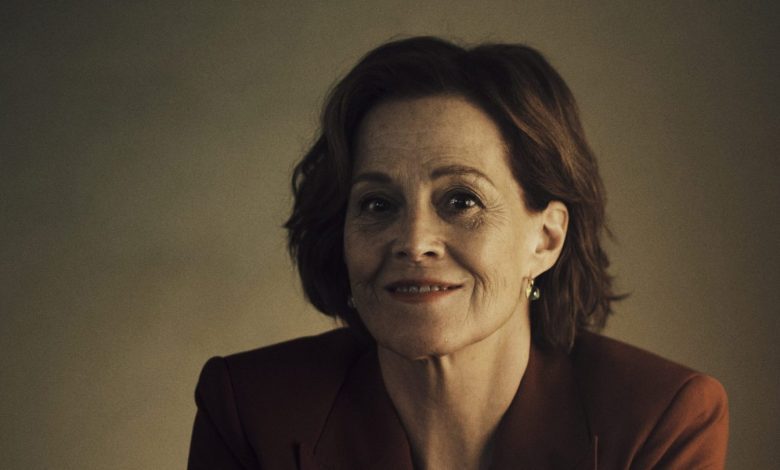
Sigourney Weaver as Kiri in Fire and Ash.
20th Century Studios.
How would you describe Kiri’s arc in Fire and Ash?
She comes of age. All the kids do because mom and dad are busy, they have their own issues going on. We’re suddenly thrown out on our own and we are forced to learn to trust ourselves and each other and encourage squabbling. Kiri is put in a very uncomfortable position of having to do something she doesn’t feel she can do, doesn’t want to do — she doesn’t want to risk her best friend’s life. She has to just follow her instincts. It’s almost like she doesn’t have time to continue to angst about feeling different from everybody else, like she can’t really get her feet on the ground until she knows who her father is — until she knows just more about what’s going on with Eywa. She has to give up all of that and help her family and survive. They pass through this crucible, and I think it changes them.
That moment where Kiri finally gets to protect Neytiri is a big deal for me. At the beginning of [Way of Water], I physically felt that Kiri was just sort of, “Mom! Stop!” Having a teenage daughter is a very different experience. I probably did shock Zoe. I heard her say to a reporter, “If I said red, she said blue. If I said yes, she said no.” Anyway, that moment where I can finally protect my mother after so many years of her protecting me was very meaningful to me…. Her pain is real. I think it’s her trying to make sense of a world and her place in it when nothing she sees does make sense. Children see things and feel things so strongly.
In that climactic scene where she does save her mother, Kiri says to Varang, “Leave my mother alone, bitch!” The audience applauds. I heard a bit of a Ripley-Aliens echo there, right?
People are very excited to bring that up, and I was shocked because that’s the last thing in the world that was on my mind. I intellectually in my shoulder recognized that it was kind of an echo that Jim was trying for that kind of moment. But I was so totally in the Kiri space, that when people say, “Were you thinking of that moment in Aliens?” I’m like, “Well, that’s not how we work. That’s not how acting works.” That would’ve completely confused me. I’m so glad I didn’t. I sensed it, but I didn’t really ever think about it.
Thinking about the way you film these movies: You get a couple of vivid scenes of Kiri in a trance-like state, trying to reach Eywa but coming up against this enormously powerful forcefield. How did you play them? What were the conditions of those scenes?
We shot each one twice. We had our usual empty volume [stage], and they put the forest in right near where the computers are, which was unusual, because they needed a wind machine. One of the thrills of acting in this way is you kind of feel like a diver at the Olympics. You just sort of fly in, “This is the scene, let’s go.” Then you have to start at a very high pitch. The first one, I just had to imagine all of that — and the fact that it got worse and worse and worse and worse. And in the second one, I flew back to do it. I didn’t have the kids with me that time.
I love to see it in the film. You don’t get that feeling of necessarily where it’s all going to end up except that it’s in the script. It was a whole runthrough of Kiri’s whole life in a way, of feeling at home in the forest and having faith. And then her one very simple goal, to feel that Eywa was on the other end of her conversation, is withdrawn — it’s that withdrawing that is heartbreaking to her and throws her into this cycle of, “I’ve been ripped away from the fabric of the Navi life.” That’s why I love acting. Jim could say, “Do this scene at a café,” or “Walk through the forest” — the scale is so big that you really can’t figure these things out intellectually. You have to just let your stomach take over and experience it.
That’s why I ask about those scenes. They’re incredibly emotional, and there is so much going on visually in the final cut, but you have to play them out in an empty room.
No, it’s true. For a second you go, “Oh, I’m in an empty space.” Then that quickly recedes because that is such a safe place for us. It can be anything. Jim does give you indications — the occasional tree thing or the wind was very helpful — but especially once you’ve done a good bit of the movie, these things play themselves in a way. You can just go.
This film develops the bond between Kiri and Spider. How did you work on that with Jack Champion, who of course was still a kid when these started filming?
That scene where I say, “You’re perfect just as you are,” we had to be very delicate about that scene because it included a kiss. Obviously I wasn’t going to kiss Jack, who was 14 or 15, in real life. We asked Jack to pick someone I could kiss and he did. Then I imagine when I wasn’t there, they picked someone appropriate for Jack. That concern about all of that, which is quite legitimate, was going on. And I’m glad the scene survived, because when I saw it, I believed it. It’s so genuine between the two of them and any concern about Jack’s real age and my real age, I think there’s no room for it there.
Kiri in ‘Fire and Ash’
Courtesy of 20th Century Studios
And otherwise, you guys are acting in the scenes together.
Yes, it was only that one moment. I thought Jack was just terrific in the film. It’s such an interesting role. It’s also the role that Jim Cameron put in after he’d written two, three, and four. He had told me about this human boy before he started writing it, and I guess at a certain point he went for it. It just drives the whole film, that incredible tension in a mixed-race family where the parents have completely opposite feelings and the children don’t have those feelings. I thought it would really resonate in our complicated world.
It was like a little vacation whenever we had a scene because we’re frolicking. It’s kind of a time off for me because she’s so deliriously happy; she enjoys his company so much. I don’t know how tall I’m supposed to be, like 6’4, and he’s what, 5’8 or something, and I tower over him — and you can really see it in the film. Being a tall woman myself, height doesn’t matter at all. I love that we’re mismatched. It’s perfect.
Kiri also learns the truth about her origins, and her birth connection to Eywa, in one of your heavier moments to play. It’s the kind of scene the audience knows will come at some point, but is such a massive shock to the character.
It was originally going to be brought up in two and Jim rewrote it for three, and I think because she’s a little further along, a little older. The way I experienced it, shooting it right alongside two, I was completely hysterical — because filming it came very soon after my saying my father was a brave Na’vi warrior and blah, blah, blah. The making fun of me and who my father was, that really struck me to the quick. In the movie, obviously, this is more because I’m having seizures — they feel they have to tell me something.
Especially at that age, the last thing you want to have happen is some discussion of your parenthood where everything you anticipated is wrong and you’re not like everybody else, and there’s no refuge in these facts. The avatar of your mother in a tank — she loves her mother, but it is a really kind of weird hand to get, and she’s hoping that something will come up that they haven’t told her because maybe the news is exciting. It’s like, “Oh, I think my father is a knight,” or whatever it is. Then you find out that you don’t have one at all. It’s the worst possible news that makes you feel like an insect or a clone.
How did you approach playing her big hero moments? What do they signal for Kiri in this huge arc of these last two films?
She senses that there’s help from Pandora, from the roots, from the creatures, and I think her emotional state is so high, so filled with adrenaline and so full of fear that the mind has stopped working. So she doesn’t go, “Wow, this is really strange. I’m not sure I want to do it.” It’s just all gut. Her gut makes it happen. The mind is like, “What are you doing?” They do grow in intensity, but I love the fact that she needs Neytiri and Spider at the end to really have that moment. As far as I can tell, she’s still this Na’vi girl. We don’t really know. And I still don’t know what the deal with Eywa is, except I don’t see any evidence of her having a precious place in her heart.
Every animal can do special things — a frog can jump, all these things — but I don’t think she ascribes meaning to it. It’s like a talent, something that comes out in moments of great stress. I don’t think she’s standing back and putting anything together. So sometimes I feel like the audience is ahead of me. “What does that mean?” — I try not to have those conversations. I don’t want to hear that stuff.
You’ve talked about what you had to tap into, from your own childhood and time in this industry, to essentially play a teenager again. On the other side of these films, what is it like to watch that work back?
At the start of this, we were postponed. I had had a year to just be with myself and find the roots of my 14-year-old. I remember that time and how I felt in my body very, very specifically. I was very shy and I was very tall — as tall as I am now when I was 11, complete freakazoid and wanting to disappear one moment and then having a wonderful time the next. That was a surprisingly fertile base for germinating Kiri. The first days — and this is what all actors do, but basically without any costume or anything — I had to go into the volume [stage]. One always prepares for months for roles as complex as this, but you have to go into neutral. Honestly, I just hoped and prayed that Kiri would come into me.
The more we worked, the more I could depend on that. That always happened. Jim said right before we started, “I hope you can do this.” (Laughs.) I’m sure we were all feeling that way. But anyway, it was hard. The beginning was hard. You have to get out of your way. Your mind has to kind of go into a drawer and your instrument just knows exactly what to do. That’s why I think it’s hard for people to talk about acting because it sounds like witchcraft or something, but it’s not. If you just let your body do it, it will go. It’s the same kind of liberation with these physical parts especially.
I love seeing you play the hero again. But you have another film out, Dust Bunny, and you’re wonderful in it — but the New York Times accurately described your character, Laverne, as “pungent and terrifying.” You’ve made a habit more recently of injecting humanity into villains.
It’s been very meaningful to me to meet so many young journalists — they look about 12 (Laughs.), and their questions are so smart and so personal, and I think Kiri gives a home to a lot of them. She doesn’t feel like she fits in anywhere. I feel very lucky that I get to constantly, with my choices in my career, do the antidote of what I did before. So after you play a character like Laverne, you do yearn to play the other side. I feel like they kind of neutralize each other in me, in a nice way. It’s so easy to get pigeonholed into those parts, and I’m so glad that I made it such a high priority to get away from whatever I had just done — go to the far side of the planet and do something completely different.
What was so hard about this Dust Bunny character? You said it was one of the hardest for you to figure out.
I think because what [Bryan] wanted was not my first instinct. My first instinct was more Elaine May, and he wanted something much more complicated and not easy to reduce down to someone who wasn’t really in control of how they were behaving. It was scarier than my instinct. By the end, I could have killed her, because I felt like I was saving his life. That’s what I was there to do. And it’s a dark place, but she was fine with it.
It must be an interesting experience having a movie that’s projected to gross upwards of $1 billion, and then another movie that is fighting to get every person into the theater that you can get. That’s kind of the movie business in a nutshell right now.
It really is. And it’s my career in a nutshell. (Laughs.)
HiCelebNews online magazine publishes interesting content every day in the movies section of the entertainment category. Follow us to read the latest news.