It’s Official: Netflix to Acquire Warner Bros. in Deal Valued at $82.7 Billion

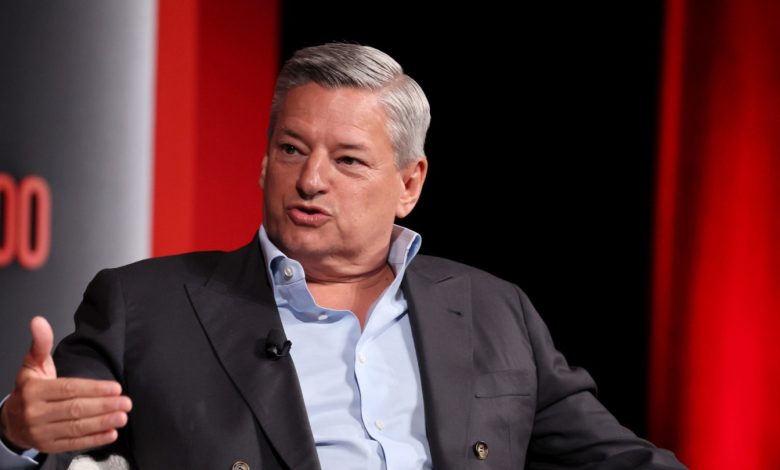
Netflix, run by co-CEOs Ted Sarandos and Greg Peters, has agreed to buy Warner Bros. in a megadeal valued at $82.7 billion. Under an effort nicknamed “Project Noble,” the streaming giant’s leadership secured $59 billion in financing from a consortium of banks to assemble the deal.
Netflix says the buy would give users more choice and let it “optimize its plans,” it will also expand its studio operations, while creating better value for talent and shareholders, with $2 billion-$3 billion in annual cost savings. The deal proposal has a break up fee of $5.8 billion, meaning that if the acquisition is scuttled in any way Netflix still has to pay Warner Bros. Discovery those billions.




The companies revealed the acquisition early Friday, altering the course of the entertainment business. Netflix said that it expects to maintain the current operations of Warner Bros. “including theatrical releases for films,” though specifics aside from topline deal numbers remain scarce. And that may be the focus of opposition to the acquisition as the dust settles on the announcement.
Netflix also made its pitch to filmmakers and creatives, writing that “by uniting Netflix’s member experience and global reach with Warner Bros.’ renowned franchises and extensive library, the Company will create greater value for talent — offering more opportunities to work with beloved intellectual property, tell new stories and connect with a wider audience than ever before.”
WBD shareholders will receive $23.25 in cash and $4.50 in shares of Netflix common stock for each share of WBD common stock, with the linear networks business, including CNN, TNT HGTV and Discovery+ still set to be spun out. That move is now expected in the third quarter of 2026.
“I know some of you are surprised that we’re making this acquisition, and I certainly understand why. Over the years, we have been known to be builders, not buyers,” Netflix co-CEO Ted Sarandos told Wall Street analysts on a conference call Friday morning. We already have incredible shows and movies and a great business model, and it’s working for talent, it’s working for consumers and it’s working for shareholders, but this is a rare opportunity and it’s going to help us achieve our mission to entertain the world and to bring people together through great stories.
“We built a great business, and to do that, we’ve had to be bold and continue to evolve,” he continued. “Remember, we started off as a DVD by mail company, then we moved to streaming, to producing original content, live programming from a US-centric business to a global business. In a world where people have so many choices, more choices than ever how to spend their time, we can’t stand still. We need to keep innovating and investing in stories that matter most to audiences, and that’s what this deal is all about.”
“This acquisition will improve our offering and accelerate our business for decades to come,” continued Greg Peters, co-CEO of Netflix. “Warner Bros. has helped define entertainment for more than a century and continues to do so with phenomenal creative executives and production capabilities. With our global reach and proven business model, we can introduce a broader audience to the worlds they create—giving our members more options, attracting more fans to our best-in-class streaming service, strengthening the entire entertainment industry and creating more value for shareholders.”
“Today’s announcement combines two of the greatest storytelling companies in the world to bring to even more people the entertainment they love to watch the most,” said David Zaslav, CEO of Warner Bros. Discovery. “For more than a century, Warner Bros. has thrilled audiences, captured the world’s attention, and shaped our culture. By coming together with Netflix, we will ensure people everywhere will continue to enjoy the world’s most resonant stories for generations to come.”
Netflix has been described by Wall Street analysts as the winner of the “streaming wars.” And now, it is at the Hollywood gates and ready for its latest conquest, even if it is expected to face heavy regulatory scrutiny. The news came after reports that it was in exclusive talks with Warner Bros. Discovery to acquire its streaming and, ironically, studios business.
Not only is it understood to have made the highest offer in terms of financial valuation, a Netflix deal would also allow WBD to go through with the planned separation of its networks business and allow WBD CFO Gunnar Wiedenfels to become CEO of that Global Networks business.
Why is Netflix buying Warner Bros. and HBO? “Above all, the flow of new content which drives the majority of Netflix engagement,” Wolfe Research analyst Peter Supino wrote in a recent report. “Content released in the last year makes up only about 5 percent of the titles on Netflix but drives over 20 percent of Netflix viewing, reflecting that Netflix engagement increases/ decreases when content spend goes up/down.”
Bank of America analyst Jessica Reif Ehrlich, in a recent report, described the auction of WBD this way: “The global media industry stands at the precipice of historic transformation, with WBD positioned at the epicenter.”
And she argued that Netflix sealing a deal for WBD’s studios and streaming operations would allow it to kill three birds with one stone. “The bidding war for WBD’s streaming and studio assets reflects the economic reality of the 2025 media environment that mid-sized legacy media studios/companies can no longer compete with the unit economics of Netflix or the ecosystem of large tech players, such as Amazon,” she explained. “Ultimately, an acquisition may be existential for both Paramount Skydance and [Comcast’s] NBCUniversal, and therefore, aside from potential direct financial benefits, an acquisition by Netflix could potentially be killing three birds with one stone – as WBD would be housed within Netflix and Paramount Skydance and NBCU/Peacock would, in our view, have difficulty remaining competitive.”
Morgan Stanley analyst Benjamin Swinburne has previously also highlighted the intellectual property that Netflix would get its hands on in a WBD deal: “Perhaps most interesting to Netflix, it owns or has exclusive rights to several iconic franchises that could be exploited for decades to come – including DC Comics, Harry Potter, and Lord of the Rings. Finally, it brings talent relationships, production assets, and global distribution scale.”
The same is true for HBO and HBO Max. “HBO brings its own set of IP, built over the past few decades, with HBO original series,” Swinburne highlighted. “It also has a brand still largely synonymous with prestige TV. HBO has also largely made the pivot from linear distribution to streaming, implying Netflix would have minimal exposure to legacy TV headwinds. We estimate only 10-15 percent of its roughly 130 million global subscribers are still signed up through wholesale [pay TV] packages.”
The biggest hurdle for a Netflix-WBD combination is widely seen as being regulatory concerns. But that is more of a headache for the streamer rather than WBD.
Even before news of the exclusive talks, Bernstein analyst Laurent Yoon argued that going with Netflix’s takeover bid was a win-win for the seller, given reports that the streamer has offered a $5 billion break-up fee in case the deal can not be completed. “WBD faces little downside – at least one worth taking,” he wrote. “Either they get acquired by Netflix – 85 percent cash! – or they walk away with free capital to fund the next phase of growth. And more than $5 billion is enough to produce more than 20 Superman-scale blockbuster films. That’s not a bad outcome either.”
Many in Hollywood are fearful of the deal, with Cinema United saying in a statement overnight that “the proposed acquisition of Warner Bros. by Netflix poses an unprecedented threat to the global exhibition business.”
“The negative impact of this acquisition will impact theatres from the biggest circuits to one-screen independents in small towns in the United States and around the world,” Cinema United president and CEO Michael O’Leary said. “Cinema United stands ready to support industry changes that lead to increased movie production and give consumers more opportunities to enjoy a day at the local theatre. But Netflix’s stated business model does not support theatrical exhibition. In fact, it is the opposite. Regulators must look closely at the specifics of this proposed transaction and understand the negative impact it will have on consumers, exhibition and the entertainment industry.”
The Directors Guild said that the proposed deal raises “significant concerns.”
Now Hollywood will have to take stock of a megadeal that promises to change the landscape in a way that no deal before it has.
HiCelebNews online magazine publishes interesting content every day in the celebrity section of the entertainment category. Follow us to read the latest news.