Maggie Gyllenhaal Loved Those ‘The Bride!’ Test Screenings: “The Fantasy of It Being Some Horrible Thing Is Inaccurate”

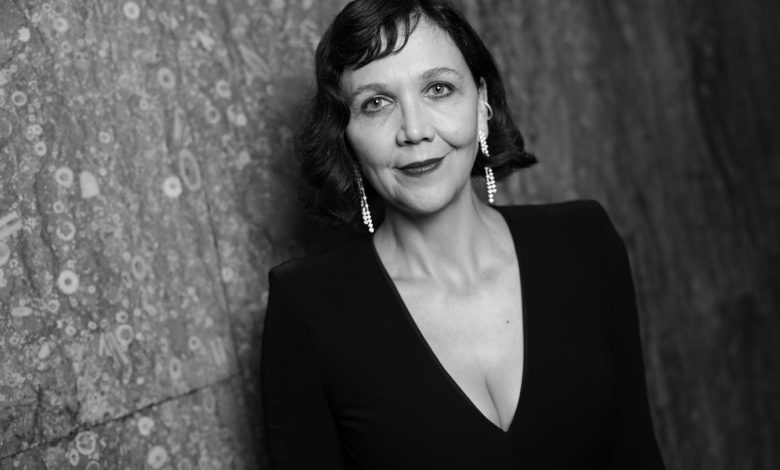
“What do you mean by wild?” Maggie Gyllenhaal has been hearing a lot of reactions to The Bride! like mine lately. The actress-turned-filmmaker understands that label being used for her punk-infused, sensual and decadently designed revisionist take on Mary Shelley’s Frankenstein and James Whale’s subsequent 1935 classic film Bride of Frankenstein. She made it with what she describes as great freedom, the “space for wild and surprising things to happen.” This was important to her from the jump. But the final product is “very, very considered,” she adds.
“I do constantly get the response: ‘This is wild, this is new, this is in a different language, I haven’t seen anything like this before,’” Gyllenhaal explains over Zoom, a few days out from the film’s release on Friday. “But to me who made it, it feels like home. So it’s hard for me to sometimes process that, because I’ve been living inside of it for so long.”
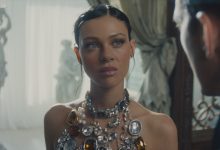
Gyllenhaal has been admirably open and candid about what that experience has been like. She’s spoken of her tight bond with Jessie Buckley, whose first Oscar nomination came for Gyllenhaal’s debut feature, The Lost Daughter — a razor-sharp indie that also scored Gyllenhaal an Oscar nom for best adapted screenplay, and several wins at both the Gotham and Spirit Awards — and who plays both The Bride and Shelley herself as women bursting with energy, rage, desire and powerful intellect. She’s spoken of learning how to work with IMAX and various other formats befitting large-scale filmmaking. And she has discussed her extensive back-and-forth with Warner Bros. chiefs Michael De Luca and Pamela Abdy, taking in feedback both from the studio and test screenings to allow her $80 million-budgeted film to both land with a larger audience while staying true to her artistic vision.
So when Gyllenhaal begins our interview by posing a question, it’s a reminder that this is the stuff she loves: talking through her ideas, her process, the thrilling tension of stepping into an entirely new space as a director — and, of course, how people react to her movie. “I guess it’s not quite born yet, right?” she says with a smile, as we get going. “I have a couple more days.”

Christian Bale as Frank and Jessie Buckley as The Bride in The Bride!
Courtesy of Warner Bros. Pictures
There is a certain grammar that you’re expecting when you step into a movie with a budget and pedigree like The Bride! has. Pretty immediately, especially within the movie’s first five minutes, you really intently do away with that.
It’s true. I mean, I love the feeling, personally, of going into a movie and being pushed off a cliff into the movie as opposed to the slow “get used to it.” I like the feeling of: Sink or swim, come with us, join in, it’s a roller coaster, put your seatbelt on — the roller coaster’s starting. There’s a real comfort in using rhythms and grammar that we know and that we love — and I do that, but I think a lot of that grammar was made so long ago by people with a very different experience of the world than me. Sometimes when the person at the helm has a different experience to the world — being a woman — I think that the language will shift and change.
Christian Bale has said that when he first got the script, he assumed it was the wrong script because thought it was a smaller indie, based on how daring it felt. Did you have a sense of it being risky in that way, in terms of scale versus what you were actually making?
This is what this movie cost. Different movies cost different things with different actors and IP and scale — and this is what this movie costs. Warner Bros. has been really brave in supporting people with unusual and singular visions, cinematically and not repeating the same work over and over again.
I listened to your conversation with Ryan Coogler, which I could have listened to three more hours of. It felt like a real alignment in that Sinners is also an obvious example of working with that kind of scale and making something that feels totally singular to the artist.
Yeah, exactly. You can keep making the same movie over and over again, or you can look for different points of view, people with different things to say and explore. I was thinking the other day, we say in the beginning of the movie, Mary Shelley wrote Frankenstein on a dare. This movie is a kind of dare. Can you step into a new language, into a new grammar? Can you try something new? What if it turns you on? What if it excites you in a way that you haven’t felt before? Can you take it?
Mary Shelley is a character in this film, communicating with The Bride in a subconscious way. She’s very much depicted through your lens, obviously, but I’m wondering how you thought about her when writing her dialogue — I know you hadn’t seen Bride of Frankenstein or read Frankenstein until recently, when you started thinking about doing this.
I read it and I loved it, — of course, obviously, here we are — but I also literally closed the last page and had a secret fantasy or wish — or I don’t know, a question. Is this all that Mary Shelley had to say, or was this all that was publishable in 1819? Were there other things that might’ve been on her mind as a woman, as a really radical person at the time that she wasn’t able to write down, or as we say in the movie, wasn’t even able to allow herself to think? Those were the places that I started the script from — my own imaginings of what those things might’ve been. And the things that were on my mind and the things which at this very moment are very, very current. I mean, it is kind of wild that those Epstein files were opened last week. It’s all on the tips of all of our tongues and all of our minds, and it’s very much at least a piece of what this movie is about.
The Bride of Frankenstein is all about possession. Him possessing her, obviously, but also this idea of, What are the secret things in all of our minds? Mary Shelley, the way that she bursts out of the Bride’s mouth or invades her dreams, it’s almost like the unconscious. It’s like the things that we can’t control that burst into our minds anyway, and that really need some paying attention to. I also do have someone in my life very close to me who has Tourette’s, and at the time that I was writing this, I was thinking a lot about that. There’s an aspect of the Bride that has something uncontrollable inside her that is bursting out … . If I’m imagining that Mary Shelley had a whole lot more to say, then sometimes there are five words where there could be one, because again, the levee is bursting with all of Mary’s excitement and intellectual energy, and it’s all really a laser beam.
What did you learn about yourself as a filmmaker coming off of The Lost Daughter, and into this movie — which, again, was made under very different conditions?
I speak a language that I didn’t speak when I started, and I love it. It was terrifying. The scope of responsibility came with a kind of terror that is very hard to bear and wear. But I don’t think the movie could have been made without it, and I wouldn’t wish it away, but I was definitely learning every day — and also working with the studio, which I had never done before. I was completely left alone on The Lost Daughter — nobody. It was COVID when we shot and when I cut, we would send it off, and they’d give us some notes. We’d be like, “Yeah, no.” (Laughs) And nobody cared because it was a very small investment.
When I made The Lost Daughter, I noticed as it came out that we hit a little vein because it was a little movie. I think we hit a vein by being very honest about something that nobody was talking about. What was on my mind after that was, “Well, if I’m very honest about something else that nobody’s talking about — say, the monstrousness inside of us — but I do it in a much bigger way with scope, if I build a rollercoaster ride that’s fundamentally based on something honest, will it hit a bigger vein? Could there be blood all over the room?”
Maggie Gyllenhaal winning the Spirit Award for best director for The Lost Daughter.
Photo by Rich Polk/Getty Images for Piper-Heidsieck Champagne
You mentioned feeling terror earlier, and there is a kind of education in how you work with a studio through something like this, especially in the pursuit of honesty. There’s a real vulnerability in that too, right?
That honesty was something that Pam and Mike were totally on board with the entire time. They’re saying, “We’re challenging you to make this clear, this clearer and this clearer.” Sometimes my original response was, “It’s clear.” I love the feeling of having to tolerate not understanding something briefly, but maybe that’s not always totally a hundred percent the grammar of a much bigger movie. I felt seen and heard by that studio. The places where they nudged me to make the movie accessible to a wider audience, I truly appreciated … . I remember when any conversation with the studio required a deep breath and making sure I had a cup of tea. And then it was like, “Oh, every day we’re talking. It’s all good.”
You’ve made some headlines talking about the test screenings, and I’m just really interested in that process for you on a granular level. What was it like to engage with that kind of rolling, generalized feedback?
With this movie, you walk into a mall, you have no idea where you’re going to see, and then you see this. We know it’s unusual. It’s wild. It’s different. It’s new. But at the time, they were like, “… Frankenstein?”
When there’s consensus, it’s extremely helpful. I don’t know how often all that stuff is usually in the press. I guess I don’t really care, but that the fantasy is that it should be born perfect. The idea that you’re working on something, asking for feedback, going back and working on it, thinking it through. To ask, “What is that?” — to me, that just seems like, “Have you ever made anything?” The fantasy of it being some horrible thing is inaccurate. Me and Pam, we love each other. We’re partners here, and so try and make it whatever you want, but you can talk to us and we’ll tell you what it’s like.
For instance, in the beginning, in an early screening in New Jersey, I hadn’t framed Mary Shelley at all. Many people were like, “We don’t know who that is.” You don’t have to know much about Mary Shelley in order to watch the movie — all you need to know is that she wrote Frankenstein — so I was like, “Cool, let’s make it super clear. Let’s just tell them.” So I loved [the test screenings], honestly. They were super vulnerable — so vulnerable, so scary, so living on the fucking edge. But I was like, “OK, let’s go.”
Did you talk to any filmmakers about the process, since it was so new for you?
You know who was so amazing? Adam McKay. He was one of my very first supporters. He saw an early cut, and he really saw it and saw me, and it felt great. I talked to Greta Gerwig, who was super helpful and great, and she gave me one great — no, maybe I won’t share that. (Laughs)
What a tease!
I know, sorry, sorry. But she was so helpful. And Denis Villeneuve, he was also a real lover of the movie. He wrote me: “OK. I saw the beast!” I definitely have called on experts and people who I respect for advice, for support, for notes, all the way through the process. We have to do that for each other.
We’ve spoken a lot about the deeper ideas you’re getting at in The Bride!. But it also often plays like a comedy.
If you’re going to get into the monstrousness, you have to also make space for the joy, for the celebration. The talk about this movie as punk, I think, is really about not so much the kind of music, even though half of Sonic Youth plays on the score (Laughs) — but also it’s a celebration of not being able to fit in your box. It’s looking into the parts that are terrifying, monstrous, scary, horrifying, but it’s also delving into the pleasure that comes from acknowledging all of those parts of yourself.
If you have a tightrope you’re walking as a filmmaker, as a director of tone and of storytelling, why not pull from every genre you have access to in order to effectively tell it? Thinking about a movie like One Battle After Another, which I really admired — what genre is that? It’s post genre, and I think that might be kind of where we are, or at least what I’m interested in.
Does it feel strange to have this movie coming out amid all the WB sale talk? It’s the studio’s first release since the Paramount acquisition news became official. I’m wondering where you are at with that.
I am not an expert in this. I’m reading tweets like everyone else, but I will say this: I’ve heard our community, the film community, saying, “What is this going to mean for real movies in theaters that have a point of view?” If you’re rooting for movies like that, go see mine this weekend — for real! Just go to the fucking theater and let’s get behind real cinematic conversations and movies that have something to say in a big way. Let’s go. That’s my point.
Do you want to go back acting right now? Or do you feel firmly set on the director’s side of things?
Yeah. I feel like acting is a tiny piece of the whole puzzle. I recently made a short film, just a quick thing with Ellen Burstyn, who’s 93. Some of it takes place in a theater, and she was up on the stage and just started doing the scene, and I was like, “Oh, shit. I’ve got to read off with her.” In my head, I was like, “Are you going to really read the scene with her or are you going to half-ass it?” I did it like an actress. I read the scene with her from across through. I just jumped in and I was like, “Oh, it’s so fun acting — and acting with a great.”
But to be honest, my mind is on these incredible tools that I have had the opportunity to work with. So few women have had access to these tools, and when we do, we really do use them in a different way. I just started using them. I’m really interested in this concept of worldbuilding. I didn’t even know what it meant when we started this. For a lot of people it means, “Pan the camera over and show off your incredible VFX,” which is just not my thing. But I’m so interested in these tools that I’ve had the opportunity to start to learn about and use, and I want to keep using them. I feel like I’m just getting started.
***
The Bride! hits theaters on Friday.
HiCelebNews online magazine publishes interesting content every day in the movies section of the entertainment category. Follow us to read the latest news.