Neil Sedaka, “Breaking Up Is Hard to Do” and “Laughter in the Rain” Singer-Songwriter, Dies at 86


Neil Sedaka, the buoyant singer-songwriter and pianist who had No. 1 hits with “Laughter in the Rain,” “Breaking Up Is Hard to Do,” “Bad Blood” and, for Captain & Tennille, “Love Will Keep Us Together,” died Friday in Los Angeles. He was 86.
“Our family is devastated by the sudden passing of our beloved husband, father and grandfather,” his family said in a statement. “A true rock and roll legend, an inspiration to millions, but most importantly, at least to those of us who were lucky enough to know him, an incredible human being who will be deeply missed.”



First teaming with lyricist Howard Greenfield — a neighbor in his Brooklyn apartment building — while still in his teens, Sedaka scored his first hit as a songwriter in 1958 when Connie Francis recorded the duo’s “Stupid Cupid,” a peppy single that rose to No. 17 on the Billboard Hot 100.
They wrote several other hits for Francis, including 1958’s “Fallin’” and “Where the Boys Are,” the theme to the popular 1960 MGM comedy; the latter reached No. 4 in the U.S. and became her signature song.
The clean-cut Sedaka quickly cemented his pop stardom with a string of popular tunes that included “Oh! Carol” (No. 9), “Stairway to Heaven” (No. 9), “Run Samson Run” (No. 28), “Calendar Girl” (No. 4), “Little Devil” (No. 11), “Happy Birthday, Sweet Sixteen” (No. 6) and “Next Door to an Angel” (No. 5).
Sedaka and Greenfield’s “Breaking Up Is Hard to Do,” with a carefree, nonsensical opening — “Do do do, Down dooby doo down down, Comma, comma, down dooby doo down down, Comma, comma, down dooby doo down down” — proved irresistible to teens, enjoying a 14-week run on the singles chart and in the summer of 1962 becoming Sedaka’s first No. 1 hit.
“I was the king of the tra-la-las and doo-be-do’s in the ’50s and ’60s,” he told Reuters in 2010. “It had to have a very catchy tune, with a catchy beat that you can dance to.”
Between 1958-62, Sedaka and Greenfield would sell 25 million records, with 10 big hits in a row.
“First, his songs have clever lyrics and wonderfully infectious tunes,” The New York Times wrote in 1976. “Second, his melodies have just enough soft‐rock and rhythm and blues underpinnings to avoid bonelessness. Third, he leavens the cheeriness with sentimentality more innocent than crass. Fourth, he has remarkable voice — a sweetly mellow, evocative high tenor that shades imperceptibly into falsetto.”
Despite all that, Sedaka’s popularity and that of other American pop stars began to wane in the mid-’60s amid the British music invasion. He didn’t release an album for six years as singles including “Sunny,” “The World Through a Tear” and “The Answer to My Prayer” barely made a ripple.
When his label opted not to renew his contract in 1966, Sedaka took a break from singing and focused on songwriting. Over the next several years, he teamed with Carole Bayer to write “When Love Comes Knockin’ (at Your Door)” and “The Girl I Left Behind Me,” hits for The Monkees.
He and Greenfield also penned tunes for The Cyrkle (“We Had a Good Thing Goin’”) and Davy Jones (“Rainy Jane”). The 5th Dimension landed in the top 20 with “Workin’ on a Groovy Thing,” a tune he wrote with Roger Atkins. The Carpenters, Andy Williams and Shirley Bassey enjoyed success with “Solitaire,” a song Sedaka recorded and wrote with lyricist Phil Cody.
When his album releases in 1969 (Workin’ on a Groovy Thing) and 1971 (Emergence) didn’t generate much excitement, Sedaka moved to England in 1970 to change things up. After a chance meeting with Elton John in 1973, he signed with John’s fledgling label, The Rocket Record Co.
The move led to one of the most successful periods in Sedaka’s career. In 1974, Polydor Records released Sedaka’s Back, a collection of songs — some recorded with future members of 10cc — from three albums that had only been released in the U.K. It peaked at No. 23 on the Billboard 200 album chart and gave Sedaka his second No. 1 song when the lilting “Laughter in the Rain,” co-written with Cody, became a stateside sensation.
The following year, Sedaka scored again with the Rocket Records release The Hungry Years. It went gold in the U.S. and gave him another No. 1 with “Bad Blood,” featuring John on backing vocals. The LP also featured a new version of “Breaking Up Is Hard to Do”; rearranging it as a ballad, he breathed new life into the song and turned it into another top 10 hit and a Song of the Year nominee.
In 1975, Captain & Tennille recorded his “Love Will Keep Us Together” and featured it as the title tune on their debut album. The jubilant tune became the year’s best-selling single and was named Record of the Year at the Grammys. (Toni Tennille gave him nod by ad-libbing “Sedaka is back” in the song’s closing frame.)
“The crowning touch was winning the BMI award for Most Performed Song of the Year [for ‘Love Will Keep Us Together’],” Sedaka said in Bruce Pollock’s 1979 book, When Rock Was Young. “It was the dream of a lifetime. I mean, I’d been going to that BMI dinner since I was a kid. I got six awards in one year, including the Most Performed Song of 1975, beating out ‘Rhinestone Cowboy.’”
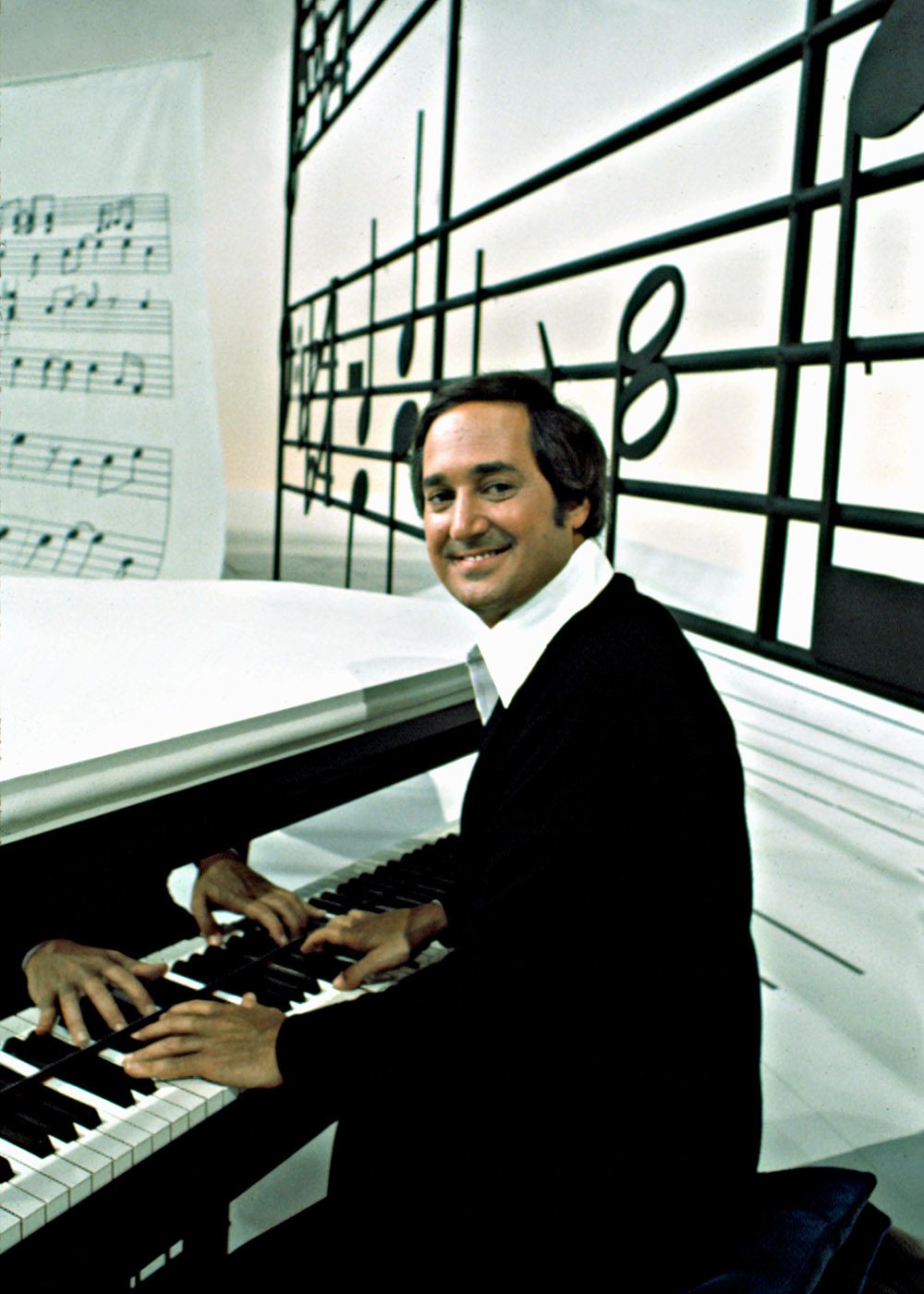
Sedaka was born in Brooklyn on March 13, 1939, and raised in the Brighton Beach section of the borough. His father, Mordechai, drove a taxi for 30 years. His mother, Eleanor, took on part-time work in an Abraham & Straus department store to pay for his first piano when he was 9.
“My parents told me that when I was an infant, I wouldn’t eat until the radio was playing music,” he said in the 2014 BBC documentary Neil Sedaka: King of Song.
In 1947, Sedaka landed a scholarship to Juilliard’s School of Music’s Preparatory Division for Children. “Without blowing my own horn, I have the musical training. I studied many, many years,” Sedaka said in a 2019 interview with The Morning Call newspaper. “Matter of fact, in 1956, Arthur Rubinstein, the great pianist, chose me [to be] on a radio program, and I won as the best New York City high school pianist. I was 16 years old.”
Sedaka’s mom wanted him to pursue a career as a classical pianist, but Greenfield, a budding poet, convinced him that they should write pop tunes together. They began working together in October 1952 when Sedaka was 13, and one point, they had written at least one song a day for 500 straight days.
In 1956, the pair approached Jerry Wexler at Atlantic Records, and soon, their songs were being recorded by the likes of The Clovers (“Bring Me Love”), The Cookies (“Passing Time”), LaVern Baker (“I Waited Too Long”) and Clyde McPhatter (“Since You’ve Been Gone”).
Meanwhile, Sedaka tried his hand at singing, joining forces with three Lincoln High School classmates to form the Linc-Tones. He went solo in 1957, but not before the group enjoyed some success with “While I Dream,” “I Love My Baby,” “Come Back, Joe” and “Don’t Go Away,” all Sedaka-Greenfield compositions. (The Linc-Tones would evolve into The Tokens, who hit pay dirt in 1961 with “The Lion Sleeps Tonight.”)
Over the next year, Sedaka released “Laura Lee,” “Ring a Rockin’” and “Oh Delilah,” all written with Greenfield. He didn’t cause much of a stir as a singer, though he performed “Ring a Rockin’” on American Bandstand. The songwriting team fared better, however, and landed a contract with Al Nevins and Don Kirshner at Aldon Music in the Brill Building.
Through Aldon, they arrived at the home of Francis, who was in search of a follow-up to “Who’s Sorry Now,” and presented her with a selection of ballads. “They played and they played and they played, and I was really falling asleep,” she said in King of Song. “I said, ‘Fellas, I don’t know how to tell you this, your music is beautiful, but it’s too educated, the kids don’t dig this kind of stuff anymore.’”
On a lark, Sedaka played “Stupid Cupid,” which he and Greenfield had written for another act. Francis told them on the spot she wanted it for her next record, and its success put the songwriters on the map.
As he and Greenfield continued working with the singer, Sedaka observed her writing in a journal. He wanted a look inside, but she refused, and that inspired him to write “The Diary.” Little Anthony and the Imperials recorded a version, but Sedaka’s take (he also played piano on it) got him a recording contract with Aldon.
Sedaka wrote “Oh! Carol” in 1958, drawing the idea for the title from Carole Klein, a girl he had dated at Lincoln. He encouraged her to join him at the Brill Building in Manhattan, the mecca for songwriters, and she did.
There, Klein joined forces with her future husband, Gerry Goffin, and as Carole King, she became one of the most influential singer-songwriters of her generation. (“Oh! Carol,” meanwhile, sold 3.5 million records, and he said his life changed when he received his first royalty check from that song, for $42,000.)
The year 1959 saw the release of Rock With Sedaka, his first solo album as a recording artist. “The Diary,” its debut single, charted, as did the second release, “I Go Ape.” It also contained Sedaka’s takes on “Fallin’,” “Stupid Cupid” and “Another Sleepless Night,” which Jimmy Clanton turned into a hit the following year.
“Howard Greenfield and I mastered the art of the 2 1/2-minute single,” he said. “We could tell a whole story from beginning to end [in that time].”
He eventually split with Greenfield and partnered with Cody, and “Laughter in the Rain” marked his big comeback, landing at No. 1 in 1975 in its 16th week on the Billboard Hot 100. “I went from making $30,000 a year to $6 million a year with [that] song,” he said.
A five-time Grammy nominee and member of the Songwriters Hall of Fame, Sedaka would write or co-write 700-plus songs and release more than two dozen studio albums during his career.
In 2005, Erik Jackson and Ben H. Winters conceived Breaking Up Is Hard to Do, a stage musical celebrating the songs of Sedaka, Greenfield and Cody. It has been performed in the U.K. and throughout the U.S.
Around that time, “(Is This the Way to) Amarillo,” a song he wrote with Greenfield that was first recorded by Tony Christie in the ’70s, became another huge hit for him when it was rereleased.
Survivors include his wife, Leba, whom he married in 1962; his children, Dara, a recording artist and vocalist for commercials, and Marc, a TV writer and film editor; and three grandchildren.
“I think the reason that my music is so special is it was a combination of show music, pop music, evergreen standards and rock. It’s like me and Phil Cody and Carole Sager and Howie Greenfield — we had a combination of all of those styles,” Sedaka said in his Morning Call chat.
“I saw Stevie Wonder not long ago on television and he was asked, ‘Who is your inspiration?’ And he said, ‘Neil Sedaka. They used to call me ‘Whitey’ in Detroit because I liked and played Neil Sedaka records.’”
HiCelebNews online magazine publishes interesting content every day in the music section of the entertainment category. Follow us to read the latest news.