Next Narrative Africa Fund Founder Akunna Cook on Why Hollywood Needs an Africa Strategy

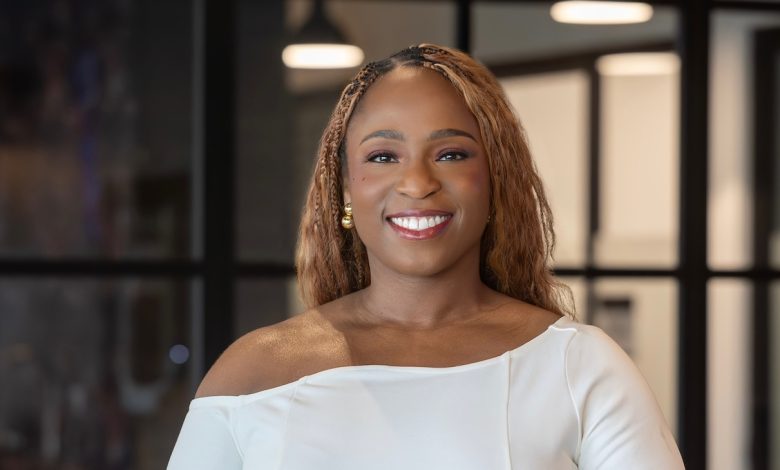
Akunna Cook found her way to the entertainment sector via an unconventional path. A former career Foreign Service officer who served in China, South Africa and Baghdad before returning to Washington to work on U.S.–Africa policy under President Biden, she first arrived on a Hollywood studio lot thanks to public policy. Working alongside President Obama on an initiative to weave policy issues into mainstream entertainment, she helped shepherd otherwise wonky subjects into hit shows — such as gerrymandering subplots in Shonda Rhimes’ Scandal and Kenya Barris’ Black-ish.
Her later work in government further exposed her to the accelerating growth of Africa’s media industries, where she championed the reclassification of entertainment exports as strategic assets essential to a nation’s soft power. With the youngest population of any continent and more than 60 percent of Africans under 25, Cook argues that the region represents a demographic force poised to shape global media consumption, political influence and economic growth in the decades ahead.


Those convictions led her, after leaving government, to found the Next Narrative Africa Fund (NNAF), a $50 million hybrid investment vehicle designed to channel $40 million in commercial equity and $10 million in nonprofit development funding into film and television projects from the continent and its diaspora. The model is structured to address what Cook sees as structural gaps: undercapitalized development pipelines, limited IP ownership for creators and a persistent tendency for global studios and capital to treat African content as peripheral rather than a potential pillar of future growth. For Cook, the question is not whether African storytelling will scale globally, but who will own it when it does.
Over the past year, NNAF has moved quickly. The fund recently unveiled a 13-member advisory board spanning veterans of production, finance, tech and talent management, and in March it will unveil its first slate of six to 10 projects, selected from more than 2,000 submissions across 80 countries.
The Hollywood Reporter connected with Cook ahead of the European Film Market to discuss the fund’s structure, her team’s approach to selecting and positioning projects, and why she believes Hollywood’s smartest money should already be looking south.
You’ve been on a unique career path, moving between government and entertainment. How did this evolution come about for you?
Well, I started my career as a foreign service officer. I was a career economic officer at the State Department, focused on Africa for a good chunk of that, but I also served in China, South Africa and Baghdad. Then I left the Foreign Service, went to law school, and graduated in 2016 thinking I’d go back to government. You might remember that there were some changes in government around that time, so that did not work out for me. So I found myself at a law firm here in Washington, D.C., and ended up working on redistricting with President Obama and former Attorney General Eric Holder.
One of the things we were trying to do was figure out how to make gerrymandering — this really wonky subject — palatable to everyday people. One of the things we came up with was to go to L.A. and speak with showrunners and give them background about what gerrymandering is and see if they could start socializing it by writing it into their projects. That was the first time I really saw the power of media in pushing policy.
Did that actually work?
Yeah, we got it addressed in an episode of Scandal, andan episode of Black-ish. Those are some of the folks we came across. Having been in the Foreign Service, I already understood how other institutions use media — the Pentagon assisting with Top Gun and other military-focused movies, police unions with TV shows. So, more and more, I felt the power of it.
Fast forward — I went on to help start the Black Economic Alliance in 2018. Several of the individuals involved were also in the entertainment business. At that time, we were looking at how the portrayal of African Americans in media has direct economic impact — lower participation in tech, lower rates of investment — how powerful media is in shaping ideas and narratives, positively or negatively.
When Biden was elected, I went back to government and returned to the State Department, back to foreign policy, working again on Africa. This was 2021. Netflix had come into Africa. Amazon was coming in. The rise of Afrobeats was happening. The creative industries there were exploding. So in my portfolio, I took an interest in trying to get the administration to take Africa’s creative industries seriously. It was a place where the U.S. had a natural advantage — because of our diaspora population, because African American culture is so global. We’re the home of Hollywood, the music industry, and so much of fashion. Ultimately, we did get the creative industries included in the national security strategy, which was a landmark.
And as I traveled across the continent at that time, ministers and heads of state wouldn’t talk to me about anything but the creative industries. Worldwide, the creative industries are the largest employers of young people. Africa is the youngest population on the planet. So if you’re trying to create jobs for young people, this is an area they’re naturally very interested in. But I also saw the power of narrative. With new technology and new forms of distribution, how could we intentionally change the narrative about Africa and people of African descent?
So you took the plunge directly into the business after leaving the Biden administration?
Yeah, when I left the administration, I could have stayed on the policy path, but I thought: I’m going to try to make an impact in this industry. I started a production company — we have a TV show under development. But I realized that over my lifetime, how many shows and films am I going to come up with? Wouldn’t it be better to create something scalable — a fund that could power these kinds of projects? With my background, I felt this was the way to have the biggest impact. Specifically projects that are well developed, well written, have something to say, but are entertaining. Think about Parasite. Think about Scandal. Shonda Rhimes always wrote really smart things into the show. The West Wing, a show I loved and was inspired by during my early days entering government, did that too — exposing people to new ideas about government and policy.
In Africa policy circles there’s a saying: “African solutions to African problems.” I used to say: actually, we can have African solutions to global problems. And we should expand our imagination — and that also means African narratives for a global audience, talking about politics, climate, health, class issues. There’s no reason you couldn’t have a show set in Lagos or Nairobi tackling the sam themes Parasite did. So how do you create a fund that has a narrative shift at its core, that gets more productions to think about Africa as a place to produce, more writers to think about Africa as a setting, and to be intentional about infusing projects with meaning — because those are the projects that travel and win awards?
One thing I realized is that on the continent, there isn’t enough time or investment in development. It’s not uncommon to go from idea to filming in six weeks. Nigeria turns out hundreds of projects a year — but they’re not well developed. I’d seen in government that when development is funded properly — proper writers’ rooms, messaging objectives — the quality is different. So I thought: what if part of our fund focuses on development?
That’s the genesis of the fund. We kicked it off a little over a year ago. We spent most of 2025 building notoriety, doing an open call. We were open for three weeks and we got 2,000 applications from 80 countries. That blew my mind. There was profound pent-up demand.
Can you talk through the structure of the $40 million commercial fund and the $10 million nonprofit venture studio?
The nonprofit recognizes the gap in script development and writing. It’s done an open call. We have early-stage scripts and concepts. The purpose is to get those scripts to a place where they’re ready to seek investment from the for-profit entity.
The for-profit entity invests in commercial projects with global distribution potential. They’re separate but work hand in hand under the umbrella of the Next Narrative Africa Fund.
It sounds like your ambitions for many of these projects are expressly global. But many of the big global players, especially Netflix, have a mantra of “local first, then —maybe — global.” To ensure authenticity, they tend to say that they prioritize creating local content that’s authentic to local interests, and if a film or series happens to connect more broadly, then that’s just a bonus. In many international markets, the prestige films that do well at festivals and have appeal in the West aren’t much watched in their home countries, where genre fare — which tends not to work for international tastes — dominates. How do you think about these issues?
For anything to work authentically, it has to appeal first to the community creating it. But with African content, there’s a huge diaspora component, which does make it a bit different than some territories. Afrobeats started in Nigeria, then artists toured diaspora audiences in Atlanta and London, and then it blew out globally. Film and TV are doing the same thing. Nollywood traveled via diaspora long before streamers. I remember watching the first Nollywood films, like in the early 90s, and they came to us in the U.S. via underground VHS tapes, and that was because there was already an industry that was growing in Nigeria.
I also think it depends on the talent involved. Like anywhere else, there are certain actors or filmmakers who, if they’re attached, people are going to show up because they care about that person. You can see that with African American content — Sinners did really well in Nigeria and South Africa. A project like To Kill a Monkey on Netflix, which was very Nigerian, had everyone talking because it felt like, “Oh, this is the next level of Nigerian content.”
So it’s partly: Is the story good? And is it something people can get behind? If you take something like Neon’s Clarissa, which might fall into a more festival or art-house category, I’m curious to see how it performs. Because you have someone like David Oyelowo involved, or other diaspora artists people feel connected to, there’s anticipation. The same with something like Idris Elba and David Oyelowo’s interpretation of Things Fall Apart — that’s such an emotional story for people that it’s going to resonate, even if it’s categorized as prestige.
My hunch is that people just want to see themselves represented in projects they can be proud of. Even now, people watch local titles and say, “I wish the production value were higher,” but they still watch because they want to see themselves on screen. So once there’s a steady flow of well-written, high-level projects — across genre, horror, action, mass-appeal films — I think audiences will absolutely show up for them.
We’re seeing through Parrot data for the upcoming white paper we will put out that African content travels beyond diaspora audiences, too. When The Black Book came out, it was number one in South Korea, number one in Brazil.
The critique I have of “local for local” is that positioning matters. In this day and age, you can market more efficiently to diaspora audiences globally. That expands the market base. That’s how you get bigger budgets and more resources.
The U.S. was the third-largest source of submissions to our open call. African Americans and first-, second-, third-generation Africans are telling stories connected to the continent. There’s a sizable, immediate cross-border market for those stories if they’re well developed, and then even bigger global breakouts, as we’ve seen with Korean content or African music, are totally possible.
What does that mean for how you’ll structure the projects?
We’re looking at projects with international appeal. I don’t think we’re likely to do shows that only appeal to one domestic market. We’re looking at co-productions between Africa and the U.K. or U.S. There will be some festival projects, but for the most part, we’re looking at inspired horror, action, genre films that can have mass appeal. One firm guideline, is that half of the production needs to take place on the continent. We want people thinking about Africa as a place of production, but you can co-produce with other regions.
We also have a narrative mandate. We don’t want projects reinforcing negative stereotypes about Africa, people of African descent or women. We developed a narrative guide with Africa No Filter, the Geena Davis Institute and others. Applicants had to identify impact areas — democracy, class, climate, health, tribalism — and be intentional about how they tackled them. If there’s a mental health storyline, we’ll help fund consultation with experts. That would be the standard process for any well-developed film or series, right? It’s not only about doing good. It’s about strengthening scripts while being intentional about narrative impact.
You’ve talked about moving from influence to ownership with African narratives. What does that mean practically?
African culture already has an enormous global influence, obviously. You can look at almost any creative domain. The question is how do creators retain IP ownership? That’s why we structured it as a fund — to give creatives more leverage when negotiating with studios and streamers.
We’re still working through the financial model. There will be balance. But the goal is to let creatives keep as much of their IP as possible. And because we exist, they can tell the stories they want to tell authentically — not appeasing someone who’s spent a short time on the continent. That’s owning both the narrative and owning the intellectual property.
And I think the smart, forward-thinking money people see where the hockey puck is going and they’re ready to skate in that direction. If you look at the demographics of Africa —the biggest youth population in the world, with more than 60 percent of Africans under the age of 25 — this is the way the world is going to go. Getting really active in media and entertainment on the content is just good strategy. You’re not going to want to be stuck on the sidelines.
When people study the Korea wave, for example, they routinely highlight the many things the Korean government got right in the late 90s, whether it was screen quotas for local films, creating a film commission that was really empowered and effective, launching the Busan film festival, and various other measures. With your background in public policy and government, are you working with government leaders in Africa to lobby for institutional mechanisms that would benefit these industries?
Yes. I started that work in government. Since leaving, I’ve worked with Namibia — the new president is the first female president and a former Minister of Communications. She wants to build a film city and bring production traffic beyond South Africa. We’re advising on incentives, how they work, how to invite creatives to showcase production capabilities. We also convene policymakers around entertainment industry issues through forums like the Africa CEO Forum and others. You have to engage policy if you want this to be effective. We can’t send 100 projects only to South Africa and Morocco. We need enabling environments across the continent. Everywhere we’ve taken up these conversations, we’ve found they’ve been very welcome, because leaders want to see those jobs come to their countries.
You mentioned how you planned to return to government back in 2016, but didn’t due to the outcome of the U.S. presidential election that year. Have the Trump Administration’s radical changes to U.S. policy and investment in Africa affected your fund’s initiatives in any way?
Because we rely on partially on philanthropic funds, some institutions have had to fill gaps left by the dismantling of USAID. It’s harder to make the case for narrative change when there are urgent, immediate needs like getting people medicine.
But narrative change is still crucial — vaccine uptake, climate, destructive technology — popular culture shapes perceptions and outcomes. In some ways, in light of what’s been happening to Africa policy and across issues in the U.S., people see more clearly how important narrative investment is.
When I was thinking about your achievement in getting entertainment and media classified as a national security priority during your time with the Biden administration, I wondered how much of that push was a response to China’s soft-power ambitions, given that Africa is one places where they’ve actually gotten real traction in shifting perceptions.
Oh yeah, China started outpacing the U.S. in investment on the continent 15 to 20 years ago. The Biden administration was asking how the U.S. maintains influence. The power of narrative was naturally strategic.
The U.S. once had the U.S. Information Agency throughout the Cold War, which did exactly this. China is very sophisticated. They’ve studied this. So are players across the Middle East. Everyone understands the strategic value of shaping narrative on a continent with this much demographic weight. It’s not just about the resources — it’s people and the role Africa will play in shaping the next century. It’s incredibly strategic, and China is playing the long game.
If we don’t create mechanisms for U.S. engagement, we risk losing ground — commercially, politically and in terms of values. Right now, the U.S. is just on the periphery. I worry about that a lot. Obviously, this administration won’t be the one to engage.
What’s the key message you want Hollywood stakeholders to hear right now?
I really want more stakeholders in Hollywood to expand their horizons and start thinking seriously about African content and how important it is that they engage. Obviously, we want funders to think about it too, but we really want the stakeholders — the Neons and A24s and the Disneys and the Lionsgates — to think about what their Africa strategy is going to be.
For the first time, in 2025, the demand for non-American, non-Western, non-English-language content exceeded 50 percent of the global revenue pie. Africa is clearly going to be a big part of that story, just given the demographics. So this is the time to expand the thinking about what the global entertainment industry is going to look like and who the players are going to be. We intend to shape how Africa and how people of African descent are going to play in the industry and reshape it for the better.
HiCelebNews online magazine publishes interesting content every day in the movies section of the entertainment category. Follow us to read the latest news.