‘Night Agent’ Boss Shawn Ryan Explains Season 3 Deaths, Shares Who May Return and His Hopes for Netflix Show’s Future After Finale

[This story contains major spoilers from the season three finale of The Night Agent.]
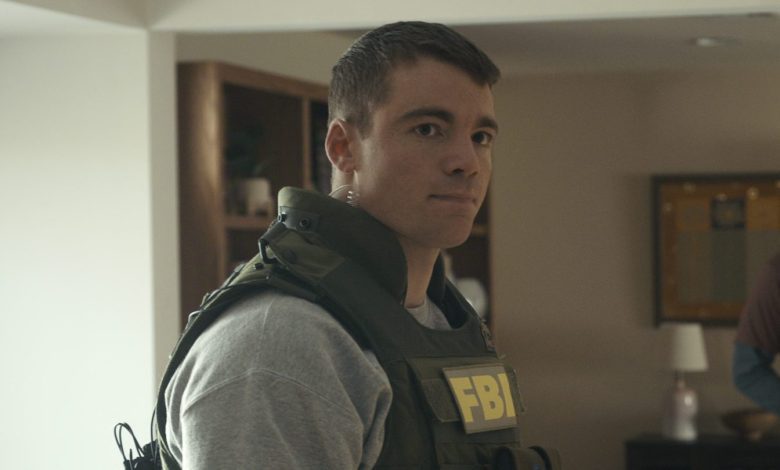
Peter Sutherland (Gabriel Basso) may now be taking a leave of absence from being the titular Night Agent. But naturally, he will not be able to resist being away from the action for very long.




In the third season of Netflix’s hit spy action thriller, after making a deal with the devil, intelligence broker Jacob Monroe (Louis Herthum), to thwart a terrorist attack on the UN at the end of season two, Peter found himself investigating a wider conspiracy involving the Financial Crimes Enforcement Network (FinCEN), a terrorist organization — and even the White House.
While grappling with the guilt of his past choices, Peter hunts down Jay Batra (Suraj Sharma), a junior FinCEN analyst accused of murdering his supervisor and stealing classified intelligence. After tracking Batra down in Istanbul, Peter discovers that the analyst is actually a whistleblower who uncovered a massive financial conspiracy involving Suspicious Activity Reports. These documents revealed that American shell companies, managed by Monroe, were used to launder money for the LFS terrorist organization responsible for downing a civilian airliner. As Peter shifts into a more protective role, he teams up with financial journalist Isabel De Leon (Genesis Rodriguez) — who is later revealed to be Monroe’s estranged daughter, born from a tragic CIA operation in the 1990s.
The conspiracy reaches the highest levels of government, specifically involving President Richard Hagan (Ward Horton) and First Lady Jenny Hagan (Jennifer Morrison). To secure her husband’s election, the future first lady struck a deal with Monroe to exchange laundered campaign funds for classified access to presidential daily briefs. When a White House butler involved in the scheme attempted to back out, he was killed in a confrontation orchestrated by Jenny to look like an assassination attempt. This web of corruption is finally exposed through Monroe’s secret hard drive, which was encrypted with a personal code known only to Isabel. Although the Hagans ultimately use a presidential pardon to escape legal consequences, their crimes are broadcast to the world by a corrupt banker, Freya Myers (Michaela Watkins).
In the aftermath of the scandal, Peter chooses to temporarily step away from Night Action to find the personal balance he has lacked since the series began. But at the end of the finale, FBI Deputy Director Aiden Mosley (Albert Jones) informs Peter that a potential new partner has already been selected for his next mission, leaving the door open for Peter to stage a return sooner rather than later.
In the wide-ranging chat below, creator and showrunner Shawn Ryan answers all of THR’s burning questions after the season three finale. He explains his controversial decision to not bring back Luciane Buchanan’s Rose Larkin, why he never saw Peter’s new connection with Isabel as anything more than platonic, how he decided which characters would live and which ones would die, and whether he thinks this show can survive without his male lead Basso: “There’s a lot of evolution for Peter that I’d want to explore before exploring the world without him.”
***
When we spoke last year, you mentioned that Peter found season one “logistically difficult but morally easy.” For season two, you wanted to maintain those same logistical challenges while making things more “morally difficult.” What intrigued you most about how Peter is continuing to wrestle with the morality of being a Night Agent in season three?
One of the things we discussed was the challenge of growing into leadership. The idea that he’s growing into the responsibility of that job; that he’s understanding the drawbacks and sacrifices that come with it. He’s still having difficulty balancing all the various aspects of his life, and that’s something in the writers room of season four that we’re currently working on and talking about. But as it relates to season three, he’s a little less naïve.
If you look at Breaking Bad, very famously, they talked about [Walter White] going from science teacher to Scarface over the arc of that show. [With Night Agent] we talk about a guy who begins the show answering the phone in the basement who gains more and more responsibility and has to live with the consequences of his decisions more and more. Season three in our overall series arc is about him embracing being a Night Agent, embracing those responsibilities, and still understanding that it’s not 100 percent a fulfilling life. There are aspects he’d like to figure out, but those things are for future seasons.
You also told me after season two that the last thing you would want to do is “manufacture crisis after crisis season after season” to keep Peter and Rose together. Peter talks about her in passing this season, but he almost has to shut off that part of his brain to avoid going down that road, because he knows that reaching out to her could put her in danger. Why did you decide against bringing Rose back this season? Was it purely a creative choice? Did it come down to scheduling?
No, listen, it wasn’t scheduling. It wasn’t that we were unhappy with Luciane in any way. She was wonderful. As we told that story in season two, it felt like an ending in that moment. I still have hopes and intentions that Rose isn’t done on our show. But we started off in the writers room with the idea of, “How would a Peter/Rose-centric season three work?” [We were] hitting some roadblocks and not getting to where we wanted to be. We asked, “Well, how would a Peter-centric season three without Rose work?” And ultimately, that was the most creative, satisfying thing.
Now, that leads to not my favorite [kinds of] conversations. I called up Luciane, and I explained [the situation]. She was really wonderful about it, and had a sense from how season two ended that this was a possibility. She has a very successful show on Apple [called Chief of War] that I know she’s really proud of. I was clear to her on the phone call: “Listen, we’re actually intending to bring Chelsea [the Secret Service Agent played by Fola Evans-Akingbola] back in season three after she wasn’t in season two, other than one cameo scene near the end. This is the kind of show where people can drop out and come back in, and I really want to hold open the possibility that Rose will return in the right situation, and I hope you, Luciane, will be open to it.” She seemed to be [interested]. She can speak for herself, but we never want The Night Agent to become formulaic. We never want it to become repetitive.
One of the things I like so much about the show is that each new season is kind of a new world — has a lot of new characters, new storylines. With our flashbacks, you can always go back to moments with characters. So it was a creative decision I made that the studio and network supported, based on what we thought was creatively best for the show. We know there will be people who were very invested in Rose who will be disappointed. I understand that. I don’t blame them for feeling that way, but hopefully, when people see the season, they’ll understand what we did. I’m really proud of the third season, and I think the creative team did a fabulous job.

You introduced Genesis Rodriguez as Isabel de Leon, a financial journalist who, as viewers learn midway through the season, is the estranged daughter of Jacob Monroe. When did you come up with that twist in the writers room, and how did you think about building up to that twist when you were creating the character?
I like to give a lot of credit to the writers room because so many of the great ideas on the show emanate from them and are presented to me. I will egotistically say for one second that what you’re talking about was my idea before the season began. (Laughs.) When I was thinking about season three and how we were going to wrap up the broker storyline, I thought about [Peter] meeting a woman who we didn’t know right away was [Monroe’s] daughter.
I didn’t have all the specifics, and in fact, those things were developed in collaboration with all the writers, [like] the journalist angle. I wanted to explore the financial world. I came into the season with a thesis statement that we put in the mouth of Isabel at one point — that all the horrible things that happened in the world couldn’t really happen without the cooperation and work of these financial institutions that hid their money and facilitated their illegal activities.
I was interested in humanizing Jacob Monroe. I think one of the things our show has done well over all three seasons is, we don’t have villains play pure villains. We see them as human beings. We understand their motivations; what drives them. And to give the writers room credit, they’re the ones who came up with and pitched me the idea of doing this extended flashback in episode seven in Mexico City, where we see the origin stories of the broker, how he came to meet Isabel’s mother, how the various levels of betrayal led him to his life now and to their estrangement.
There were some viewers who cynically believed that Isabel was replacing Rose as Peter’s love interest, but Peter and Isabel never crossed that line. Did you ever consider making them more than just friends and allies?
While the character of Rose isn’t in season three, the shadow of Rose hangs over a lot of season three. One of the things I fought for in the writers room was the idea that, as far as Peter was concerned, Rose wasn’t just disposable. It wasn’t just like, “Oh, well, we had a thing in those couple seasons, but now I’ll move on.” We wanted him to carry the weight of the sadness of that [relationship ending]. One of my favorite scenes in the season is in episode four, where he and Isabel are playing pool and asking each other questions, and he comes cleaner than he otherwise might [to someone else] about the weight of losing Rose and having to give her up.
Everyone loves a little romance, and the Peter/Rose romance was very successful, but we never viewed Isabel as a “replacement” for Rose. I think that would cheapen what Rose meant to Peter. Not that he can’t ever find love or romance again, but I just felt it was emotionally true to have him still carrying the weight of that lost relationship. So I don’t know if it was ever pitched or discussed, but if it was, we never seriously considered a romance. The things that they were involved in were too serious. The whole reason why [Peter and Rose] weren’t together was that it was too dangerous in his job. And to have another woman who’s romantically involved in danger, at least in season three, didn’t feel right to us.
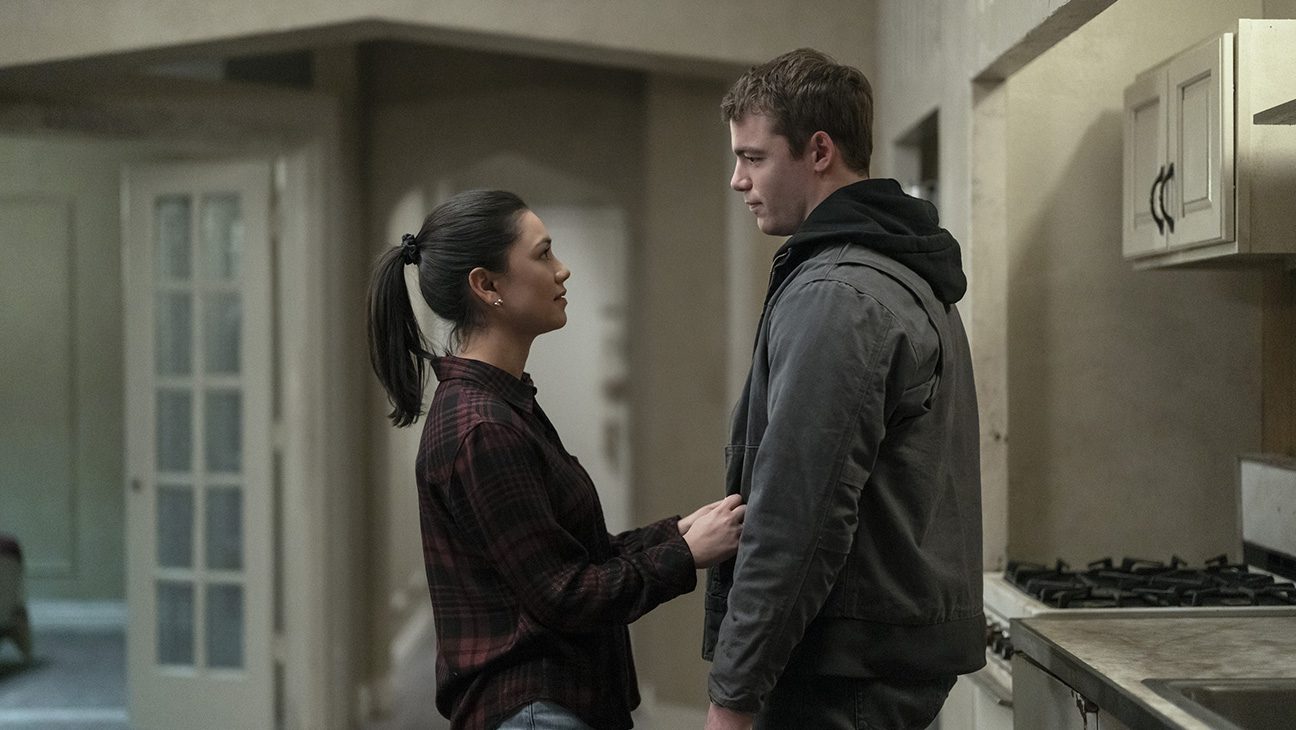
This season, compared to past seasons, doesn’t have as high of a dead body count, but there are still two pretty shocking deaths: Peter’s mentor-slash-handler Catherine (Amanda Warren) dying in an explosion staged by Monroe in episode two, and Peter’s partner Adam (David Lyons), who was previously Hagan’s commanding officer in the military, secretly shooting Monroe in the head in episode eight. Can you walk me through the thought process behind which characters you chose to kill off this season? Did you have any others that you considered killing off in the room?
We always discuss killing off everyone! You never want the deaths to feel like wallpaper. You never want them to feel gratuitous. You think about ways that you can earn them. Early on, we talked about Peter growing into being a leader. One of the ways that can happen is when you lose your leader, and you have to step up.
So it was out of those conversations that we talked about Catherine’s death — and all credit to Amanda Warren who played her so well. She didn’t have to come and do those two episodes. We had a contract [option] to either employ her for all of season three or not at all, so it had to be a negotiation for her to come back and just do the two [episodes]. She was truly lovely, and I explained to her what that death would mean for the show, what it would mean for Peter, and she really embraced it and was wonderful.
The Jacob Monroe death was something that the room pitched to me that I think is a great twist for Adam, who starts off as an ally for Peter. He’s someone who grew up believing that, as he said, “Generals question so that we don’t have to,” and [Adam] starts finding himself in the gravitational pole of a corrupt presidential administration by which he begins to be corrupted. I liked that there was some reticence and hesitation from him about doing what he did [by killing Monroe] and almost a little instant regret, because there are a lot of good aspects of Adam.
So both those deaths came out of [the idea that] you have a political thriller, it’s a dangerous world. There are some characters that aren’t going to survive. That’s just one of the signatures of this genre. You always want it to be surprising but inevitable, and I think the game that Jacob Monroe was playing inevitably led to his demise. I don’t think he was destined to die by cancer. I would say that you smartly put your finger on something — we did lean a little bit more into tension in season three. A little less violence, and a little more tension, was an intentional calibration for this particular season that we were interested in.
Peter gets dangerously close to dying multiple times this season — most notably at the hands of his Night Action partner Adam, who is actually an old friend of the corrupt POTUS. Why do you think Adam ultimately lets Peter go after initially shooting him in the finale?
Despite his actions in the last three episodes, I think Adam is ultimately a decent person, and what he was ordered to do, with increasingly less and less justification, reached the point where [he thought to himself] “Am I the person that’s going to sit here and shoot an unarmed man who is just trying to do the right thing?” That was the line that Adam couldn’t cross. He was led to believe erroneously that it was Peter who was off the rails, and then when he gets confirmation that Freya was helping the president and the first lady launder their money, [he realizes] that this isn’t about national security anymore. This is about protecting their own interests, not protecting the nation. That was the last straw for Adam.
Again, I think our villains are multifaceted. They’re not just there to do the evil thing. I think Adam had a lot of points in the season — saving Peter at the end of episode four, working with Peter in episodes five and six — that revealed him to be someone that wanted to be on the forces of good. He thought for a while he was on the forces of good, even if he was asked to be doing tough and violent things. I think when confronted finally with that evidence, that was the line for him that said, “I can’t just shoot and kill this man, in this instance.”
You gave almost all of the surviving characters some kind of coda, but what exactly happens to Adam after he lets Peter go? Where is he? Is he coming back next season?
[Pauses.] The reason why I pause sometimes when I’m answering your questions is that I’m living in this world where I’m getting asked questions about season three, but I’ve been spending the last few months working on season four. I will tell you that the answers to your questions exist in season four, as it relates to Adam.
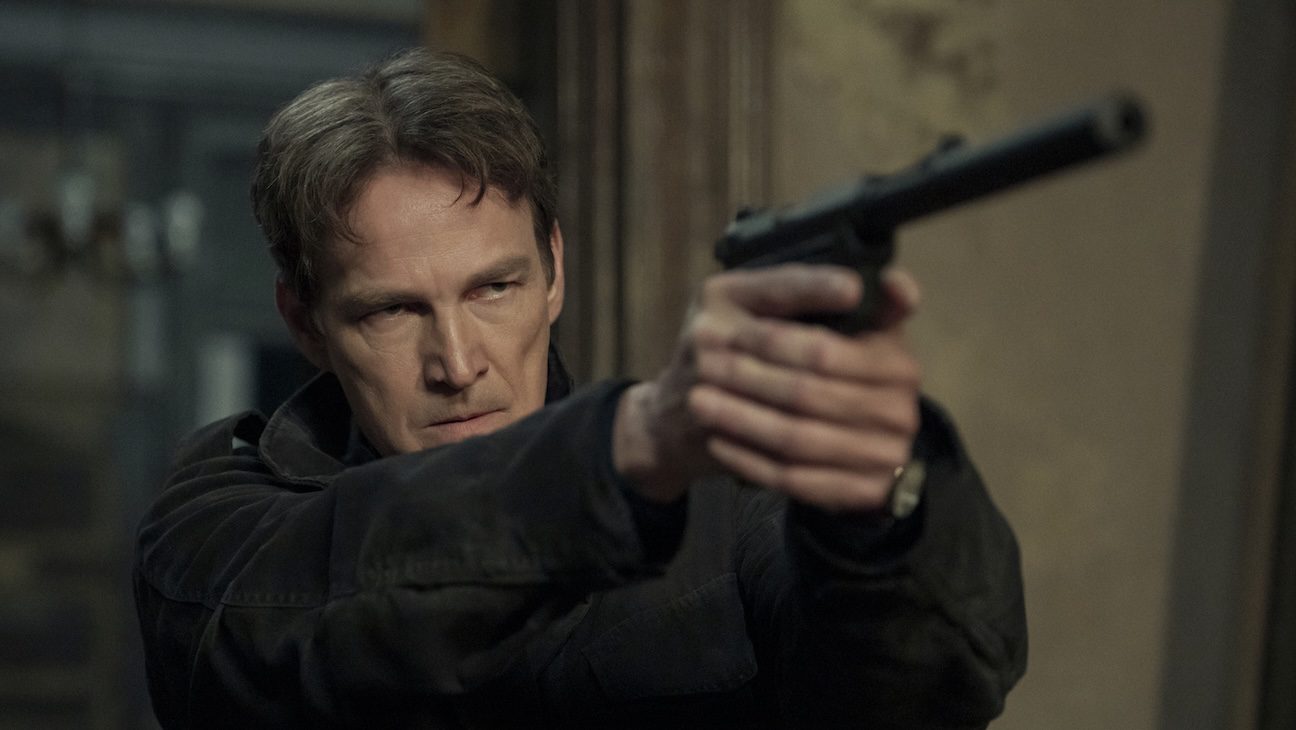
Peter and Isabel’s investigation into Monroe puts them on a direct collision course with a hit man (played by Stephen Moyer) with a young child, who he seems to have kidnapped on one of his other ops and has now raised on his own. Does this unnamed assassin have a name, or is he just called The Father?
No, we always referred to him as The Father. He gave a fake name to Freya in that bar at the end. That’s not his name. The son tells Peter his name is Orion, but we know that’s a code name he was given. One of the things that I was thinking about, and the other writers were thinking about, is how often kids and parents don’t really use each other’s names in real life. (Laughs.) We just liked the mystery of that.
That’s one of my favorite storylines that we’ve done in all three seasons of the show. I thought Stephen Moyer was so fantastic. Callum Vinson, who played the son, was the real discovery for us all. Credit to the casting department at Sony. He had been in Long Bright River, [another] show of [the studio, Sony Pictures Television], and they recommended that we take a look at him for this role, and he was so, so good. The two of them were so good together. I loved writing that. I loved working on that in the editing room — seeing the two of them work together, and then seeing that all come together in episode eight in the interrogation scenes between the father and Peter, and then seeing the son appear there later in the episode.
The Father has a crisis of conscience as a hit man over the course of the season. And as soon as he sees Peter using “Orion” as a bargaining chip for his own survival in that episode, The Father realizes that he is not cut out for this lifestyle anymore. The last time we see The Father onscreen, he is impersonating a British man who flirts with an unsuspecting Freya, who now goes by Nina, at a restaurant on the boardwalk. Are we meant to interpret the fact that he pulled out a vial of clear liquid from his pocket as proof that he poisoned Freya and presumably killed her?
Yeah, I think we’re meant to interpret that he poisoned her the same way that he poisoned [Isabel’s newspaper boss] Mike in episode two. She threatened his family. There’s one thing about going away, but there’s another about leaving that threat hanging over you and your son. So I think that was him closing the last loophole before walking off — literally — into the sunset on the boardwalk with his son.
We’ve spoken quite a bit about what next season will look like, but The Night Agent hasn’t officially been renewed yet. Where exactly are you in terms of renewal talks with Netflix about season four?
We’re not officially picked up yet, but we’ve been actively working on the writers room. So I just want to be super clear that there’s no news to report on that front. We are just focused on the creative, and when the time comes for Netflix to pick up, they’ll let you guys know.
But what I will say is that [Netflix executives] really do care a lot about the viewer experience, and they understand that fans don’t always like it when there’s too much time between seasons. So I think one thing on their more successful shows is that they’ll allow the writing process to get going a little bit so that when they do pick up a show officially, we can get into production quicker. We can finish the episodes and we can release them to the public with a more regular cadence than we otherwise might be able to if we were waiting for an official pickup to happen before the writing process [begins].
How many seasons of The Night Agent would you ideally want to make, and do you think this show could go on without Peter — or Gabriel — at the center of the action?
I haven’t really considered that a lot. There’s a lot of evolution for Peter that I’d want to explore before exploring the world without him. What you’re talking about is partly creative, but it’s also partly business. I certainly have business partners in Sony and Netflix, so I’d be hesitant to go on the record about what those plans are. I do think, as you’re talking creatively about season four, it’s natural to talk about: Where do we think we’re going in the long-term? You hope you’re the kind of show that would be granted a clear and final season by Netflix so that you could wrap it up. We just saw Stranger Things get a chance to wrap up their storyline after a number of successful years. We saw The Crown get a chance to wrap things up. My hope would be that our show, with the success that we’ve had, would get a chance to do that.
I imagine if and when the time comes, there’ll be a conversation that involves creative and financials. These shows always get more expensive the longer they go on, but because of the nature of the ever-revolving and changing worlds, I do think the show has the potential for longevity. That doesn’t mean it’s Law & Order: SVU 25 seasons and counting, but I think there are more stories to tell — and I hope we’ll get the chance to tell them.
***
The first three seasons of The Night Agent are now streaming on Netflix.
HiCelebNews online magazine publishes interesting content every day in the TV section of the entertainment category. Follow us to read the latest news.