“Once You See That Stuff Projected, You Don’t Really Turn Back”: THR’s Cinematographers Roundtable

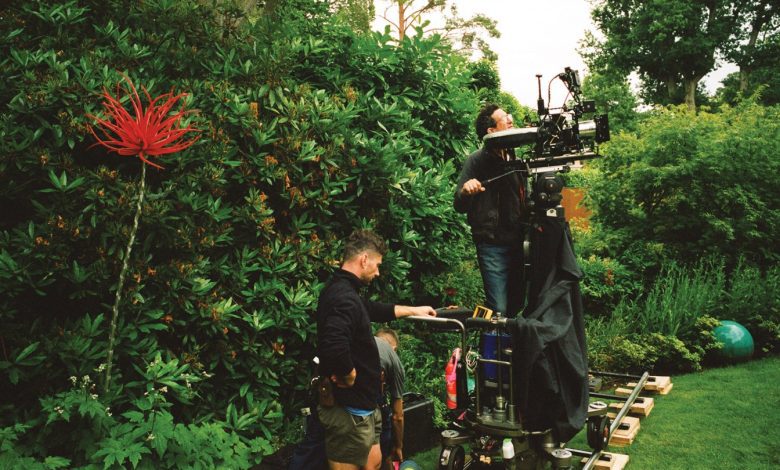
What’s old became new and exciting again this year for moviegoers, who packed into Imax theaters to see Ryan Coogler’s Sinners and Paul Thomas Anderson’s One Battle After Another projected in large format. Both movies, along with Yorgos Lanthimos’ Bugonia, were shot in VistaVision — with cinematographers Autumn Durald Arkapaw, Michael Bauman and Robbie Ryan, respectively, at the helm — a format that, until last year’s Oscar winner for best cinematography, The Brutalist, hadn’t been used for a feature film since 1961.
“Everyone’s looking for something new; they want to be woken up, jolted out of their seat,” says Sinners DP Arkapaw of the buzz around the films.

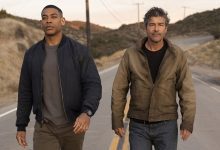
F1: The Movie gave audiences that sensation with the opposite filmmaking approach. Cinematographer Claudio Miranda tacked tiny cameras onto the cars and played with light grading and other elements so the resulting footage gave viewers the sense that they were in the middle of actual Formula 1 races. “It’s all of these choices that made things feel real,” he says.
Such was the goal for this year’s more sentimental films, like Chloé Zhao’s Hamnet and Clint Bentley’s Train Dreams, in which DPs Lukasz Zal and Adolpho Veloso, respectively, captured nature as beautifully as they did human emotion.
The DPs of all these films came together for THR‘s Cinematographers Roundtable to discuss the resurgence of VistaVision and its “finicky” nature, and getting audiences excited about theaters again.
For most of you, your work on these films marks a reteaming with directors you’ve worked with in the past. Talk about those first conversations you had around these latest projects. What did you set out to achieve from a cinematography perspective?
ROBBIE RYAN I’ve been working with Yorgos quite a bit lately in a compressed amount of time, going from one film to another. Bugonia sort of landed on his desk, and when we were filming Kinds of Kindness, he mentioned that it was the next film coming up and it was going to be quite [soon]. My relationship with Yorgos, we sort of start talking about cameras and lenses a lot more than stories. We’d done a bit of filming on VistaVision for Poor Things, so he was curious to try that out. It was a practical kind of conversation because we start going, “OK, where do we get that camera?” “Where can we start doing a few tests?” There are many things, as Michael and Autumn know, about those cameras — they bring up their own problem.
MICHAEL BAUMAN With Paul, this is my fifth collaboration with him, playing a few different roles, and he usually starts with film references. So for this, our north star was The French Connection. He really wanted that kind of energy and he really wanted to explore the VistaVision concept. So how do we get that kind of energy in that tool set? To what Robbie said, it can be challenging at times. It’s its own finicky component.
AUTUMN DURALD ARKAPAW The night before I started my first day on this other picture, [Coogler] sent [the script for Sinners to me] and I read it really quickly and I was just blown away because I had never read anything like that before. It opened a new door, because previously we worked on Black Panther [Wakanda Forever], which is based off of something that someone else had done previously, so we had a reference, but with this there was no reference. So I wrote him a long email, which I tend to do when we’re not near each other, and I just told him how I felt about everything. He initially wanted to shoot 16mm, and then it went to large format in our prep period. And, like they said, we did a lot of testing and figured out that that was the format that we really wanted to use. And once you see that stuff projected, you don’t really turn back. So then it became a kind of battle to make it happen logistically and financially.
ADOLPHO VELOSO When Clint got Train Dreams, he was sending me scripts early on. And we realized that we really wanted to keep everything we liked about Jockey in terms of flexibility, because it was such a small movie that we made with a crew of like 10 people. Then we were like, “How can we now scale this to a movie that is much bigger” — it’s a period piece, so it’s hard to do it the same way — but how we can keep working with natural light and practical [effects] and have a small footprint as much as possible. How do we make that happen with a huge crew now, with a much bigger footprint, and try to protect that within the set itself?
CLAUDIO MIRANDA Mine is completely different. You guys are [working] with giant cameras, and if I put them in front of a Formula 1 car, we would be having a lot more accidents. For me, the priority on this one was to get actors going 200 miles an hour. So I approached Sony to make basically a sensor on a stick. I had a lot of lead time, which I have with Joe [Kosinski], so I could have a camera company help me out and build one-off cameras for us. So they built two one-off cameras for us. And because the cameras had to be in particular spots due to their design, I had to work closely with Mercedes, for example, because every focal length and every position was mapped. I would look at some [previsualization] and say, “This has to be a half a centimeter this way; otherwise, the wind blocks or the forward angle doesn’t work.” And to get every angle approved [by F1], it was three months just to get it all down. It had to be that kind of crazy accuracy about where everything was placed. Also, because actors are driving 180-plus miles an hour, it had to be safe for them. You couldn’t put a giant speed rail [to stop a crash] because everything had to be built for crushing. I hadn’t been in a situation where it’s all about safety and these are the limitations of where cameras were going. But in the end, we told the story of speed, and it’s visceral.
LUKASZ ZAL When we first met with Chloé, we were mostly talking about life, death, relations, that we want to make this film very simple, kind of normal, how we are going to build our frames, the kind of tableaux that are important for us, and also what is beyond the frame. Very soon when we started working, we went to the forest because that was very important for us to show the forest as a living organism, show the life cycle, where things are born, and death. We went there for four days — I also prepared a lot of excerpts of different films, which we were watching and discussing — and started shooting with different lenses, looking at how to show the forest, because that was the crucial thing for us. Chloé was playing us [composer] Max Richter’s music, so we were listening to the music and trying to get into this.
Robbie, for Bugonia, you shot with a Wilcam 11, the only one of its kind in the world. How and why did you track down this specific camera and how did its use affect your process?
RYAN It was a camera that was sold in a fire sale in [rental equipment company] Keslow Camera. They got rid of it. And a Belgian DP, a 29-year-old guy, bought it for like 10 grand, the whole kit, and he just took it and then he didn’t know what to do with it. He got in touch with [technician] Scotty Smith about reconfiguring it to be a bit more of a shoot-friendly camera and then another technician called Marty Muller got involved and they reconstructed the camera. When we were doing Poor Things, it wasn’t available to us to try out, but in the [interim], it became available. So it worked out well that we were able to test it. You could use 2,000-foot [film] loads, which kind of was unique to that camera. A thousand-foot magazine usually gets you 10 minutes [of shoot time], but it only gets you five minutes on VistaVision. And that was one reason why we went with that camera. It was a little bit of a Faustian pact. You go, “OK, this is the one we’re going to go with,” then it kind of reared its ugly head in certain other ways.
Our film’s all set in the basement, and Yorgos doesn’t do ADR, and as Michael probably will tell you, they’re very noisy cameras. It’s like any camera. It’s got its own characteristics. It kind of was a character in the film, in a way, because there are two characters in our film that are playing mind games with each other. And then the VistaVision kind of played mind games with the crew, and you never really knew if it was going to make it through a take, and that added to the tension.
VELOSO I shot a movie this year with VistaVision, and when I was about to prep it, they arranged a call with Robbie to ask about the camera. After the whole conversation, I said, “What do you think?” And Robbie just said, “I’m glad I did it, not sure I will do it again.”
Autumn, Ryan Coogler’s decision to shoot large format made you the first woman cinematographer to shoot a feature film on 65mm Imax. Did you know you were making history at the time?
ARKAPAW No, Vanessa Bendetti at Kodak texted me when I was driving to work one day and she told me, and it didn’t really faze me, because we’ve got a lot on our mind, but Ryan came up to me on set and he’s like, “You know, this is a big deal.” And when he said it to me, I felt it was pretty special, because there’s not many people that get to do films like that— it’s Christopher Nolan and Hoyte [van Hoytema]. So it was nice to have Ryan be like, “You know what, we’re going to up the ante and we’re going to use this format to tell the story.” It’s the best format I think that we could tell it with. But to be brave, a respect has to happen when you’re using these formats, outside of just that you’re getting to shoot film. My camera team was impeccable. There were a lot of eyes on us, but Ryan, he’s very patient and very brave in his filmmaking. So on our sets, there’s time given to what we have to do, and I think that’s the most important thing when you’re shooting like that. You have to be OK with it. Everyone’s always trying to rush the process, but when you’re storytelling, you want patience. I also feel as a woman, we’re all storytellers. I have eyeballs too and I’m creative and I have a point of view. So it just was a matter of time that it got in the hands of a female DP.

Michael B. Jordan (left) films a scene for Sinners with cinematographer Autumn Durald Arkapaw and director Ryan Coogler.
Eli Adé/Warner Bros.
With F1, Claudio, you sort of built on the camera technology for Top Gun: Maverick. Did you expect to ever use that again?
MIRANDA For Top Gun, the pilots weren’t really flying. There was always someone in the front flying the jets, so this was a little bit different. We really wanted actors to drive, so even having a camera that’s as small as it was was slightly problematic. We did a lot of testing and R&D on that. But, thank God I was given the time. That’s the great thing with me and Joe, that I’ve had a history with him. I love that he tries to keep everything authentic, that we don’t go to volume stages. That would be a sad version of the movie to try to do it in that kind of synthetic way. So I’m all with you in the organic ways to shoot it as much as possible. I guess my version of the organic thing is, “Let’s go 200 miles an hour,” and that’s exciting to me. When we first did it, I had this fail-safe, so they formed a seat for me and I’m in the car, like I’m potentially going to operate the thing. And man, I was black and blue at the end. That was plan C, I think. So I’m glad that plan A worked where I get to stay somewhere and not get sick — because I did for Top Gun.
F1: The Movie director of photography Claudio Miranda (standing) positions a camera on a race car.
Courtesy of Apple TV+
Adolpho, you had the task of showing the devastation of nature, particularly through fire, which also serves as a light source for the period in which the film is set. How did you come to the decision to use real fires instead of visual effects?
VELOSO It has to do a lot with trying to make it as naturalistic as possible. We wanted to keep the fires real, so making sure that the actors could play around those campfires or those candles and actually use them and feel the heat, feel the flicker. Whenever I would use something to mimic fire, we would never get the same result as actually using fire. There is a lot of prep, a lot of SFX work that expands to so many other departments that you really need a whole movie crew that is willing to embrace it. And because the devastation is so important in the movie, we wanted to portray fires as realistically as possible. We looked at a lot of real fire footage and tried to mimic that instead of looking at other movies and trying to replicate that. We were supposed to shoot the movie when the strike happened, and we went [to the Pacific Northwest] and actually saw a real fire happening. We couldn’t go out at all because the whole area was smoky and orange. So we kind of lived that the year before shooting. That was also a learning experience, to know how to shoot it and how to be respectful to it, too.
Anderson opted to shoot on location for One Battle as well. Everyone wants to know how the car chase sequence near the end, on a very hilly highway in Borrego Springs, California, was captured.
BAUMAN We ended up just going out there first and driving in a van with an iPhone pressed to the back of the car. Brian Machleit, who was our stunt coordinator, was driving another vehicle, and we were just kind of seeing what it would look like. So I have all this iPhone footage of the car disappearing, the car reappearing, and it started from that. Paul is all about doing everything as practical as possible. So Tana Dubbe, who was our key grip, she knew that team really well. And Allan Padelford came in, and his elevator rig and his arm car kind of unleashed all that. Then it was the camera team finding systems that could support the VistaVsion camera. We had a lot of jams as we refined the system more and more. And then it was really just finding those moments, whether it’s long lenses on the side of the road or the energy. I’m sure, Claudio, you guys went down this path as far as using millimeter length to translate into speed. Finding we can use short zooms to really accelerate over the hill and how fast you’re going. Then it was pulling focus and racking to different points in the road, which added another element. It was tedious. Things would break. It was incredibly hot out there, and the temperature was affecting us also.
Camera operator Colin Anderson and DP Michael Bauman prep for the car chase scene in One Battle After Another.
Courtesy of Warner Bros.
Lukasz, fans of Maggie O’Farrell’s novel, from which Chloé Zhao adapted Hamnet‘s screenplay, were really curious about how the stage play at the end would be portrayed onscreen. Talk about what went into planning that execution.
ZAL We went to the real Globe [Theatre in London], and then Chloé came to me and Fiona Crombie, our production designer, and she said to us, “We cannot shoot in the real Globe. I don’t like it. It doesn’t work for us.” So then we decided to build our little Globe, because she wanted it to look like an inside of a tree. So that was the first thing. We knew that it was going to be the most important part of the film, but the exact ending came up just four days before the end of shooting. Chloé just found this idea. So we were observing, following the emotions day by day, very slowly, trying to capture the truth, trying to capture the emotions and being close to our characters. What was most interesting for me is that there was a DreamWorks session for extras, and that really helped our extras, and actors, get into those emotions of grief, of losing somebody, of just being there, to be immersed in the situation. I was kind of shocked how it worked. We created this atmosphere that our cast and extras were able to really feel they’re in a real place and can show emotions.
Cinematographer Lukasz Zal (center) films an interior scene in Hamnet.
Courtesy of Focus Features
Ryan Coogler’s Kodak promotion explaining the way Sinners was shot led to pandemonium at Imax theaters, with people going to see the movie two and three times to get the filmstrip keepsake. Similarly, F1‘s box office success has largely been credited to its cinematography. Do you think this trend will continue?
ARKAPAW You want to get people out of their seats and out of their houses. We’re all so inundated with images and content that I feel like if you want to express yourself with an old tool and revive it and tell a new story that’s different, it’s about creating an experience. I took my son to see F1. There are not a lot of movies my son can see, and I wanted to see it. I went and I got an Imax ticket; I bought it early, and same for One Battle. I want to be excited again, I want to go to the theater, and I want to have that experience that I had when I was younger and bought a ticket and waited a couple of weeks to see something. It’s exciting when you can create an experience for the viewer so that you can get out of your house. I think there’s a place for that, even though everything is in a very tense state right now with filmmaking.
BAUMAN The commitment to trying to project in VistaVision and the journey that Erica Frauman, our post supervisor, and the editing team go on to just get that to happen on the big screen, and originating in formats that are designed to go all the way to exhibition like this, is really impactful. At the Vista in L.A. where they screen [One Battle], because they don’t do assigned seats, every time you roll up, there’s a line down the block and people are like, “This is like something out of Star Wars back in the day.” As people go by, they’re like, “What’s going on here?” It gets more energy out that this is something you need to commit to going to. And I think that’s really important right now in the state of the business, underscoring the power of cinema. Getting people out is critical.
Train Dreams star Joel Edgerton and cinematographer Adolpho Veloso.
Daniel Schaefer/BBP Train Dreams. LLC.
In 2013, when Claudio won the Oscar for Life of Pi, it sparked a debate as to whether there should be two separate Oscar categories for cinematography, one that honors classically photographed movies and another for films that employ lots of digital and visual effects work. With the rise of AI in filmmaking, do you think it’s time to revisit that conversation?
MIRANDA I think as creatives, we just need to figure out what the story is. Then I’ve got to figure out what the correct medium is to shoot that with. I couldn’t do my movies on film, even though I’d love to. I saw some great [reference] images of people hanging on race cars. Safety won’t let me do that anymore. I had to tell my story this way. Everyone has their own path, and whatever path they choose, I think we should honor that. I don’t feel like it should be segregated. And sometimes I feel like the people that are actually judging may not know exactly what it was shot on, so that division line gets blurred. I think, in the end, it’s about, “How does it make you feel?”
RYAN I think, as well, we’re harnessing so much digital visual effects stuff in all of our films that we’ve shot on larger film formats. It’s a very important part of us getting that image across. There are a lot of hidden visuals that are being helped by digital technology; it’s just harnessing it and making it feel true to whatever your final film wants to be. We’re in debt to visual effects. It’s a friend.
HiCelebNews online magazine publishes interesting content every day in the movies section of the entertainment category. Follow us to read the latest news.