‘Palm Royale’ Creator Breaks Down the Carol Burnett Scene That Ups the High-Society Drama in Season 2


With Palm Royale, creator and writer Abe Sylvia has crafted a bright, boisterous dramatic comedy pitched perfectly to the charms and talents of its star, Kristen Wiig (who plays aspiring socialite Maxine Dellacorte-Simmons). But just under the surface of the series’ high comedy, high society and high hair lie hard truths about being a woman of ambition: what it means to be a “have-not” in the glamorous world of “haves,” and the cost of getting all you’ve ever wanted — and what some are willing to do to hold on to even a handful of it. In season two of the series, which also stars Carol Burnett, Laura Dern, Allison Janney and a coterie of notable faces that includes Julia Duffy as fellow socialite Mary Davidsoul, Sylvia ups the ante, putting his characters in direct conflict as they stake even more entitled claims to things that were never theirs. Old frictions become new frays in the very first episode as Norma (Burnett) and Linda, née Penelope (Dern), collide in a tête-à-tête dispensing new secrets and poignant credos after the explosive season one finale that left Robert (Ricky Martin) shot and Linda cuffed.
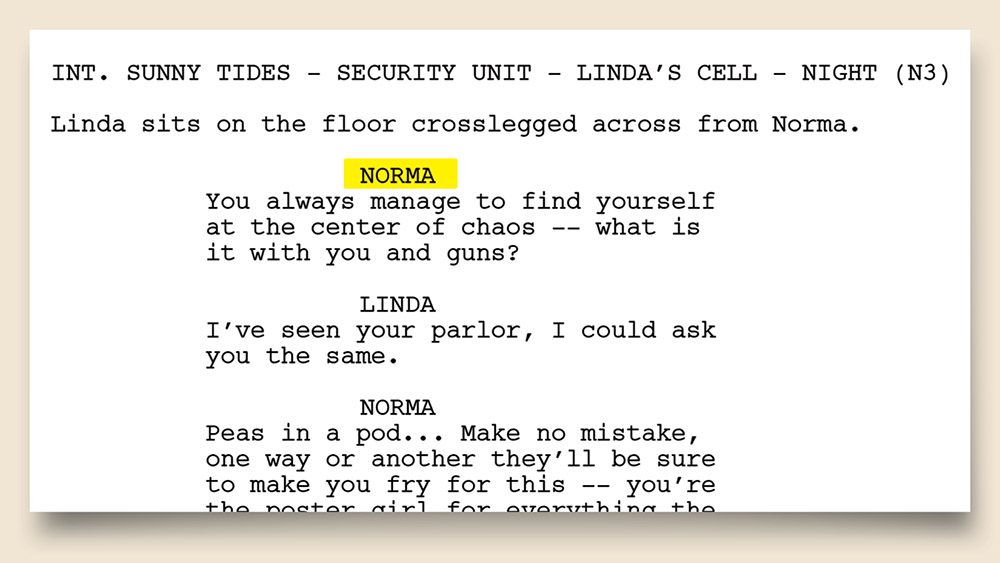




After Carol Burnett’s Norma spent much of season one mumbling or unconscious in the background, Sylvia wanted her front and center, driving action in season two. “I really wanted to take the opportunity to introduce the audience to Norma in her full power, as only Carol Burnett could embody her,” Sylvia says. “This season, we wanted to leave nothing on the table in terms of the wondrous powers of our actors. And so right out of the gate, we wanted Norma to be driving the first episode.”
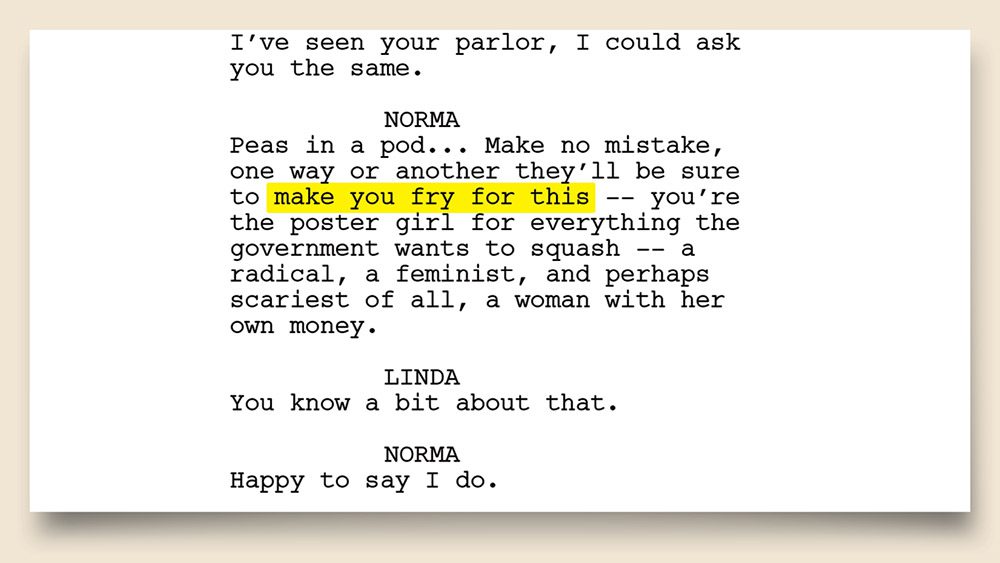
When talking about harsh societal realities, Sylvia distills the ethos of the entire show through Norma in this quick exchange. “She’s saying a real truth there: ‘You have agency, you have your own money and you have conviction. You are the poster girl for the enemy within,’ ” Sylvia says. “It’s set against this ridiculous story, but what woman in this country hasn’t felt that way? Look at what happens to women in this country who have ambition and how they’re vilified. Linda’s an idealist and Norma’s a realist. These women of society, even though they had money, still faced all the misogyny and barriers that women have always faced.”
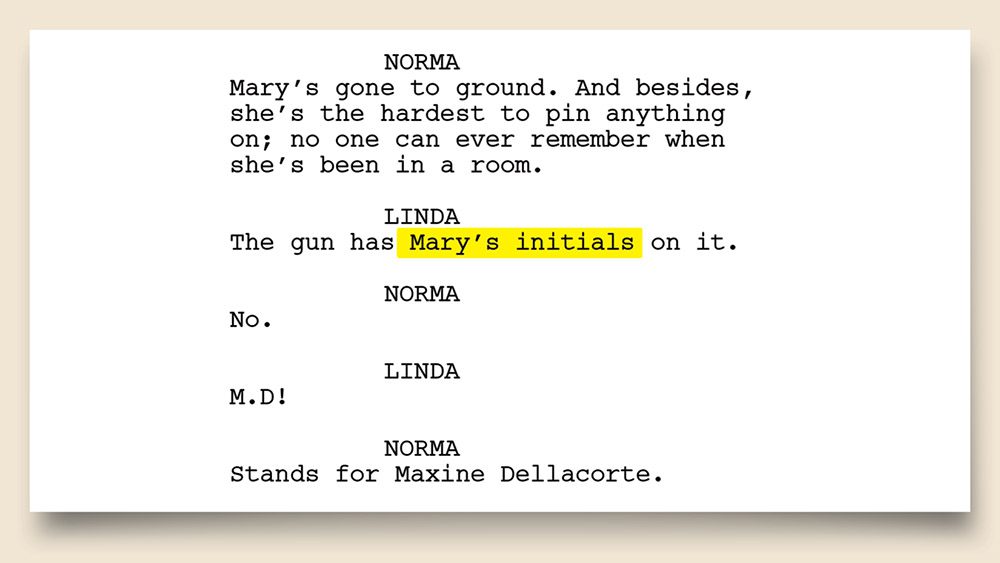
“I like to say, nothing is ever wasted in our show. For all the planning you do, there are some decisions that you make along the way and we won’t always know why we did it until much later, and it totally pays off,” Sylvia says. “Case in point, even though Norma paints a really vivid and convincing picture of how they could pin [the shooting] on Maxine, I was sitting in the writers room and I was like, ‘We need one more piece of evidence. It isn’t enough that she invited Nixon to the ball. It isn’t enough that she had been hanging out with Linda in the feminist bookstore in season one. Like, we need a piece of hard evidence.’ And then I realized that the real culprit we had named Mary Davidsoul, and she has the same initials as Maxine. Those little things, you know. It’s like a puzzle sometimes.”
It’s not only Wiig’s accent and diction, familiar to fans of her work on SNL, that gives Palm Royale its comedic sense of heightened reality, “There’s a very sort of singsong rat-a-tatness to our dialogue that heightens the whole series. But we then also have these actors that can play [up the writing] style, but still do it in a really grounded way,” Sylvia says. But writing for the show means also knowing when to pull back, and Sylvia says he empowers the actors to tell him when enough seems like enough. “I had this one line in this scene … I think at the start it was, ‘just a confluence of convenience,’ which seems very fitting for the show,” Sylvia says. “And Carol goes, ‘Now that’s just even too wordy for us.’ And I said, ‘OK, fair enough.’ ”
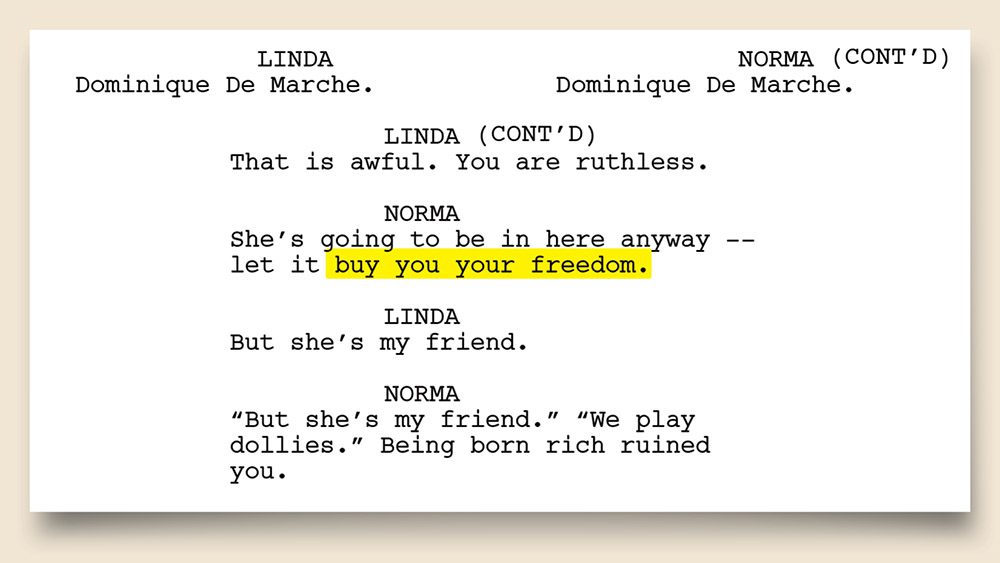
Comparing how this scene plays out to what was written on the page highlights that so much of what the actors do was never written into the character or the script, Sylvia says. “There’s a beautiful moment later in the scene where, for a moment, Linda considers [Norma’s proposition]. And we didn’t put that in the dialogue, that at the last moment, Linda almost goes along with it,” Sylvia says. “But I remember that when we were doing this scene, I went up to Laura, and she’s one of our greatest living actresses, and I said, ‘Why don’t we put in this moment at the end?’ And when you watch the scene, you’ll see for a moment she realizes that Norma is right, that she is going to fry for this. And you just watch it in Laura’s eyes. There’s a passing moment where she goes, ‘Oh, maybe, maybe I will.’ ”
Sylvia and the writers, up to this point, have breadcrumbed distinct mysteries that they lurch into full steam through the dialogue here. For many viewers, it might raise an intrigued eyebrow to hear Norma saying to Linda that being born rich ruined her. “Norma’s had to hustle. Norma wasn’t born rich,” Sylvia says. “Linda doesn’t know that Norma wasn’t born rich. The origin story begins in the finale of season one, and by episode three of season two, more is revealed — or the story we already know, we get to watch play out.”
HiCelebNews online magazine publishes interesting content every day in the TV section of the entertainment category. Follow us to read the latest news.