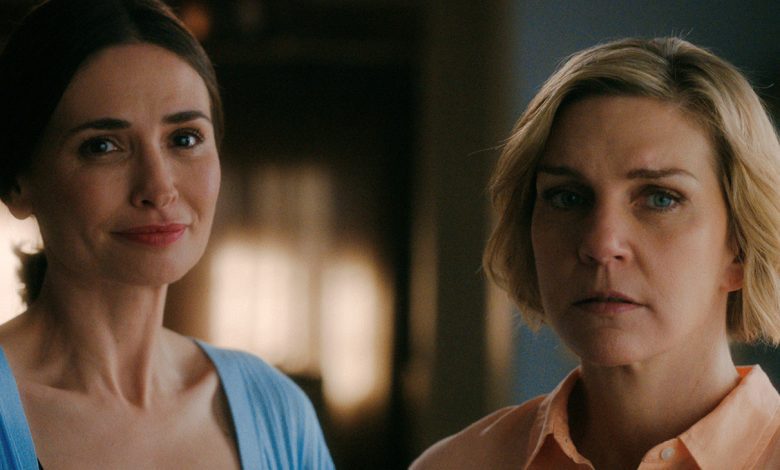
[This story contains major spoilers from the Pluribus season one finale, “La Chica o El Mundo.”]
Rhea Seehorn didn’t see Pluribus season one’s ending coming, either.


From frolicking on the slopes of Big Sky, Montana, to drawing a battle line with an atom bomb, tensions have certainly escalated between Carol Sturka (Seehorn) and Zosia (Karolina Wydra). The duo consummated their relationship in the penultimate episode, prompting Carol in the finale to turn her back on Manousos (Carlos-Manuel Vesga), who risked life and limb en route to Albuquerque in order to save the world with his fellow immune “Old-Schooler.”
Granted, his methods to reverse the Joining were more violently aggressive than she was expecting, but she’d already fallen for the idea of a romance between her and Zosia. That pipe dream and their globe-trotting romance soon ended, however, when Zosia revealed that she and the rest of the hive mind were nearing completion on a backdoor scheme to use Carol’s frozen eggs to turn her into one of them. Carol had thought she’d freed herself from this threat during her Vegas trip in episode six.
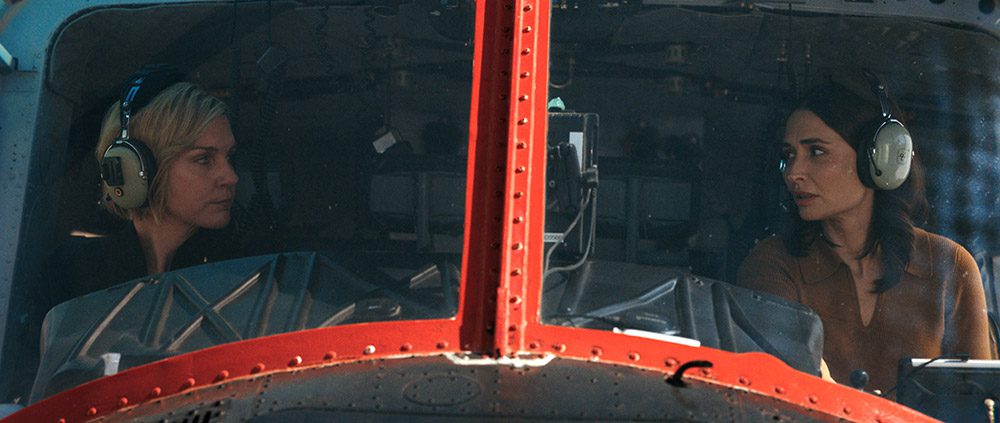
When Zosia flies Carol back home with an A-bomb in tow, the short-lived lovers exchange one last loaded glance before parting ways for the time being.
“She just feels so incredibly betrayed. She had some real feelings for Zosia, and she feels like an idiot that she thought Zosia had real feelings for her,” Seehorn tells The Hollywood Reporter after the season one finale. “It’s almost like the way you would feel from a breakup where somebody has chosen to not just break up, but to do it in such a painful and humiliating way that didn’t need to be done.”
The finale was co-written and directed by Gordon Smith. The longtime associate of creator Vince Gilligan also helmed the third episode, “Grenade,” in which Carol asks the Joined the theoretical question of whether their insistence to make her happy would go as far as granting her request for an atomic bomb. Neither Smith nor Seehorn knew at the time that the Joined’s willingness to do so was setting up an ominous punchline in the finale. In between that episode and the finale, the writers knew the thought experiment would come back in some form, but the atom bomb, specifically, was added at the start of the finale’s principal photography. In conversation with Apple TV, Gilligan and co. opted to end season one with more of a showstopping exclamation point, replacing the quieter team-up with Manosous that was planned.
In their finale postmortem with THR — Gilligan, Smith and season one finale co-writer Alison Tatlock all but confirmed that season two won’t premiere in 2026, so it’s going to be a while before we learn what Carol’s intentions are with the bomb. Seehorn admits she knows absolutely nothing about where the overall story is going, but she does seem to suggest that Carol’s formidable countermove is less offensive and more defensive. In other words, the A-bomb on Carol’s driveway may not necessarily be the beginning of nuclear warfare; it could just be the world’s most intimidating “Beware of Dog” sign. This preventive measure would be consistent with Carol’s previous aversions to violence she unknowingly or unintentionally caused.
“She’s very, very angry, but she’s vulnerable enough that it’s more about receding than even attacking at that point,” Seehoorn says.
There are still some big questions that will undoubtedly spark debate during the long offseason. Did Zosia manipulate Carol from the start? Did she recreate Carol’s favorite diner and instigate their first kiss in an effort to lull Carol into a false sense of security while the Joined put the finishing touches on their grand plan? They believe they do everything out of love for Carol, but does their programming even allow them to entertain the thought that they’re potentially manipulating her? For Seehorn, it was all manipulation, even if it wasn’t entirely sinister.
“It was manipulative [to rebuild her favorite diner], yes, but it was also an act of kindness. It was a lovely thing to do. Do they have to be mutually exclusive?” Seehorn asks.
Then there’s another question surrounding Carol’s brand of heroism. Is she really a hero if she only seems to want to save the world when she’s directly in danger?
“It’s a good question. How heroic are you if you only do it when you’re threatened?” Seehorn ponders. “But other than the dude who shows up with a machete and wants to kill everyone — everyone else [meaning the other Old-Schoolers] has told her to leave them alone and that they’re absolutely fine [living] this way. So what was the fight she was going to fight? And that’s part of her capitulation. She was just like, ‘I am tired of being Old Man Yells at Clouds from The Simpsons. Nobody cares.’”
Below, during a recent conversation with THR, Seehorn also discusses a story element that was removed from episode three, as well as how art eerily imitated life in episodes one and four while looking ahead to season two.
***
When Pluribus season one ends with the exclamation point of the atom bomb, I laughed out loud at that ominous punchline. What was your reaction when you first read it?
I thought that it was just another brilliantly written script, this one by Gordon Smith and Alison Tatlock. I thought it was so dramatic. It’s playing with certain tropes and catchphrases, but it’s also very, very funny while still having emotional impact. I don’t really know how the writers do it. They’re so deft with tone that I was like, “That’s an awesome scene. I can’t wait to dig in and try to play it.”
When the atomic bomb subject was introduced in episode three’s thought experiment, did you know then that the writers were leading to it in the finale?
No, I didn’t know. It was a surprise to me, too. The writers may have known. But I think Carol wasn’t at all planning on asking for these weapons of mass destruction or even violence. She was still of the mind then — even before she had any relationship with Zosia — that she doesn’t want to harm these people. If anything, that was an intellectual pursuit: “Will they do anything that I ask? And how can I use that to my advantage?” [Writer’s Note: I later learned that the atomic bomb was a late addition on the eve of the finale’s production. That said, between the writing of 103 and the finale, the writers did discuss the thought experiment becoming reality in another form.]
What’s on Carol’s mind as she looks at Zosia one last time before getting out of the helicopter?
She’s so angry, but also so hurt. She just feels so incredibly betrayed. She had some real feelings for Zosia, and she feels like an idiot that she thought Zosia had real feelings for her. One can argue how you define real feelings, and I know that the Others would have a different definition of it. So it’s hard to even look at her during that last glance. In that moment, she just feels so betrayed; that’s the best way I can put it. It’s almost like, “Shame on you.” It’s almost like the way you would feel from a breakup where somebody has chosen to not just break up, but to do it in such a painful and humiliating way that didn’t need to be done. So she’s very, very angry, but she’s vulnerable enough that it’s more about receding than even attacking at that point.
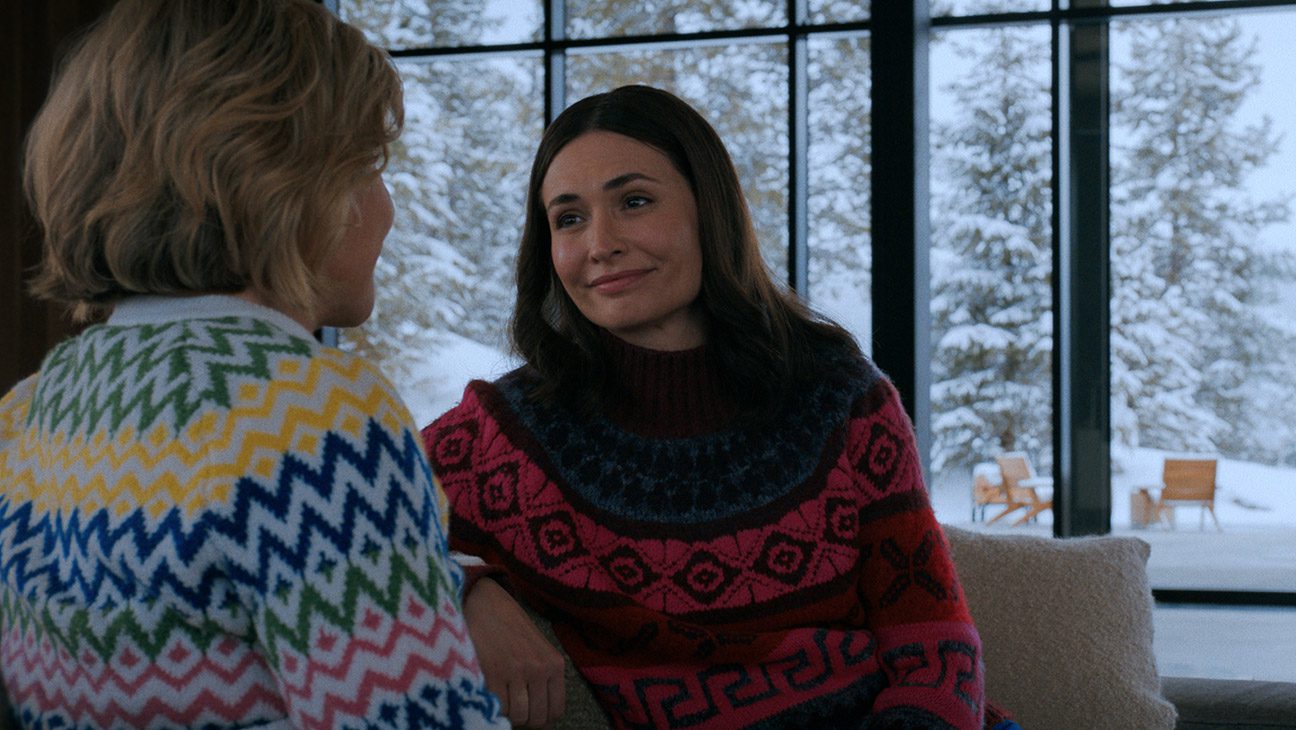
In Big Sky, Carol learns that Zosia and the Joined have been working on another way to turn her. Did the egg scheme retroactively confirm to Carol that everything leading up to it was manipulation — from the diner theatrics to Zosia making the first move to consummate their relationship?
I think so. But part of how much it hurts is because Carol pushed down that skepticism and doubt. What’s conscious and what’s unconscious kept shifting. How far would she suspend this delusion? You can have a lot of really interesting intellectual acrobatics to believe this delusion if you want to, and some of them are real questions that I find profound and interesting. The act of creating this whole diner led to what might be the first time that Carol has a joyful memory of something instead of picking it apart. She could have easily said, “That’s when I was broke, and the coffee sucked.” But she only says what was amazing about it. She allows herself to share that memory and to be vulnerable and light for a moment.
She then becomes infuriated and calls Zosia on it: “This is totally manipulative.” Melissa Bernstein directed that argument scene, which Jonny Gomez wrote. We all found it very interesting how difficult it was for Carol to wrestle with these [conflicting] ideas. It was manipulative, yes, but it was also an act of kindness. It was a lovely thing to do. Do they have to be mutually exclusive? So she’s been doing mental gymnastics to remain in this playing-house kind of fantasy world. Frankly, the alternative — which she just found out about through [40 days of] isolation — is to die alone in her house and never speak to anybody again.
So she’s trying to allow herself to float in the direction of the current for a little while. Some of that’s fatigue, some of it’s delusion, some of it’s desperation, some of it’s grief, some of it’s primal. But it’s an act of suppression of other thoughts that probably sting even more. Most of us have been there where it hurts even more to be made a fool of if you actually knew it all along and didn’t listen to yourself.
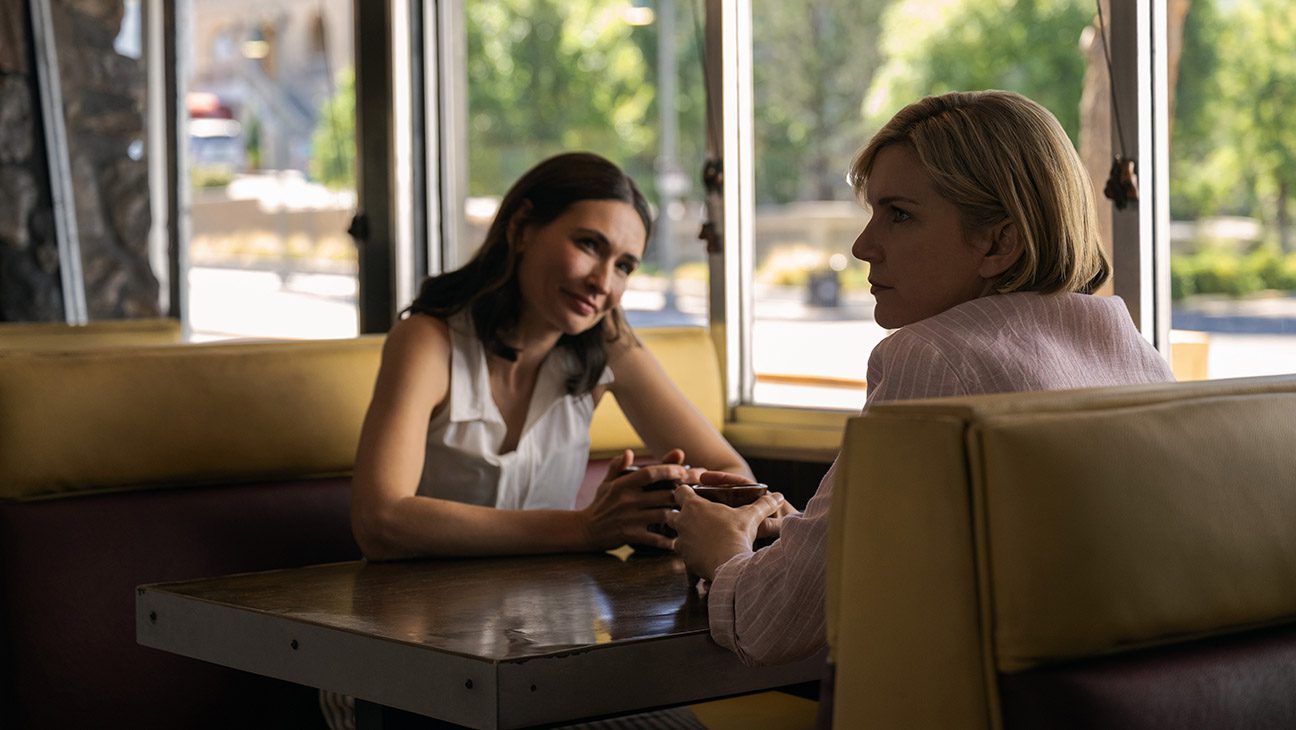
As soon as Carol thought she was in the clear, she returned from Vegas and went gallivanting around Albuquerque for 36 days. She then chose a globe-trotting romance with Zosia over Manousos’ offer to save the world. She only reversed course when she learned that she was still in danger of being belatedly joined. Does she actually want to save the world? Or does she just want to save herself?
It’s a good question, and it’s one that you could definitely argue. How heroic are you if you only do it when you’re threatened? But I would have a couple counter arguments. One of which is that Carol has never wanted to physically harm these people. Even when she was absolutely in opposition — “I want nothing to do with you. Get away from me. Leave me alone” — she hated when she harmed them. She was sick to death when she accidentally caused [millions of] people to die or even to have a broken bone. Going all the way back to the Spain episode [102], she asked them, “Can you give me anything to make me stop doing this? Even though my emotions are justified, I don’t want to hurt anybody.”
Manousos’ declaration that these are not humans and that they should basically all be murdered is not something she wants any part of. Yes, there is an additional layer that she now cares for this one individual, which further highlights that she thinks these people are human just with a neuroscience change and that they should be saved. So she wants nothing to do with [Manousos’ plan].
You are correct that it isn’t until her own independence is threatened again that she decides, “I’ve got to go back and fight the fight.” But to be fair, so far, other than the dude who shows up with a machete and wants to kill everyone — everyone else [meaning the other Old-Schoolers] has told her to leave them alone and that they’re absolutely fine [living] this way. So what was the fight she was going to fight? And that’s part of her capitulation. She was just like, “I am tired of being ‘Old Man Yells at Clouds’ from The Simpsons. Nobody cares.”
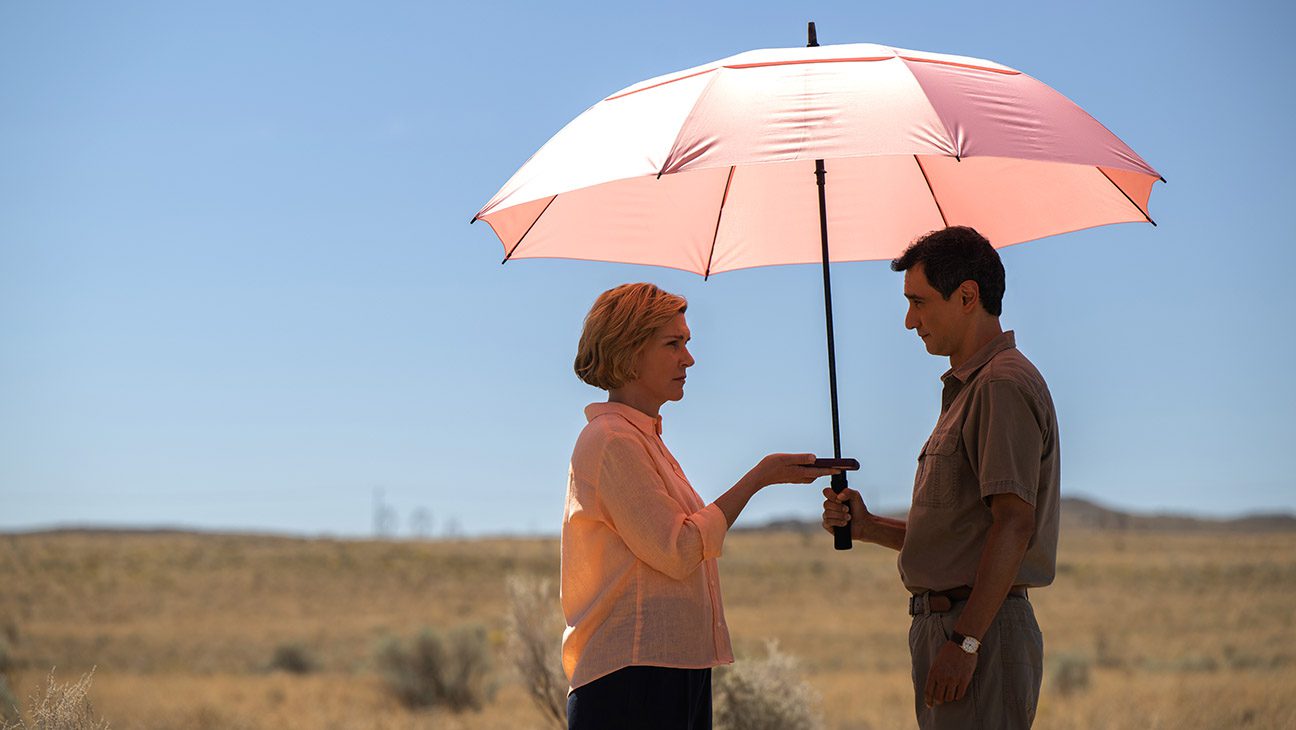
When you were talking to Bob Odenkirk for Interview Magazine, you said, “My character was almost suicidal to a degree that Vince and I realized we had to pull back a bit.” How does that relate to the firework scene and the vodka-Xanax scene? Are you saying there were more moments than just those ones?
It had more to do with the grenade scene. That’s what it was. It was just a few lines. It wasn’t pronounced. But it was in and around Zosia telling Carol, “If you saw somebody drowning, would you throw them a life preserver? Of course you would. You wouldn’t think, you’d just throw it.” And Carol says, “So now I’m drowning?” I cannot remember the lines, but it was about how Carol would rather kill herself, destroy herself, than join them if it comes down to it. Carol’s non-response and reaction then implied far too early in our story that Carol had given up and had no fight in her.
We needed the character — who has a 500-pound weight on her of grief, abject loss, confusion and terror — to keep getting up off the floor. But what’s compelling her to get up off the floor if she’s like, “I’m done.” So we talked about withholding that because we needed somewhere to go later, and then we see that [ideation] when we get into episode seven’s isolation stuff. So she couldn’t be broken that early, or we wouldn’t be able to show that later.
In that episode, the lit firework fell in her direction. She then had enough time to reposition herself in front of it and let the chips fall where they may. Do you consider that to be a suicide attempt?
I don’t think so. I find it to be passive and between two things. Like you said, it’s, “Let the chips fall where they may.” It also spurs her to do something and do something huge. It frightened her that she didn’t even care if that rocket might hit her in the face. That’s the glimmer of hope. It wasn’t, “I do want to die.” It’s, “I am losing my care for even my own survival and that’s a problem. I better do something right away because of where I mentally just went.” But I feel like it falls just short of, “This is what I want to do.”
When you tested with Karolina originally, did you know you were testing with an eventual love interest?
Well, we tested with the scene where Carol realized that they sent Zosia [in Raban form] to try to entice her on purpose. They say, “Because we thought you would like their company,” but there’s a lot involved with that. So I definitely would’ve had the idea that that’s how this could play out. I knew that she was going to be my co-star and number two on the call sheet. But I cannot totally remember if Vince laid it out like that. I don’t even think he called her a love interest. I knew she would be very, very significant. I assumed there would be a lot of complications: “Does she fall in love with this woman? Or is it just sexual chemistry? How does that happen? What kind of corner is she backed into psychologically? Because, clearly, if that’s going to happen, then I must not see them as Others anymore.” So I didn’t know how we were going to get there, but I just figured that we were open to a host of stories.
Do you know the broad strokes of season two’s story?
I know nothing. Not one single thing.
What about a tentative schedule for when filming might start?
I don’t know that either. They’re in the [season two] writers room right now, I know that.
In all of our interviews, you’ve always been really good about crediting your cast and crew, especially the behind-the-scenes folks. And I really respect that because I rarely hear actors express gratitude to specific craftspeople. What is the root of that generosity? Do you just remember a time in your career where a mention went a long way?
Sometimes the people that I’m mentioning will never hear it or read it, or they may get cut out. But I think the most honest answer comes from theater, especially early days, non-union. Everybody is in the trenches helping each other. I love this art form because it’s a collaborative art form. I value the input of others. I know firsthand that my creation of characters is with the aiding and abetting from all of my partners in crime including department heads and creative people, down to greens and sound.
In the premiere, Phil Palmer, my sound mixer, went to great lengths with his sound team — Mitch Gebhard and Andrew Chavez and all sorts of tech people — to figure out how I could talk through that TV to Peter Bergman, as Davis Taffler, so that we could perform the scene live without hearing feedback. Nobody asked him to build this whole thing; he just thought, “This could help her be even more alive in the performance.” So I care when Phil tells me that he needs to move a mic — or Mitch or Andrew need another place to do the boom. They want me to be my best, and I want them to be their best. That is how we make the show the best it can be. That part, as you can tell, is very important to me, and it does make me upset when I’m on a set where anybody thinks it’s all about them. It’s just the wrong attitude to have.
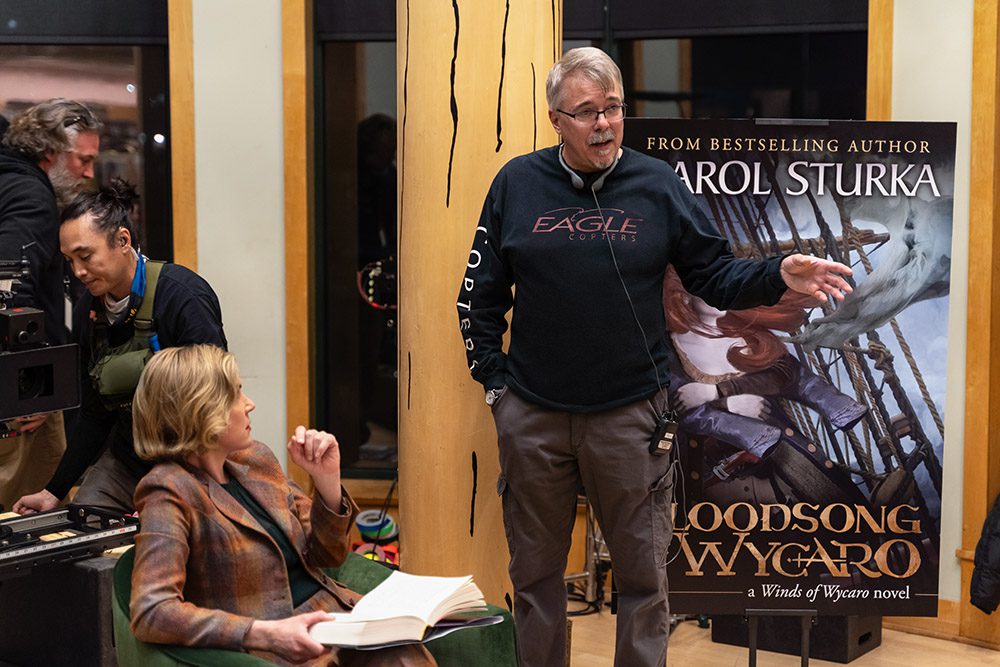
Having covered the ins and outs of Better Call Saul’s final season, the end of episode four really shook me, especially since Zosia was revived by Rosa Estrada, Saul’s healthy and safety supervisor who revived Bob during his cardiac incident. You’ve said to me before that you don’t “prostitute” real life in this way, but was it impossible to not go there when many of the same crew were there on both days?
And even when Carol tried to revive her wife, Helen, played by Miriam Shor, in the premiere. Vince and I had talks about it. Everybody on set was aware of what those scenes could bring up in people. Most of the people in the crew were also there that day with Bob. When I say I don’t want to prostitute that, I just mean I don’t look at a scene that has any similarity to any pain that I’ve ever been in as another chance to exorcize that pain. I take that to my therapist. (Laughs.)
However, you are absolutely right that my job is to constantly think about my as-ifs. Have I been in a circumstance where I’ve seen others have to deal with X, Y, or Z? What’s the closest I’ve gotten? I’ve never murdered somebody, but I have felt out-of-control rage where I behaved in a way that I never thought I would. What did that look like? What did that feel like down to the technical? Did I get very hot in that moment? Was I stuttering? Was I sweating?
So I do comparisons in that way, down to the very practical question of asking Vince: “How long do the compressions go on before she realizes she’s dead?” And he said, “Well, as long as they need to.” I then looked at him and said, “If it had been Bob and I was doing the compressions, hours? How long is the show? Would you stop?” Clearly, we couldn’t do that [for hours], so we had to find the reality of trying to revive somebody and not wanting to let them go within the obligations of doing a one-hour show that has to stop. And knowing I was surrounded by a bunch of people that are protective of me, it’s never going to be like, “Make her do it again for no reason.”
It’s an understatement, but I have the great fortune of knowing Bob survived and is 100 percent. So I at least didn’t have to think about that, but I do use my whole life, and I am fairly good at deciding what’s usable and what’s not. I can still leave it at the door and then respond in the moment to the energy and the vibe that is real for Carol.
I adore Miriam Shor, and I’ve now become very close with Karolina Wydra. She is another sister to me, and I absolutely love her. So there was extraordinary pain in just physically looking at them and thinking, “What if you lost this person in front of you right now?” Sure, there’s understanding watching Bob go through that and watching other people try to resuscitate him, but I try to separate the two. I know I’m taking forever to answer this, but I don’t ever want to be out there playing how “Rhea” would respond because Rhea is stuck in the trauma of this other thing. That’s not exactly what Carol is stuck in at this moment, and that’s why I figure out the appropriate as-ifs and leave the rest at home.
***
Pluribus season one is now streaming on Apple TV. Read THR’s previous interviews with creator Vince Gilligan, EP Gordon Smith and stars Rhea Seehorn, Karolina Wydra and Samba Schutte.
HiCelebNews online magazine publishes interesting content every day in the TV section of the entertainment category. Follow us to read the latest news.