Ruth Wilson on That ‘Down Cemetery Road’ Finale and Hopes for a Season 2 With Emma Thompson: “There’s More Juice in That Relationship”

[Spoilers for the season finale of Down Cemetery Road lie ahead. You have been warned.]
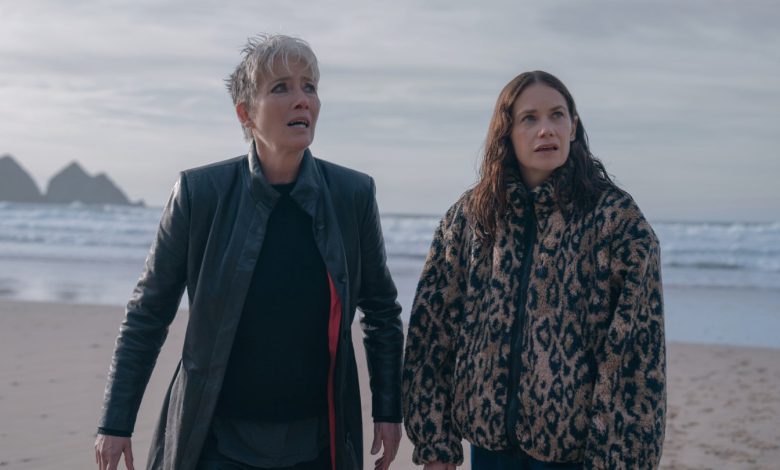
Ruth Wilson is reflecting on a cracking Down Cemetery Road finale in which her character, Sarah Trafford, and Emma Thompson‘s Zoë Boehm come to a final stand-off with their hunters.


Based on Mick Herron’s bestseller and adapted by Morwenna Banks, the eight-part AppleTV series follows lost soul Sarah and the charismatic, no-nonsense Zoë in their attempts to save a young girl, Dinah (Ivy Quoi). When Dinah is taken after her parents are suspiciously killed in a bomb blast, Sarah and Zoë uncover the truth: that the British government has been trying to bury a covert military operation in which they tested chemical weapons on their own troops.
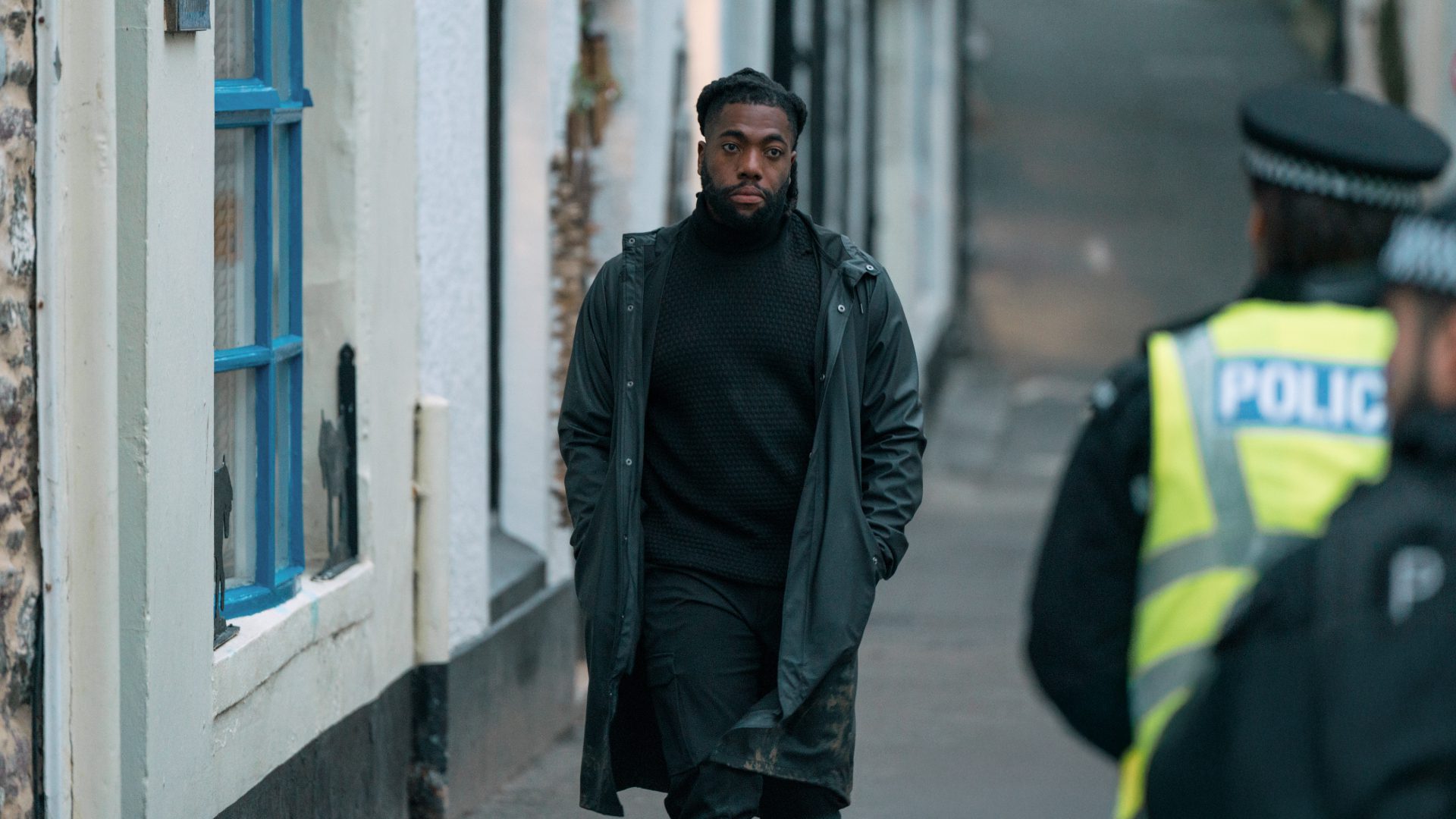
Downey (Nathan Stewart-Jarrett), one of the soldiers the government are endeavouring to silence — for good — dies at the hands of killer-for-hire Amos (Fehinti Balogun). Sarah and Zoë have managed to rescue Dinah and are attempting a way off the Scottish island where she was being held. It all comes down to an explosive stalemate at a church nearby, where the rather wimpy government official Hamza (Adeel Akhtar) comes face-to-face with the women.
Thankfully, Sarah manages to best him and Zoë indirectly kills off Amos, who C (Hamza’s senior, played by Darren Boyd) had sent in as back-up. The pair of them deliver Dinah into the hands of Ella, Downey’s sister, and part ways at Paddington train station in London. Zoë, it seems, has some real mourning to do — she has not yet entirely processed the death of her husband Joe, the private investigator Sarah hires, who is killed off early on in the series. Sarah, meanwhile, is ditching her lousy husband Mark (Tom Riley) and beginning life anew. Hoorah.
Below, Wilson unpacks the wild season finale, “What Will Survive.” She explains not quite understanding Sarah at first, throwing herself into stunts, and whether she and Thompson — also an executive producer on the show — could be tempted to return: “I really loved playing with Emma. I think there’s more we can juice [from] that relationship. We haven’t quite filled its potential.”
What is your reaction to reading a finale script like that? You hadn’t read the book, right?
No, I hadn’t read the book. Emma [Thompson] had read the book. Emma knew of the novels before Slow Horses even became a thing. I had never read them, and I read the pilot script first, and I’ve obviously seen Slow Horses. I love the premise of [Down Cemetery Road]. I thought the characters really read like a page-turner. I mean, [the script] was a really, really fun read, and I thought it felt quite a different character for me in some ways. And then I read the novels, so I kind of had an idea of what Mick had intended with his piece. And it was a chance to work with Emma, and a chance to work with Morwenna Banks and work within that Mick Herron world, there’s always a wonderful dry wit to his work.
But at the heart of it, it’s always about flawed characters who end up becoming these heroes in quite surprising ways. And they’re very human. They’ve got very human qualities. They feel very relatable.
I loved Sarah. She felt like someone I know. Were you happy with where her story ended? It was a real arc for her over the course of eight episodes.
Yeah, it was funny. I didn’t quite know. They had to truncate some of the first half of the novel in order to get Zoë’s character in earlier. So by doing that, you had to push Sarah quicker into the action side of the script, because [there was] a lot more sleuthing that she originally did with Joe. It did make her have to become a bit more impulsive, I think, as a character, and a little bit more instinctive. As I played the role, I understood her more. I didn’t particularly understand her initially, but as we progressed… I found it was through the relationship that she had with each individual, whether it was Downey, whether it was the little girl, or whether it was Zoë, that’s how you really formed the character. It was in the relationships with those people that she came out, she became defined. And I thought, yeah, she’s fascinating.
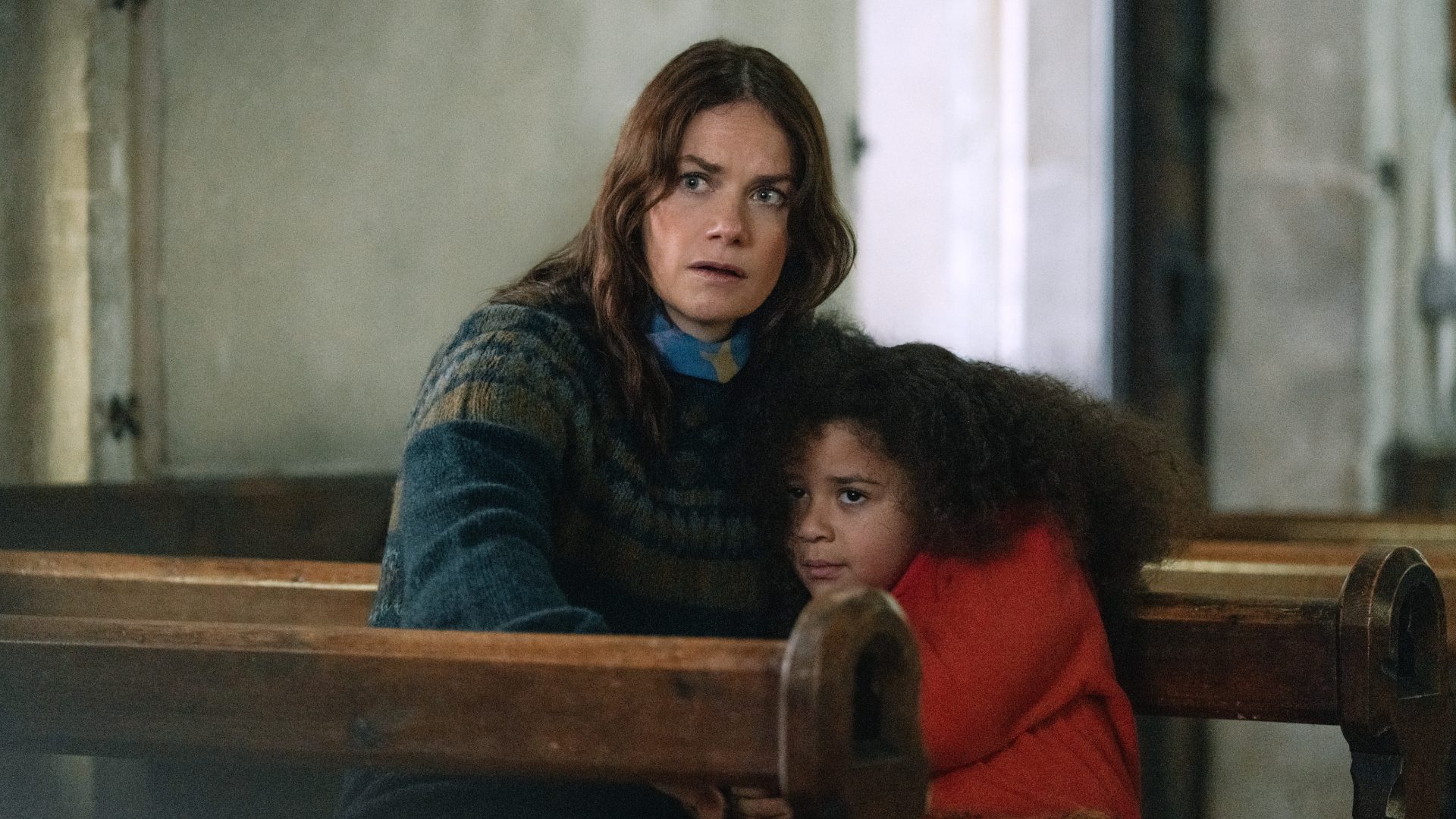
She’s someone who obviously has a real feeling of justice and a moral compass at the core of her, and she’s very brave. At the same time, she can be very childish and petulant and impulsive and reckless, but I think she lives entirely in the present. She’s very instinctive and very present in the moment. So whatever’s happening, she’ll just react to it. I really hadn’t made those choices before I went into the project, which I often do, [so it was] quite a strange experience in performing it. She’s in the driver’s seat, but her hands are off the wheel.
What was it that you found hard to crack with Sarah as a character? Those paradoxes of her personality?
Yeah. I think also it’s the nature of a piece like this — it jumps into the plot very quickly. Things happen all the time. What’s great about Mick’s work, and what’s great about Slow Horses and particularly our show, is that there’s no time to reflect. There’s no time to have those big moments. We have a few of them in the show, but they’re very brief reflective moments or thinking about your life and what you’ve done. Instead, you’re just constantly having to react to the situation and what’s happening. And it’s in reaction, it’s in what people do in those circumstances that indicates character. So it’s how she might physically react to something like pushing the fisherman in the boat, or her instant reaction is to chase or to attack [rather than] run in the opposite direction.
It’s not in the words. It’s not what she says, necessarily. It’s how she interacts with the circumstances that she’s faced with. I think, initially, I couldn’t quite understand what her drive was. I had an inkling that this kid was important, because it was somehow mirroring something of her own childhood to her: That in some way, if she can save this child, she somehow can save the little version of herself. And as the show went on, I did feel like she was exploring more of her younger self — that creative, wild persona that she was when she was younger — that she’s hidden away. I thought she had a secret, but I didn’t really know how that was going to manifest as the show went on… I understood her more at the end than I ever did at the beginning. Sometimes you’ve made all the decisions as you go into the performance, but this it was happening as I was there.
How fun for you as an actor. That was something I really liked about Sarah, how she built those relationships — even with Joe, who she ended up grieving. And Downey too; they were almost friends. How was it digging into each of those bonds?
What became clear to me is that Sarah is someone desperate for connection, or she’s looking for her tribe. I think she’s married into the wrong tribe, and she married a guy who didn’t really respect her or love her, and vice versa. She did it for safety reasons, and in that marriage, she was hiding herself and hiding parts of herself. So this whole explosion in her life has literally allowed her to rediscover who she really is. And I think she’s looking for her tribe. She’s sort of clinging on to anyone or everyone that she comes across. She’s very open in that way. I mean, she kind of forces herself into these people’s lives, and doesn’t let go of them, and makes them face something about themselves in doing so. [Laughs.]
All these people have intimacy issues. Downey doesn’t want to be close to anyone, can’t be close to anyone. Zoë, equally, can’t be close to anyone. So Sarah is attracted to those that don’t want her around, which is quite a brilliant setup for conflict and for a drama dynamic. With Nathan… I love the way it plays out in the books, because you think, ‘Are they going to get it together?’ And then, no, it doesn’t go there. It’s brilliant. The cliche would be that she falls in love with her kidnapper. But actually, it becomes a really interesting, humorous relationship, and almost a sibling relationship and friendship. They build trust together and actually rely on each other in the end. It’sthe same with Zoë, that she’s able to build these relationships is quite surprising, but it makes these people human rather than just cliched baddies or goodies.
I have to ask about Emma — sharing a screen with her must have been immensely rewarding. What was that process like, with her as a producer on this as well?
That was one of the reasons why I wanted to do the job – to work with her, and she didn’t disappoint. I mean, we didn’t have much time together. We had two scenes initially and then we didn’t come back together until episode six. But it was quite good in that way, because we both had a chance to ground our characters. So when we did come back, it was quite explosive, and it felt we were both quite specific in our own way and and that dynamic really worked. It was funny, because it wasn’t like most dynamics, where one person’s always playing the Batman and [then the] Robin. They took turns as characters to take the lead, and they kept surprising each other. And I could do that with Emma. She would surprise me. I’d surprise her. The chemistry was natural and instantaneous. She works very lightly. She has such a lightness of touch with her work. I really enjoyed that, and learned a lot from that, and certainly in a show like this. She can go deep and feel the most when the scenes need to be emotional, she’ll go there, but otherwise she keeps it light and free and easy and playful. And I think that was really useful. It’s really wonderful to work alongside her.
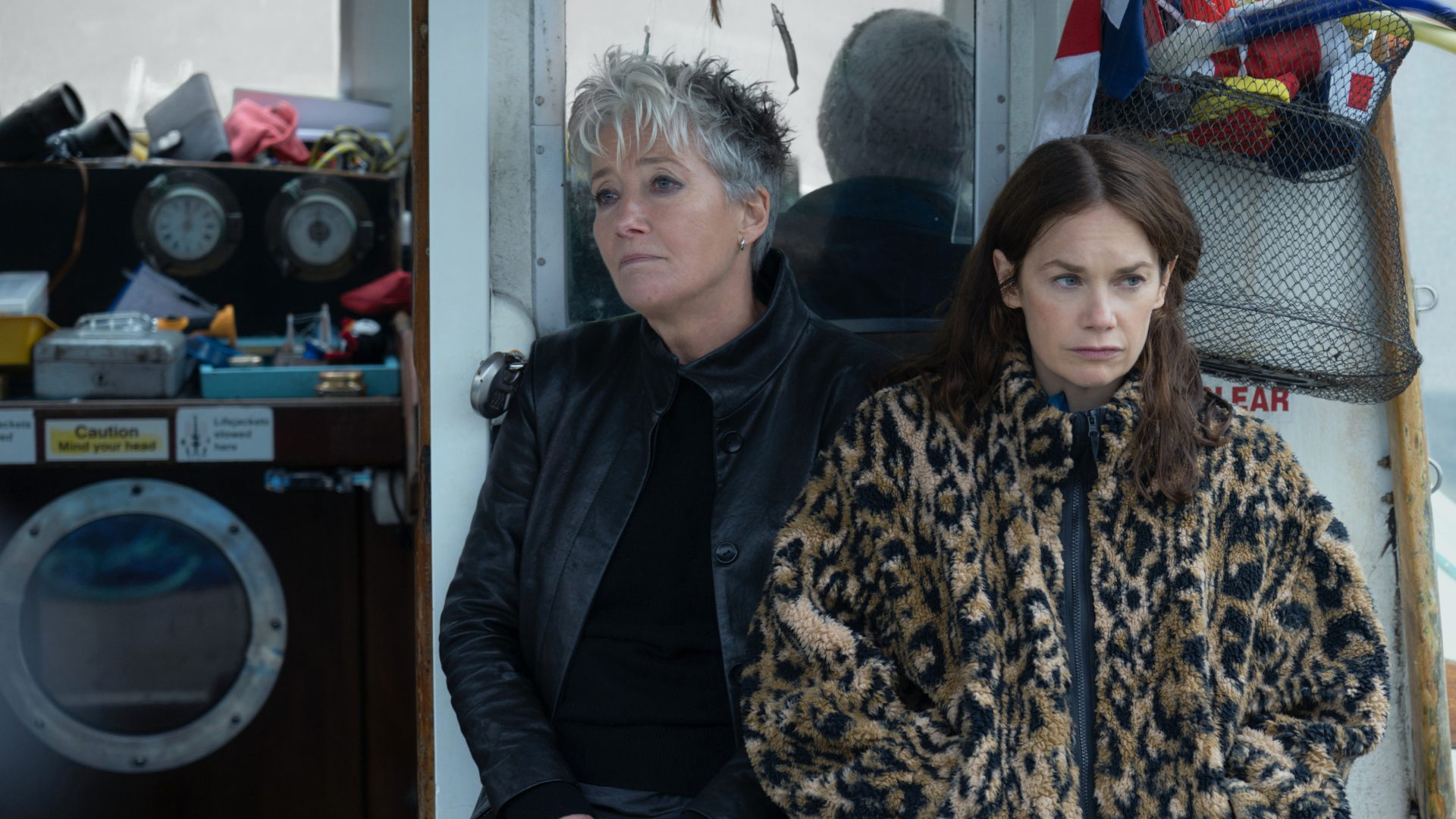
That final scene was so bittersweet. Especially Sarah’s goodbye with Dinah — she says that her and Zoë are two women who never wanted children, but is there any part of her that wants to look after Dinah for good?
Um, no. [Laughs.] Well, it was really interesting, that kid who played Dinah — Ivy — is such a sweet child and brilliant and really funny and smart. So I really enjoyed working with her, and she was adorable. But I don’t think Sarah thinks she’s in a place to take on a kid at that point. I think it’s about what that child did for her, in the whole journey. [She] made her face her life and give her a new beginning, but also, it’s the loss of the person that she met. And I don’t know if she really thinks that she could take on that responsibility, but I think it’s about everything that’s passed and that child did make her reinvent herself, or make her rediscover herself. Maybe I’ll go and take her out for tea every now and then. You know?
Yes. Despite all the trauma, there was something in Sarah that healed.
Definitely. The journey she’s been on… We’ve seen her change and be very different with different people, and open up and wear these weird clothes. We’ve seen different sides of her come out, which I really loved exploring that with her, and in a way, she was the least defined of all the characters. Initially, everyone else felt quite clear as to what their intention was or where they were in their worlds and their life. They had made strong decisions. Sarah felt quite lost and unclear and ambiguous in a way. As the show goes on, you really understand why she was so lost, but you also understand a bit more of who she is.
And as you said, Sarah hadn’t found her tribe. She married into the wrong tribe. How do you envisage things for her? She goes home and dumps Mark? Maybe she never goes home?
[Laughs.] I don’t know. Maybe she goes home and packs her bags when he’s at work and just leaves. I mean, I sort of think there’s no point in having the conversation. It almost doesn’t warrant having an argument. I imagine that’s what she might do. She knows what he’s up to. She doesn’t want to go back. He would almost prefer not to have that conversation either. The divorce would be…
Faceless.
Yeah. [Laughs.] I think she’d just go and get what she wanted. I mean, she set fire to her whole life and if she goes back, she risks getting locked back in there, away. If she has that conversation with him, she might risk finding herself stuck in it again. So I think it’s best to stay away and just find herself. I don’t know what she does next. I love how it’s left like that. There are a lot of questions, what happens to her and Zoë, and what happens to her and her past. Where does she go now?
What do you think happens with her and Zoë? Surely they’re going to see each other again.
I think [Sarah] would attempt to ask her out for a coffee, and Zoë would just find any excuse not to go. Then she might text her a few times, and then actually go back to the office and try and find her. I think Sarah would persist in trying to create a relationship, and Zoë would try to resist and avoid it — until Zoë needs her.
It is left open-ended. C doesn’t quite get his comeuppance. Would you return to the Down Cemetery Road world and re-team with Emma?
It felt like a very refreshing role for me, actually, a different role. And I really loved playing with Emma. I think there’s more we can juice [from] that relationship. We haven’t quite filled its potential. I think so. If there was a second season, it’d be great. We’d love to return to it and find out: What would Zoë and Sarah be up to? It’s nice to explore where they go next.
Why “What’s Up?” by 4 Non Blondes?
Oh yeah. Why did [we pick] that song? I think there were a few songs going around, some potential. I remember that was like, “Oh yeah, okay. I know the song. It’s one we can belt out.” There were different versions that we did in that car — louder versions and versions where Emma joined in. So it was a song that you can definitely belt out if you need to. We’ve done that at karaoke, and I remember certainly when that song came out, or when I was younger, singing it. So it’s one that I knew I was familiar with, and it was one that Morwenna felt was kind of like, you could let out your anger in that song, your female anger. It’s a great sing-along tune.
This was very action and stunt-heavy. How was that change of pace for you — daunting?
No, I quite like stunts. I haven’t done many, but I enjoy doing them when I do because I’m quite physical as a person. I’m quite strong. So I really enjoy all that stuff and things like on the boat, we had the bit where I had to drive off with a kid at the end of episode seven, and I’m racing on a little dinghy, and we’re doing that for real. The camera’s in the boat with me, and we’re zooming in this [boat] on the south coast, and I loved it. I loved all that stuff. Bring it on. I’m really into stunts and action, which I didn’t realize, but it felt natural.
What was your favorite scene to shoot?
God, what was my favorite? I did love all the boat stuff, actually. I mean, we talk about the boat scene because it was sort of PTSD, and an actor was throwing up over the boat, and crew members were getting sick, but Emma and I didn’t. So we felt quite smug. But I think that boat sequence was quite fun. There were lots of elements to it. There was a whole journey with Gary Lewis [who plays Captain Donny]. I’d worked with Gary Lewis in His Dark Materials, and I’d slightly beaten him up then as well, so that we have this relationship where every time we come together as actors, I’m always slightly bullying him or beating him up. But I love that little dynamic that Sarah finds with him in that episode. And I just thought it was great fun. It was a moment that Emma and I had really come together as characters.
HiCelebNews online magazine publishes interesting content every day in the TV section of the entertainment category. Follow us to read the latest news.