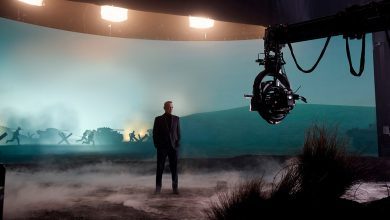
Ryan Coogler Goes Deep on Shattering Oscar Records, Losing Chadwick and Battling Imposter Syndrome

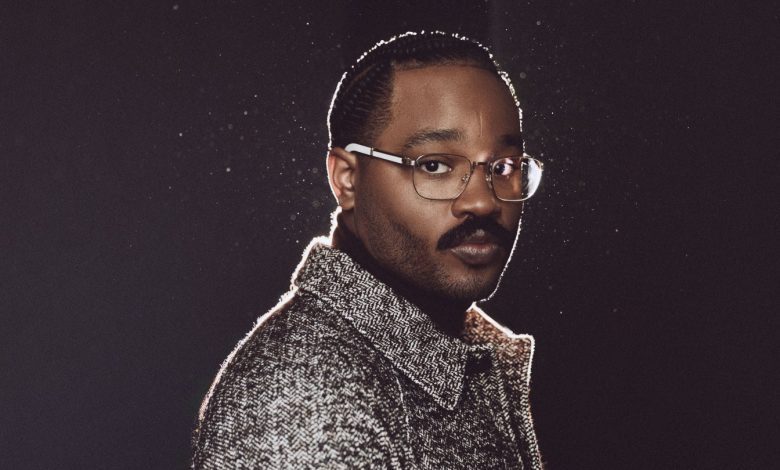
If you’re new to Oakland, California, and want a few recommendations from Ryan Coogler, set aside some time. As his friends and colleagues will tell you, the 39-year-old filmmaker and Bay Area lifer takes no question for granted. “You like coffee?” he asks me. “You can’t lose out here with coffee, bro,” naming spots like Aint Normal and Highwire on nearby College Avenue as his must-tries. To round out a weekend up here, he suggests the Black-owned Marcus Books and the Grand Lake Theatre, where his most formative moviegoing experiences took place, including seeing Malcolm X at 6 years old with his father.
On a breezy January afternoon, we’re having “good coffee” — so Coogler, a connoisseur, assesses — at the border of North Oakland and Berkeley, a few blocks from where Coogler spent the morning intensively writing for his upcoming The X-Files reboot series. He hasn’t had time to eat, so he’s very hungry; he quickly scarfs down a bagel with cream cheese and lox. “I’m in deep now. Today’s a good day,” he says of the morning’s writing. “Been a lot of days that weren’t so good.”





Photographed by AB + DM
Coogler also lives nearby and has mostly stayed up here in the week since he made Academy Awards history. His audacious genre mash-up Sinners became the Oscars‘ most nominated film ever with 16 nods, crushing the record of 14 set — and never previously topped — by 1950’s All About Eve (Titanic and La La Land tied it). This is only the latest milestone in Sinners‘ extraordinary run since its April release; distributed by Warner Bros., it’s also the highest-grossing movie not based on any preexisting material in North America since 2010’s Inception.
Next month, Coogler has the chance to make yet more, in this case depressingly overdue, history: As the seventh Black filmmaker ever nominated for the directing Oscar, he could be the first to win the category. (He’s also contending for best picture, as a producer, and best original screenplay.)
While traveling the awards circuit over the past few months, he’s spoken often of wrestling with impostor syndrome and anxiety and carries an unforced modesty. Yet his ebullience on the trail has been clear — beaming alongside his collaborators, many of whom are now Oscar-nominated, while taking the acknowledgment of his own work in stride.
With five films, he’s already contributed an enormous amount to the industry: an old-fashioned Sundance triumph in his debut, Fruitvale Station; the galvanizing revival of the Rocky franchise with Creed; the culture-defining Black Panther films. Sinners — an original, rollicking entertainment exploring historical traumas with unusual depth for a $90 million film — has marked the moment for his peers to turn the spotlight back on him.
“I feel proud,” says Sinners star Michael B. Jordan, with whom Coogler has collaborated as long as he’s been making movies. “To go through every stage of filmmaking and creation — writing through the studio system and independent film, from preexisting IP to making original IP — this entire journey just feels full. It feels complete. To see everybody embrace him, for him to get his flowers this way, it’s just a tremendous sense of joy.”
Chadwick Boseman and Ryan Coogler attend the European Premiere of Black Panther at Eventim Apollo on February 8, 2018 in London, England.
Mike Marsland/WireImage
The Coogler sitting before me now, wearing a relaxed black tee and making warmly direct eye contact, senses something has changed in himself, too. He traces this evolution to Black Panther and what he learned from working with that Marvel Studios film’s late star, Chadwick Boseman.
“Engaging with him on an artistic level, conversations that will forever just be between me and him — I was about 30 years old, stressed, completely out of my mind, sleep-deprived, convinced that the movie wasn’t going to work,” Coogler says. “I robbed myself of truly enjoying that privilege — even of sitting there and enjoying the countless Chadwick Boseman takes, because he didn’t have a bad take. So when he passed, I’m like, ‘Oh my God, how much stuff have I not allowed myself to enjoy because I was in my own head — feeling like I was unworthy?’
“I’m going to take the lessons from Chad for the rest of my life, bro,” he continues with a smile, his voice going quiet. “That includes all of this. I have to see the good in things, see the value in things, and not let impostor syndrome or guilt or negativity rob me of moments with my cast who I love — or with folks who want to say, ‘Hey, good job.’ “
***
Officine Generale coat; Ralph Lauren sweater; Amiri pants; Coogler’s watch, jewelry, glasses.
Photographed by AB + DM
“My family is from North Oakland, which is there,” Coogler says as he points out to the left of our view. He has roots all over this city. He highlights the longshoreman cranes hovering farther west, where his grandfather and uncle worked for the ILWU. “I was brought up on union talk,” Coogler says.
His mother was a community organizer, his father a probation counselor at a juvenile hall; they put him through private school, a relatively privileged environment at sharp odds with the circumstances of some of his neighbors.
In his early teens, he met his wife, Zinzi, now the mom to his three kids and co-founder of their production company, Proximity Media (alongside longtime friend Sev Ohanian). “Whenever I’m here, everybody’s here,” Coogler says. Oakland is home. He’s picking up his kids at 3 o’clock.
He attended college on a football scholarship at nearby Saint Mary’s and later Sacramento State before deciding on a change in direction after graduation. His love of cinema was instilled well before he hit middle school, his desire to dedicate his life to it cemented by Zinzi’s gift purchase of the screenwriting software Final Draft.
“When football began to feel like a chapter he might be closing, I could see he was looking for a place to pour that same energy into, and filmmaking was it,” says Zinzi. He was accepted into USC’s film program and arrived with voracious ambition. In the vein of heroes like John Singleton and Spike Lee, he intended to burst onto the scene with the brash, clear-eyed urgency of youth. He’d felt talked down to by movies that depicted but didn’t understand his generation.
“You need that hunger — without it, movies don’t get made,” says Michelle Satter, who co-founded the Sundance Institute’s Screenwriters Lab, where Coogler was accepted to develop his first feature, Fruitvale Station.
Set in Oakland, Fruitvale Station dramatized the real-life events leading up to the 2009 death of 22-year-old Oscar Grant (played by Jordan) at the hands of a police officer. Buzz built fast around the project: Forest Whitaker stepped in to produce, Satter gave notes on various drafts and cuts, and newly minted Academy Award winner Octavia Spencer joined the cast as Oscar’s mom, Wanda. Filming began in July 2012, a few months after the tragic killing of Trayvon Martin. The day after the movie was released, George Zimmerman, the neighborhood watch coordinator who shot Martin, was acquitted of murder, leading to nationwide outcry.
A nuanced, textured character study, Fruitvale Station doubles as a searing plea for racial justice. The film swept the Sundance festival’s awards before going on to make north of $17 million worldwide, on a budget of $900,000. By any measure, the film was a resounding success.
After the movie’s release, Coogler, at 27, fell into a depression. “I did have a need to make that movie, but I was not convinced that I belonged in what comes after that,” he says. “When you come from where I’m from, that’s not necessarily an affirming environment all the time. You can convince yourself that somebody’s playing a joke on you. You can convince yourself that none of this is real: ‘I don’t deserve to be here. This place isn’t for me.’ ”
He also felt enormous stakes. He expected his movie to wake the world up and right itself so that what happened to Oscar Grant could never happen again. It was too much for a burgeoning artist in his 20s to put on his movie; it’d be too much for any artist to put on any work.
“That movie was made by a person who didn’t totally understand how the world worked — like, straight up,” Coogler says. “Playing football and going to school my whole life, I wasn’t studying all the factors that led to Oscar being executed on camera. I know more now — and it doesn’t make you optimistic.”
“I try to make the best movie I can as the person I am at that time,” Coogler says. “If I was to make Fruitvale Station [starring Michael B. Jordan, left] today, it’d be a totally different movie.”
The Weinstein Company/Courtesy Everett Collection
I’d rewatched Fruitvale Station just before our interview, days after 37-year-old ICU nurse Alex Pretti was fatally shot by an ICE agent in Minneapolis — the latest killing on camera to capture a horrified nation. I wonder what Coogler might tell a young filmmaker today with that same anger and purpose that he felt, only for it to have at least briefly turned to despair.
“This is why we need films from people who are naive, the reason why we need films from people who aren’t old enough or jaded enough to understand that art can only do so much,” he replies. “There’s a place for optimism. There’s a place for youthful ignorance. It’s a vital place.”
He turns toward what’s going on in Minneapolis: “Violence is horrible to see — violence in any way, shape or form — and when you are forced to bear witness to it, it should mess you up. Then, when you see violence inflicted by people who are there to protect people — by people who were funded by tax dollars? That’s a whole ‘nother thing.”
He adds of how he looks back on Fruitvale, “I’m thankful for everybody who met that kid, who was naive and ambitious and optimistic — sharp in some ways, ignorant in others.”
Spencer was one such person. She tears up over the phone, recalling a scene where Wanda identifies Oscar in the morgue. The day of production had been laid out so Spencer wouldn’t see Jordan, her co-star playing her dead son, until filming; when they got to it, she couldn’t do it. “It was so realistic that it scared me and I froze. I looked away,” she says. “Ryan came up to me and he said, ‘I need you to see him. I need you to see him.’ ” Spencer has taken that note to every job since: “I have to deal with the fear.”
Amiri jacket, pants; Ralph Lauren sweater; Coogler’s jewelry, glasses.
Photographed by AB + DM
***
Coogler learned from Spencer, too. On a Fruitvale scene he was struggling to complete, “I was trying to direct her too much,” he says, until she asked him for the room to play out a take for herself without notes. “It was perfect. It went straight into the movie,” he says. “I think about Octavia every time I’m on set. There is a direct line from that to a line reading from Angela Bassett in Wakanda Forever, to basically every performance in Sinners.”
Coogler was officially attached to direct Creed less than two weeks after Fruitvale hit theaters. The bump in scale meant answering to many voices: Sylvester Stallone, reprising his role of Rocky Balboa for the first time in a decade; Irwin Winkler and the producers of that then-40-year-old storied franchise; MGM, Warner Bros. and all the companies expecting to make money off of the spinoff.
“Watching Ryan navigate that [studio] system, it didn’t feel like he was making the concessions that you think about when you think of smaller indie filmmakers moving into that space,” says Tessa Thompson, who played the female lead, Bianca. “It felt seamless and homegrown and tender.”
With Fruitvale, Coogler knew the milieu. Creed took him 3,000 miles away to Philadelphia, and he learned the city inside and out, peppering his movie with niche local details. “I have this fear of getting a place wrong,” he says. “I don’t ever want somebody who’s from the place to be excited to go buy tickets to a movie, then sit down and say, ‘Oh, man, they got it wrong.’ That’s getting punched in the gut.”
After the success of Creed — it grossed $173.6 million globally, more than four times its budget — Coogler was approached to helm Black Panther. His first order of business: travel around Africa to realize the fictional sub-Saharan country of Wakanda as richly and accurately as possible. He immersed himself in the cultures of countries like Kenya and South Africa. He learned the smells, tasted the food, got to know the people.
His vibrant vision for Wakanda came to life with the help of artisans who have remained with him through to Sinners, including costume designer Ruth E. Carter and production designer Hannah Beachler, both of whom won Oscars for the 2018 movie and are nominated again this year. Even by a harmonious set’s standards, the vibe is unusually familial.
“He was getting married, and he wanted me to see what he was wearing to his wedding and give him some tips,” recalls Carter of her first meeting with Coogler about Black Panther. “He liked that athletic fit. He didn’t want to wear a tie. I said, ‘Well, just think that your wedding photos will be around forever. Everybody will look at ’em.’ ” Did he wind up wearing one? She shrugs: “I don’t know!”
Coogler booms with laughter when I pass along Carter’s memory and ask on her behalf. “That’s exactly what it was,” he says between chuckles, pouring himself another cup of coffee. Breaking news: He wore the tie. This was the legendary Ruth Carter outlining what to wear, after all. “Got to take the advice,” he says. “No option.”
Coogler knew “everybody’s going to be grieving in different ways,” he says of what it was like continuing the Black Panther franchise without its star, Chadwick Boseman.
Matt Kennedy/Marvel/Walt Disney Studios Motion Pictures/Courtesy Everett Collection
Black Panther grossed $1.35 billion worldwide and was nominated for the best picture Academy Award.
The sequel, Wakanda Forever, seemed like a slam dunk. Then the world changed, both within the Black Panther universe and beyond it. Coogler was deep into writing when the star, Boseman, died in August 2020 from colon cancer. The entire project would need to be reframed around the enormous loss, with Boseman’s T’Challa dying at the beginning of the film.
“I would look around to people who had been making movies as long as I had been alive, bro, sometimes longer, and they would say: ‘I’ve never seen anything like this,’ ” Coogler says. “We had to work from the place of being brokenhearted, or else it wouldn’t have got done. … Me and Chad were getting closer, so it was like a wound to the heart. It was like somebody had taken the sun away and we were all these planets floating.”
“You could just see [Coogler’s] heart, and every day in every way I wanted to give in full measure,” recalls Bassett, whose wrenching turn as T’Challa’s mother earned her an Oscar nomination. “Something about him makes you show up for him — and for yourself.”
Coogler, meanwhile, speaks of that period with great sadness but also pride. “I learned that I was more resilient than I give myself credit for — I’ll say that was the biggest thing,” he says. “And that movie gets watched at home so much more than the other Panther did. I think about that: People may be watching when they want to feel something specific.”
Officine Generale coat; Ralph Lauren sweater; Coogler’s watch, jewelry, glasses.
Photographed by AB + DM
***
Coogler had traveled to Philadelphia, to countries all over Africa, to film festivals across the world — and yet he’d never been to Mississippi, the home state of one of the most important people in his life, his great-uncle James Edmonson, who died in 2015.
“I had to ask myself, ‘Why is that?’ ” he says. “Shame had a lot to do with not getting to the South.” Like those earlier trips, an idea for a film brought him there — the legacy of his uncle, who introduced Coogler to blues music, inspired Sinners. Coogler traveled the Mississippi Blues Trail alongside composer Ludwig Göransson, a moving but painful journey. He learned about his roots, as a product of the Great Migration’s second wave, while coming face-to-face with the brutal realities of slavery and Jim Crow.
Such personal growth coincided with a kind of artistic explosion. Coogler hadn’t made a film unbeholden to IP in more than a decade, and he leapt at the opportunity to swing for the fences. He worked quickly and compulsively, delivering a scary, sexy vampire movie centered on twins Smoke and Stack (both Jordan), who are angling to open a juke joint in 1932 Mississippi.
It played as a galvanizing ode to blues music, a complex unpacking of cultural ancestry, ownership and appropriation — and a damn good time. Crucially, it’s also the first instance of Coogler producing his own directorial endeavor, alongside Zinzi and Ohanian. (Their company, Proximity, had backed efforts including Space Jam: A New Legacy and the Oscar-winning Judas and the Black Messiah.)
“I see Ryan the most in this movie,” Jordan says. Zinzi Coogler concurs: “This film is deeply reflective of him. It’s personal in a way that’s woven into the DNA of every character and every choice.”
Driven by both the movie’s themes and the evolution of his own career, Coogler negotiated to have Warner Bros. return the rights to him 25 years after release — an uncommon, if hardly unprecedented, arrangement that nonetheless sparked endless debate about its merits both for him, despite his strong track record, and for an embattled Warner Bros.
Indeed, the film was absorbed into a larger period of industry panic around Warners film heads Michael De Luca and Pamela Abdy, whose spring had kicked off with the risky plays Mickey 17 and The Alto Knights, which both bombed. Rumors swirled around their future at the company. A Minecraft Movie‘s box office dominance kept the chatter at a simmer, but all eyes turned to Coogler — in the spotlight like never before, with Sinners next at bat. The movie was expensive, strange and arriving at an existential moment for theatrical exhibition. Did it spell their doom?
Hardly. Sinners proved every skeptic wrong. But even before that, Coogler tells me with an almost nostalgic grin, he wasn’t bothered by the negativity clouding the release. “I admired Mike and Pam and what they were doing, so I didn’t mind that our film was the one coming at a time when they needed something to work — I actually liked that,” he says. “I liked the opportunity to show up for a philosophy that I believed in: bravery, creativity, theatrical. I was happy that it was Sinners, where people were talking about: ‘Is this going to work or not?’ “
He puts it for me this way, catching my look of surprise: “If somebody said, ‘Hey man, there’s going to be a whole debate around the movie business, if it is worth it or not, if people should be taking gambles on things that aren’t sequels’ — and gave me the choice of, ‘Do you want it to be your movie?’ Yes! I’d be excited.”
Coogler’s confidence rested in a core fact of Sinners: More than any of his past movies, it was made with the audience in mind. The bravura filmmaking, showcasing Coogler’s playful authority behind the camera and the eye of his DP Autumn Durald Arkapaw (who, in March, may become the first woman to win the best cinematography Oscar), proved inviting rather than alienating.
Two weeks before it hit theaters, Kodak released a 10-minute video with Coogler describing aspect ratios and the best ways to watch Sinners on the big screen — a gleefully nerdy breakdown that eventized the release. Nearly 17 million people watched the video on X alone.
“I wanted people to know we were thinking about them — that’s it,” Coogler says of what inspired the Kodak video. “Every time we framed up a shot, we would talk about the aspect ratios and what was going to be available where, and why we should back the camera up or move it closer. We were thinking about the audience on this movie every day. Sometimes it is nice to know that you were thought of, you know what I mean?”
“The genuineness of him is something that really stands out,” says Sinners star Michael B. Jordan (left) of Coogler.
Eli Adé/Warner Bros.
Take Sinners‘ mic-drop of a centerpiece, called the surreal montage, in which centuries of musical forms and genres are collapsed together — a joyous collective expression of artistic expression and ancestry. Each element, from sound to costume, intricately but vastly captures this spiritual expanse.
“Everyone who read it from a different discipline could hear the music, could see the movement, could see the costumes,” Carter says. “That is the beauty of allowing your team to understand the material but also give them room for their own vision.”
Catch a filmmaker or executive in town lately, and if Sinners comes up, a rave about the montage almost assuredly comes next. “The music was incredibly meaningful to me, and I told Ryan that my jaw was on the floor. It should win best picture for that alone,” says Marvel Studios president and Black Panther producer Kevin Feige. “The Academy doesn’t always, in my opinion, recognize the movies that are most relevant for audiences today. But, boy, did they hit it with this one.”
***
Amiri jacket, pants; Ralph Lauren sweater; Coogler’s jewelry, glasses.
Photographed by AB + DM
Coogler will turn 40 in May. He is not that young filmmaker anymore. What he says and how he says it — even, when he chooses to take a stand — matters. There’s an elephant in the room regarding our conversations about Sinners‘ impact on the theatrical business, for instance: Netflix’s impending acquisition of its studio, Warner Bros. “I don’t want to speak out of school when it comes to that,” Coogler says when I call out the elephant. But he has a unique background and perspective within Hollywood and carefully leans into it as he navigates the business in more of a leadership capacity.
So, the Warners sale. He answers through the prism of his upbringing and what he heard a whole lot of growing up: union talk. “What I’m going to always be advocating for is jobs. Strength of opportunity for our union membership and our sister unions. We don’t want to see consolidation lead to less buyers, less jobs, less opportunity — and that tends to be the pattern when these things happen. It is never good for the working filmmaker.”
He pauses. “We are eyes and ears open and hoping for the best in a situation that’s not ideal, it looks like,” he says.
Coogler reconfirms that his next movie will be the third Black Panther, but right now, it’s all X-Files, all the time. This project is personal, too — he watched the original show religiously with his mother as a kid. He’ll return to work as we wind down our afternoon together. “There are times when I wish that I could separate and have a day where I’m not anxious about having to deliver the draft,” he admits. Even now, he’s struggling to enjoy the moment.
In its way, it feels full circle. In 2013, Coogler brought Fruitvale Station to the Deauville American Film Festival, in the Normandy region of France, where he met Breaking Bad creator Vince Gilligan in an elevator. There, he learned that Gilligan got his start on The X-Files, and years later, Coogler reached back out when the chance to make his own X-Files came his way. “Vince gave me a couple hours of advice over Zoom and answered all the questions I had — I’ve got them all in my notebook, and I go back to it often,” Coogler says, before noting he’s currently watching Gilligan’s new show, Pluribus.
Coogler speaks of figures like Gilligan with reverence and humility. I throw it back on him a bit — when it comes to breaking barriers for his own legends, his track record is certainly admirable. Stallone got his first Oscar nom in 40 years for Creed; Bassett got her first in 30 years for Wakanda Forever. Carter, who designed Coogler’s childhood favorite Malcolm X, won her first Oscar for Black Panther (and her second for Wakanda Forever). Another Malcolm X alum, Delroy Lindo, got his first Oscar nomination for Sinners, more than 50 years into his career.
You can tell Coogler would rather shut his eyes and plug his ears than hear anyone blowing smoke. But he listens, and nods, and takes the point.
Rather than take the credit, he connects this back to another mentor. “I remember my first conversation with Chris Nolan — he was talking about his experiences with Michael Caine, and how they work together all the time. He was talking about how much he loves working with him,” Coogler says. “These people, bro, they have a youthfulness to them. It is so clear. They are ageless. It is so infectious, and it gives you hope.”
This, for Coogler, is another way of saying he’s just getting started. “I realized with that conversation: I’d be blessed to work as long as Sly or Delroy,” he says. “I want to work for a long time.”
This story appeared in the Feb. 11 issue of The Hollywood Reporter magazine. Click here to subscribe.
HiCelebNews online magazine publishes interesting content every day in the movies section of the entertainment category. Follow us to read the latest news.