On a recent Tuesday afternoon, just days after the final Sundance Film Festival in Park City began, I walked down Main Street and was stunned at how calm things already appeared.
The crowds had thinned, a table for lunch at the No Name Saloon was easy to acquire, and the dulcet tones of power tools filled the air as the Chase Sapphire Lounge was dismantled. The salesperson in the custom knife shop with a $1,200 pizza cutter on offer — albeit the most beautiful pizza cutter I, personally, have ever seen — said that more customers had started to trickle in now that the fervor on Main Street had died down and the roads were clearer. The festival was never as good of a time for foot traffic, he explained.




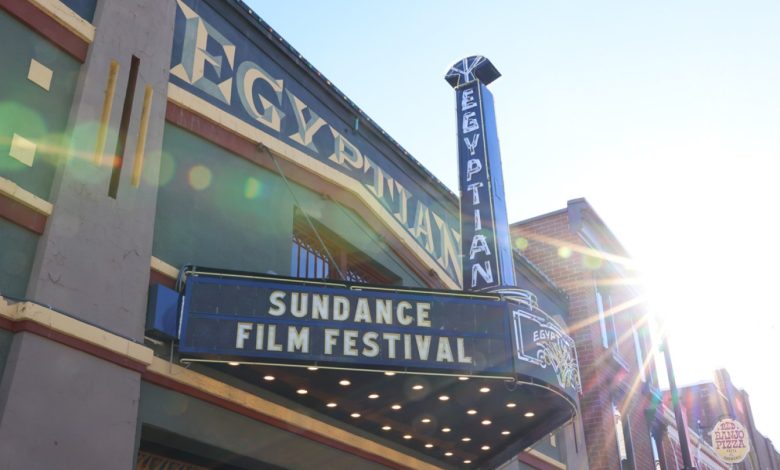
The one place where a crowd assembled was outside The Egyptian. The small theater is the ideal backdrop for annual social media posts, with “Sundance Film Festival” always plastered across its marquee. As a hat tip to its ubiquity, the 2026 festival merch immortalized the theater on t-shirts, sweatshirts, coffee mugs and hats.
Despite all this, throughout Sundance’s busy days of opening weekend, the marquee publicized a three-day residency by Denver band DeVotchKa, not the fest. (Albeit for a tribute concert for Little Miss Sunshine, one of Sundance’s favored success stories and a movie the band contributed music to.)
By Tuesday afternoon, “Sundance Film Festival” had taken up its usual space on the marquee, prompting much picture taking. Still, as I walked past at 2 p.m., a festival volunteer told me to snap a photo while I could — the marquee would be taken down in about two hours.
With this, my time in Park City came to an end.
There were breakout moments at the year’s festival, like the bidding war for Olivia Wilde’s The Invite, an early pick-up for queer horror Leviticus, and a plethora of standing ovations for well-received if not yet acquired movies like Fing! and festival winner Josephine. But the 2026 festival felt burdened by its 40 years of history. It’s hard to address the current moment, let alone look forward, while paying homage.
Festivalgoers were at the ready with retrospective lists of their favorite screenings, parties and run-ins. Park City will always be the shining city on a hill — or, mountain top — where the halcyon days of American independent film played out. The town’s inconveniences will be reframed as “quirks,” and near-extortive housing costs have likely already been forgotten about.
The most common grumblings (of which there were many) I encountered about Sundance’s move to Boulder revolved around a lack of premium lodgings, few skiing opportunities and overall unfamiliarity with the food, screening venues and general populace. The most common positive: A potential new audience.
“I’ve heard true complaints in the last few years about how expensive everything is,” Sundance veteran Richard Linklater told THR for an expansive Sundance oral history. “It’s prohibitively expensive for young filmmakers who want to come and watch movies or bring a short to the festival and find somewhere to stay. I hope the new situation accommodates lower budgets because that’s the whole point.”
As Sony Pictures Classics co-head and longtime Sundance veteran Tom Bernard said ahead of this year’s festival, “Sundance became a sea of gray hair when you’re looking around the room, and people are laughing at the wrong moments.”
Sundance’s move to Boulder is coinciding with a fortuitous moment in the specialty film space, with an uptick in post-pandemic interest from younger moviegoers. Universal chairperson Donna Langley has talked about engaging with “the Letterboxd generation”, or younger moviegoers who see their viewing habits as a part of their social (media) capital.
CU Boulder has some 23,000 undergraduates on its campus, most of whom spent their teen years in the pandemic, coming-of-age without the ability to go to a theater.
“I’m interacting with students wanting to be involved in cinema in some fashion as a career, so all those students are just champing at the bit to get involved in any way they possibly can,” says Erin Espelie, the department chair of CU Boulder’s Cinema Studies & Moving Image Arts, which has some 500 students majoring in the program.
Espelie says that when Sundance’s move to Boulder was announced, much of the campus, even those outside of the cinema studies program, voiced their excitement. Festival director Eugene Hernandez visited Espelie’s introductory film class to speak with her 170 students.
“I was really encouraged by Eugene and a lot of the curators who have said: This is a new era for us, and we really champion young voices and artistic independence, and want to make sure we really get back to Sundance’s roots,” says Espelie. “I’m really hopeful that there are ways that our students can energize them, and they can energize us.”
It’s time, after all, to start thinking about the future.
Chris Gardner contributed to this report.
HiCelebNews online magazine publishes interesting content every day in the movies section of the entertainment category. Follow us to read the latest news.