Ten Years Before Rob and Michele Reiner Were Killed in Their Home, Rob Made a Movie About the Family’s Tensions, Including With Son Nick

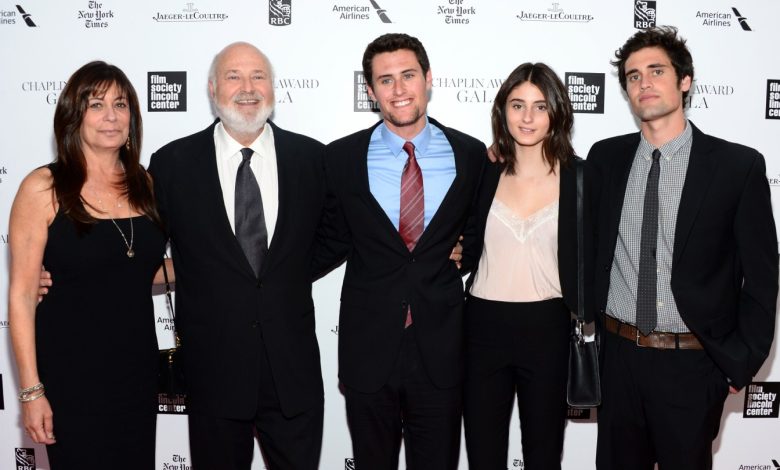
On Sunday evening, People magazine reported that Nick Reiner was responsible for the Brentwood homicide of his parents, Rob and Michele Reiner, while the New York Post said that the 32-year-old is a person of interest in the killings.
Law enforcement has not confirmed the outlets’ reporting. If Nick Reiner is ultimately alleged to be a suspect, however, it would not mark the first time that tension between the son and his parents has come into the public eye. Ten years ago, Rob and Nick actually made a movie about the challenges the Reiners faced.




The younger Reiner had long struggled with addiction. The family’s 2015 film drama, Being Charlie, documented the resultant struggles. Nick co-wrote the script with a friend from rehab, inspired by their experiences, while Rob directed the movie, drawing off what he went through as a father. Sanctioned by the family, the movie offers an unusually candid glimpse into the inner workings of the Reiner household in those years when Nick’s challenges grew. Cary Elwes played the Rob stand-in and Nick Robinson the Nick Reiner character.
Premiering at TIFF in September 2015 ahead of a release the next year on Starz, Charlie centers on Charlie Mills, the 18-year-old addict son of David , a movie star who is now running for Congress. Charlie resents the harsh way his father and mother are treating his addiction, which involves mandatory stints in rehab; that tracks closely with how Rob, Michele and Nick Reiner interacted, the family said.
The movie offers few answers. And it ends with at best a détente after an apology from the dad for the sometimes-unsympathetic way he treated his son — an apology Reiner said in an interview at TIFF that he owed and gave to his son in real life.
“When Nick would tell us that it wasn’t working for him, we wouldn’t listen. We were desperate and because the people had diplomas on their wall, we listened to them when we should have been listening to our son,” the Princess Bride director told the L.A. Times at a dinner with his family, including Nick, who by then achieved sobriety.
Michele added: “We were so influenced by these people. They would tell us he’s a liar, that he was trying to manipulate us. And we believed them.”
Nick, who didn’t say much at the dinner, did note that he decided to get clean because “I got sick of it. I got sick of doing that shit. I come from a nice family. I’m not supposed to be out there on the streets and in homeless shelters doing all these f*****-up things.” (The Hollywood Reporter’s review said the pair “clearly used this as a way to work through how 22-year-old Nick Reiner’s own drug problems affected their family.”)
In a post-screening Q&A, Rob said that “we didn’t set out for it to be cathartic or for it to be therapeutic, but it turned out to be that,” when asked by a festgoer about their relationship. Nick did not respond to that question. A moment later Rob said “there were disagreements” and “at times it was really rough” when the pair were trying to figure out how to depict the reality of their relationship in the movie. Nick said, “Sometimes it would get overwhelming for me.”
The movie is on YouTube, and late Sunday night it had become a go-to space for people to come and debate how parents relate to their drug-addicted kids, with viewers alternately expressing sympathy for the father and the son. A film scene in which Charlie angrily confronts his father at his family home is painful to watch, and if law enforcement concludes Nick is the suspect, it would not be surprising if YouTube decided to remove the film.
Rob Reiner said that, at the time of production, his relationship with Nick had changed for the better. “To be honest, by the time we got to the point of making the movie…our relationship had gotten so much closer.”
Still, Nick did not seem as engaged with the interview as one might have expected; at one point he said, “I really wasn’t sure I wanted to do this.” A reporter came away feeling that the elder Reiner’s expression of closure was an aspiration that had not been fully achieved.
(THR’s review concluded that the film featured “two warring agendas, aligned neatly with the father and son positions expressed therein. The son/addict side wants…to point out that recovery is a long, grinding process that never magically ends. The dad viewpoint, on the other hand, is all about seeking closure, making everything all better and moving on to some elusive next stage where life can resume as normal once a handily cathartic rock-bottom has been endured. But the two angles are not so easily reconciled by final-reel hugs and glib one-liners.”)
The movie includes several scenes that would make uncomfortable any viewer who read the People.com report.
This piece of dialogue comes near the end of the movie:
David: “Charlie, I know you’re angry at me and probably don’t want to hear this right now but I do love you. I’m sorry. Every expert with a desk and a diploma told me I had to be tough at you but every time we sent you away to another one of those programs I saw you slipping away from us. And all I could tell myself is that I’d rather have you alive and hating me than dead on the streets. So what do you want me to do? Tell me what to do.”
Charlie: “You don’t have to do anything.”
David: “You want to come up to Sacramento? Get away from all the—”
David: “—What, the drugs? It was never about the drugs. All I ever wanted was a way to kill the noise. But the more I used the louder it got.”
David: “I was part of the noise, wasn’t I?”
Charlie motions a sarcastic “little bit.”
David: “So what are you going to do?”
Charlie: “I don’t know. I’ll figure it out [Pause.] I don’t hate you.”
David: “I know.”
The two hug, as Charlie turns to walk out the door.
David: “You take good care of yourself.”
HiCelebNews online magazine publishes interesting content every day in the celebrity section of the entertainment category. Follow us to read the latest news.