‘The Perfect Neighbor’ Advocates Say What They Really Want Goes Well Beyond The Film

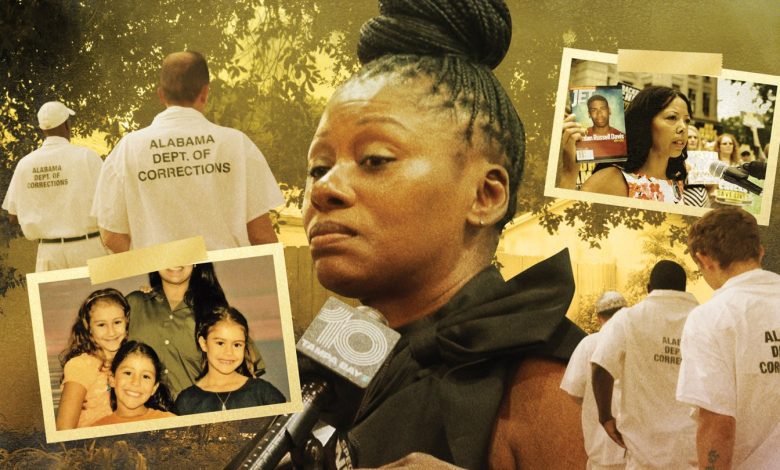
“Had we not gone forth with the film and the Standing in the Gap Fund, she would have been just another dead Black person.”
These chilling words were uttered to me recently by Pamela Dias, the mother of Ajike “AJ” Owens, about her daughter. Viewers of the Netflix social-justice sensation The Perfect Neighbor will know Dias from the last few scenes of the film, when she emerges from the tragic haze as the hero who will try to ensure meaning from her daughter’s death in a senseless Stand Your Ground killing.




These are dark times for documentaries; only the naive would deny it. Global streamers have shown timidity about politically charged or even politically adjacent material — which means complex, relevant films don’t get financed, bought or, most importantly, seen. The number of artist-approved music documentaries is enough to fill 10 flash drives at Primary Wave, the music-rights IP manager. Hard-hitting investigations? They’re less common.
But even in such harsh conditions, a number of docs on the Oscar long list this year are about social justice topics. More notably, they’re trying to bring about social justice.
The Perfect Neighbor is a perfect example. Dias, plus activist and Owens’ friend Takema Robinson, have launched an organization along with the film’s release. “That is the mission of Standing in the Gap. Through The Perfect Neighbor, we’re hoping to [change] Stand Your Ground laws and also hoping to raise resources to support other families impacted by racial violence in the future,” Robinson tells me, referring in the first instance to the controversial statutes that allow an aggressive form of self-defense and that disproportionately victimize people of color. “We are trying to make really powerful art that moves hearts and minds toward some type of change,” she adds.
Currently, 38 states have Stand Your Ground laws. And while Robinson and Dias don’t have a lot of hope for changing the law in Florida, where it was born 20 years ago, they see the possibility of weakening it in places like Pennsylvania and Minnesota.
Meanwhile, Cover-Up, Laura Poitras’ new movie about the professional complexities of journalist Seymour Hersh — and the uncomplicated importance of a free press — has been making the circuit at journalism schools and other venues where its message is needed. At a recent New York City gala for the Committee to Protect Journalists, Hersh and Poitras attested to the importance of protecting an endangered media, which these days applies to this country almost as much as CPJ’s traditional battleground of the Global South. “If you start taking the freedom for granted, you’ve already lost it,” Hersh told me as we heard harrowing/inspiring tales from Beijing to Bolivia.
And Mariska Hargitay, who executive produced Lorena Luciano’s DOC NYC film Nuns vs. the Vatican, has just sent a long note to the Vatican with a link to the film. The movie tells of the dozens of women allegedly abused sexually and spiritually by former Jesuit priest Marko Rupnik and the Church’s alleged protection of him. Hargitay and other filmmakers hope their efforts allow victims to testify at his canonical trial, which has not yet been approved.
One proto example of a doc changing the world came 20 years ago, when An Inconvenient Truth flipped the light on climate change. So impactful was that movie that one study found that ZIP codes within 10 miles of screenings showed a 50 percent increase in the purchasing of carbon offsets. Michael Moore also mobilized activism on gun control with Bowling for Columbine.
True crime has a long history of real-world change, from Errol Morris’ The Thin Blue Line resulting in the overturning of a conviction, to accused killer Robert Durst facing a new trial and conviction after The Jinx.
And there is a template for criminal-justice reform brought about by documentaries. During the first Trump administration, Congress passed the First Step Act to reform federal sentencing laws after legislators were shown The Sentence, a harrowing Sundance film about a mother of three daughters who spent years in prison owing to a minor, nonviolent drug-related offense.
It’s unclear if this year’s crop can have that kind of systemic impact. But producers are certainly trying. Andrew Jarecki and Charlotte Kaufman’s prison-industrial complex indictment The Alabama Solution from HBO is seeking just that. As UPI’s Fred Topel wrote, “If incarcerated inmates can make progress in activism from inside prison walls, it suggests even greater things are possible when people with more resources join forces.”
One reason these films can have an impact even as their distribution power dwindles is docs’ quickly thinning line between activism and journalism.
Many nonfiction films of earlier eras sought a spot above the fray, but that thinking has changed. Geeta Gandbhir, who directed Neighbor, is unabashedly an advocate; that’s baked into her earliest relationship with her subjects. “I think that as an artist or filmmaker, my job is to be a vehicle,” Gandbhir tells me. “The activism is the filmmaking.”
Journalism classes will debate whether this is a good thing. Certainly, we are less likely to see studiously dispassionate inquiries into a subject; the seminal 2006 abortion doc Lake of Fire, in which director Tony Kaye examined the issue from all sides, seems much harder to imagine today. In many ways, the advocacy-ification of our documentary space is one more offshoot of the larger polarization of our world, in which it often seems that not a sentence can be uttered without planting a flag on an issue.
Yet it would be silly to overlook all the good the trend can do. At a time when injustice rages in so many realms, and documentary film is struggling in so many quarters, the latter getting out there and swinging may not be the worst idea. The number of ambiguous, tough-minded docs may be dwindling, but the tools to repair a broken world are growing. Just ask Pamela Dias.
HiCelebNews online magazine publishes interesting content every day in the movies section of the entertainment category. Follow us to read the latest news.