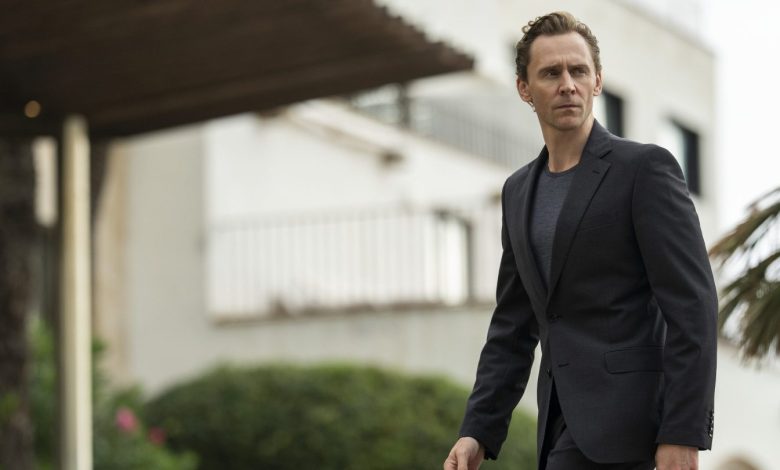
Tom Hiddleston Breaks Down That Isolating ‘Night Manager’ Finale: “An Extraordinary Place to Leave Someone”

[This story contains MAJOR spoilers from the season two finale of The Night Manager.]
Tom Hiddleston knows that Night Manager viewers — much like his Jonathan Pine — will be left reeling after the season two finale of the Emmy-winning BBC and Prime Video series.




Nearly a decade after The Night Manager earned the actor a Golden Globe and two Emmy nominations, Hiddleston has reteamed with writer David Farr for two more seasons of the spy thriller series. In the same vein as the first season, this second season and the forthcoming third installment both focus on the high-stakes, international game of cat and mouse between Hiddleston’s MI6 agent and Hugh Laurie’s morally corrupt arms dealer Richard Roper.
Written by Farr and directed by Georgi Banks-Davies, the six-episode second season followed Pine as he journeyed to Colombia to secretly investigate a new arms operation headed by young businessman Teddy Dos Santos (Diego Calva).
Upon his arrival, Pine, under the alias Matthew Ellis, crossed paths again with Roxana Bolaños (Camila Morrone), a Miami-based shipping broker connected to Teddy’s criminal enterprise. Pine originally questioned Roxana in the season two premiere in connection with the suspicious death of his superior Rex Mayhew (Douglas Hodge), who had been killed by MI6 chief Mayra Cavendish (Indira Varma) for investigating a high-level leak within the organization. Despite the blackmail they had on each other, Pine used Roxana to get close to the center of Teddy’s criminal enterprise.
As he seduced both Teddy and Roxana, Pine learned that Teddy was merely a figurehead. The true puppet master is his archnemesis Roper, who faked his death in captivity years ago. Now operating from the shadows in Colombia, Roper has been operating a massive arms-smuggling ring with the goal of rebuilding his empire and bankrolling a private guerrilla army to topple the local government.
After his cover was blown, Pine managed to get Teddy alone to play him secret recordings of Roper revealing that the antagonist never intended to acknowledge Teddy as his legitimate heir. In reality, Roper was planning to return to England, where his other son, Danny (Noah Jupe), has been sequestered at a boarding school. Pine took advantage of Teddy’s obvious hurt to convince the young drug lord to turn on his father for good.
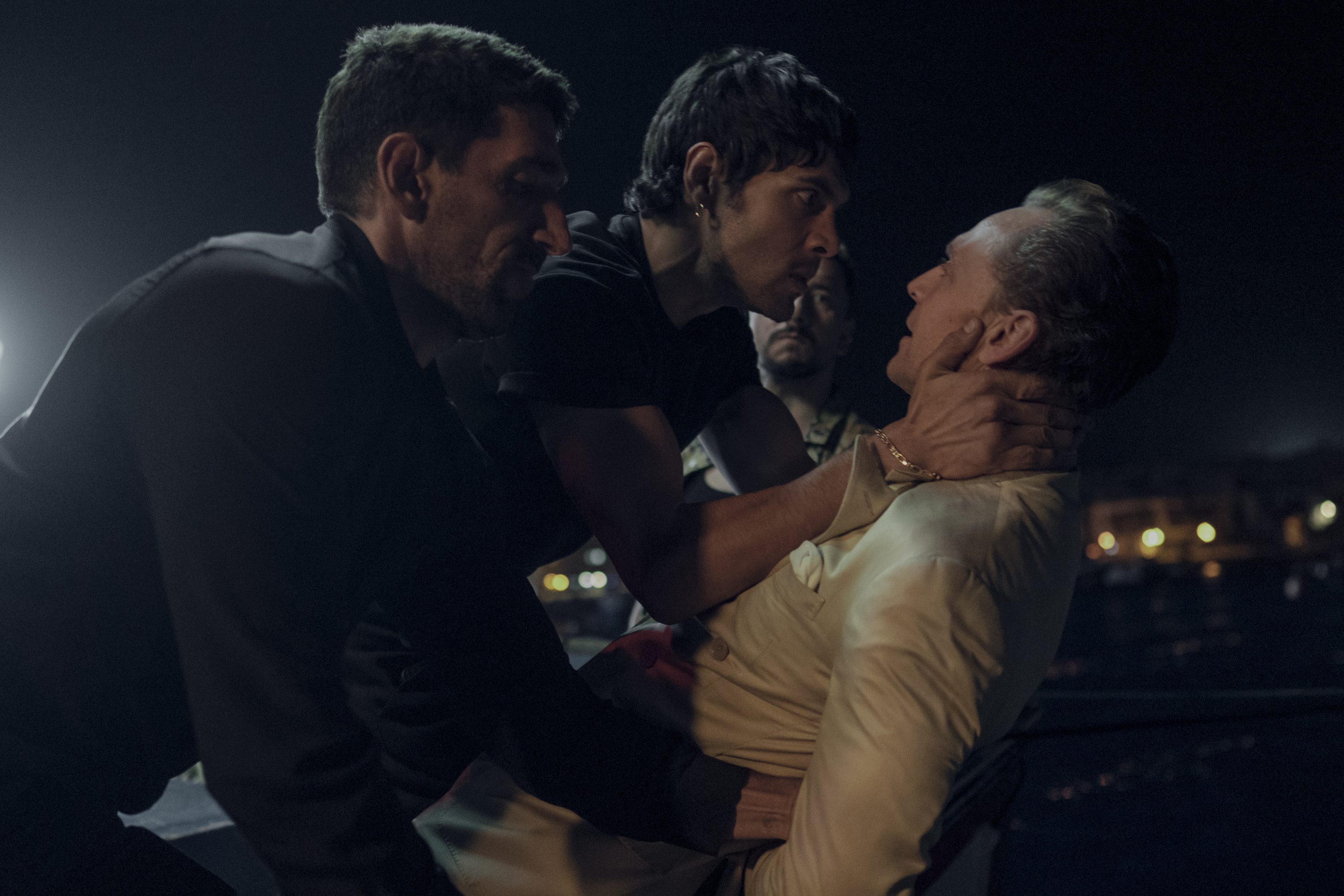
In the finale, Teddy then worked with Pine to redirect the final shipment of weapons and give international authorities the evidence they need to put away Roper for good. But after being tipped off by Roxana, Roper hatched a plan to use two different planes, sending the empty plane to the authorities and the real plane to the Colombian militants in the jungle. Once he fulfilled his end of the deal with the militia, Roper then shot Teddy in the head in front of Pine.
“The way it felt like playing [Pine’s reaction to Teddy’s death] was almost like being enveloped or engulfed in an explosion of pain and trauma and vulnerability,” Hiddleston tells The Hollywood Reporter on a video call from his home in the U.K. “It’s an impact of enormous grief and loss that engulfs him or washes over him and renders him completely incapacitated for 10 or 20 seconds.”
Pine’s survival instinct was then reactivated when he heard another series of gunshots. In the ensuing shootout, Pine narrowly manages to escape with his life, but is last seen, after hours of walking in the forest, collapsing in the middle of nowhere. (Read the full breakdown of the season in THR’s finale interview with Farr here.)
In the conversation below, star and executive producer Hiddleston deep dives with THR into the psychology of his damaged MI6 agent and explains how the devastating finale sets the stage for the very likely final season: “[Pine] is a man alone, a man cut adrift, a man completely abandoned. And, dramatically, that’s an extraordinary place to leave someone.”
***
Once David Farr approached you a few years ago with his plans to revisit The Night Manager, what kinds of conversations did you have with him about how Jonathan Pine would evolve between seasons one and two?
The first answer is time. The simple nature of the evolution of time — that he would be 10 years older, that I would be 10 years older, that the world is 10 years older. If you are in the intelligence community, the last 10 years must have been incredibly complex with so many international conflicts, so many uncertainties — including a pandemic — and a lot of fragmented stability all over the world at home and abroad. And if you work for an intelligence agency either in the United Kingdom or in the U.S., I’d imagine that life is complex. So [we were] just allowing for the 10 years to have passed.
For Pine specifically, David and I talked a lot about his vigilance — he is someone with enormous competence and capacity and, crucially, moral courage. There is a fire inside him. There always has been. He was a British officer in Iraq and Afghanistan before he was a hotel manager, but he was comfortable in uniform. He then hid behind the uniform of being a luxury hotel manager, and he’s a collector of other people’s languages. That’s one of the le Carré quotations, which is literal and metaphorical. In the first season, I spoke French and Arabic. In this season, I speak Spanish. But also, he’s a collector of other people’s personas. He doesn’t necessarily speak his own truth, or somehow his own truth is filtered through the masks of other men.
Angela Burr [Olivia Colman] finds him in the Swiss hotel and recognizes a similar moral fingerprint and recruits him to become a field agent for MI6. He then delivers Richard Roper to his captors. After that, David and I agreed there is no going back. Once he’s seen behind the curtain, he’s wide awake; he’s alert and aware and watching. So that’s why in the genesis of this [second season], there was no version of him going back to a kind of ordinary life. He stays in the intelligence community with a different role, but of course, the role is a half-life. He’s got a desk job, he’s in nocturnal surveillance, and it doesn’t satisfy this urgent burning, searching, curiosity he has about the world. It’s really only that familiar scent of dragon smoke, the scent of Roper’s legacy, that impels him back into action. So that was a long answer, but that’s what we talked about — in 10 years, [there are] more scars on the inside, more scars on the outside.
David never envisioned making a second season of The Night Manager without Hugh Laurie, and as if it wasn’t already clear enough, this finale cements the notion that this show will always boil down to the international game of cat-and-mouse between Pine and Roper. You have even compared that dynamic to the tale of St. George and the dragon. What do you think Pine learns from having to quite literally confront the ghosts of his past — and for those ghosts to ultimately get the better of him — this season?
There is probably an existential shock, and the profundity of that shock is probably not yet understood. I do know that le Carré was fascinated by the mirror of Pine and Roper. There’s so much about the reflection they find in each other that is the same. They move through the world with a similar elegance, a similar intelligence, a similar understanding of the complexity of people. They trade in secrets. They trade in masks. They’re very, very sophisticated in the way they operate. They have similar charms, similar manners, similar bearing. In another world, they could have been best friends, or they could have been family. There is a red line that divides them, which is that Pine believes in the goodness of people and Roper does not. As [Roper] says in the first season, “The world is rotten. Might as well celebrate that rottenness.” I think that is the crucial difference.
This season is about fathers and sons. Teddy is desperate for his father’s approval. Meanwhile, Roper’s worried about his English son in an English boarding school, in a distant land. And then the third, I suppose, is Pine. Pine has been chosen, unconsciously or not, by Roper as his heir and executioner. Roper makes Pine an offer [this season], which he refuses. But when I talk about the red line, the thing I love about the scene between myself and Hugh in episode five is … He says, “Your father’s values are dying. Mine are in the ascendant. Wake up and smell the effing coffee.” And Pine’s response is, “My father loved me. What about yours?”
So what it always told me — and I believe it is at the core of this story and the core of le Carré’s novel — is that Pine is a character who understands love, who understands the force of love in the world and its transformational power. Roper probably doesn’t, and doesn’t believe in it. So there’s a cynicism deep in Roper — as much as we like him, because he’s played by the most charming man in the world. [Grins.]
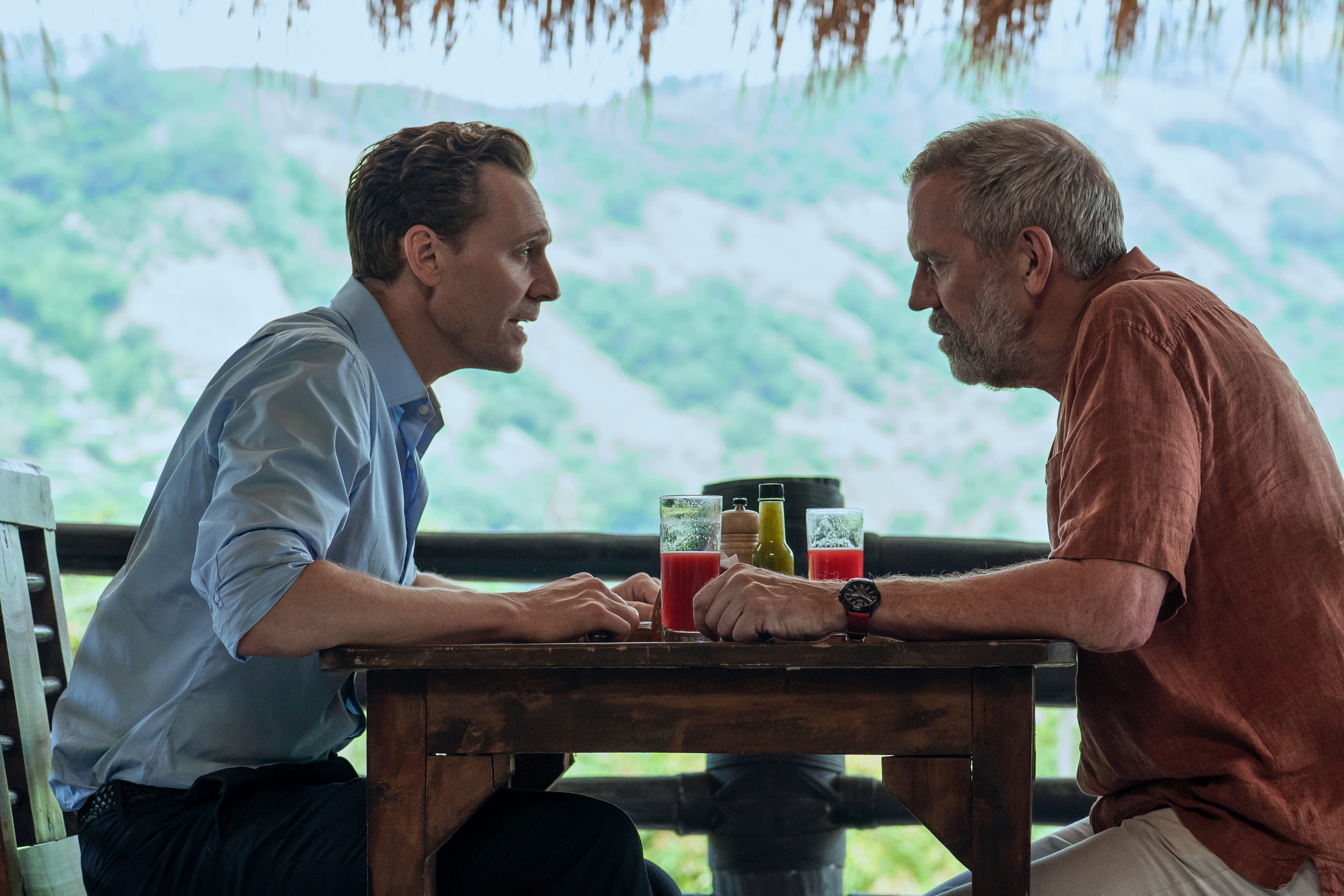
But David is right that le Carré’s fascination was with this extraordinary distorted reflection that they see in each other, which I think [le Carré] always felt about those who work in intelligence. There is a kind of brotherhood forged between people who work in the shadow world. They’re all liars, they’re all dishonest, they’re all pretending. So, in that sense, they’re all the same. But in these crucial moments, [regardless of] what ideology you choose to support, whether you choose to believe in the goodness of people, that is the uncorruptible, indivisible, unassailable character of a human being.
But I didn’t really answer your question. I think the fact that Roper finishes [this season] in the ascendant — it would force an existential crisis that Pine has never had to confront. [Pine has to accept] that he was played, that he lost the game, that Roper was too good, and that actually the tide is with him. That is a profound crisis. There are people who Pine supposed were on the side of the angels and supporting his cause who are happy to cut him off and possibly even shame him when he thought he was doing the right thing.
David admitted to me that there was a bit of a misdirect in season two, in the way he initially introduced the central trio and suggested there would be a classic love triangle with Roxana at the center. But, in the finale, Roxana tells Roper she wasn’t the one who lost their heart to Pine, seemingly confirming that Teddy had developed some feelings for Pine. Or, at the very least, Teddy became so attracted to Pine that he was willing to switch allegiances, to Teddy’s own detriment. What was your take on Pine’s relationships with Teddy and Roxana?
I think that Pine’s relationships with both of them are surprising. And narratively, I found that really exciting. I think there’s a vulnerability in Pine, which we’ve understood from that first [season]. He feels enormous and accumulated guilt about women being put in extreme danger because of his actions — or inaction. And that happens twice in the first season with Sophie Alekan (Aure Atika) and with Jed (Elizabeth Debicki). There’s a line in this season where he says, “I have a bad record with people I get close to.” I think he has a self-diagnosed — misdiagnosed, possibly — pathology, which is, “If I get close to women, they’ll get hurt. I must not get close to them.” I think that’s actually his Achilles heel.
In the first episode, he sees Roxana. He knows that there are mysterious circumstances surrounding Rex Mayhew’s death, and he’s worried that Roxana will find herself in incredible danger. In actual fact, he doesn’t know that Roxana is the source of the danger. So there’s a vulnerability [where] he’s trying to look after her, but she already has the power — and she is in no way a damsel in distress. She has her own reasons for doing what she does and for being where she is. She’s personally, emotionally, deeply invested in Teddy’s plan, and it’s all to do with her family circumstances and the loss of her own father. So she’s playing them at the game as much as they’re playing her.
With Teddy, I think there is a strange [connection]. They’re both orphans, and at first Teddy materializes in Pine’s perspective as a true villain, somebody who is formidable and dangerous with violence in his past. But as [Teddy] pieces together the picture of his biography, it’s very clear that you can see this emotional vulnerability, this lost boy who is trying to find a center in his life. Pine could also be characterized as a lost boy trying to find a center. John le Carré could be characterized as a lost boy trying to find a center. So there’s a fellowship or a kindred spirit that’s recognized in the other.
David talked about this, and I think it’s probably true that there’s something about the secret world, and these characters who trade in secrets and lies, and the game they play and the dance they do is one of seduction and betrayal. Seduction is a part of the game. So I think that’s what Pine and Teddy do. If Pine needs to get close to Teddy to find out who he is, there is a part of that which is a seduction — in the same way that Pine seduced Roper [in season one]. Pine seduced Roper away from Corky [Roper’s fixer, played by Tom Hollander, who was killed off in season one]. Corky could see it as plain as day that Pine was not who he said he was, but Pine somehow seduced Roper and said, “It’s okay. You can trust me. I’m your man.”
So I suppose in that game of seduction, there are levels of intimacy all the way along. And, obviously, we’ve played that out in the show in demonstrable ways — for example, the [suggestive, three-way] dancing sequence in episode three. But I think it’s a psychological seduction; it’s a spiritual seduction all the way through that they’re all doing. They all get close to each other in different ways. To me, that just felt very real. It seemed to be very honest about these very fragmented people.
How would you define the relationship between Pine and Teddy? Some people, including David, have called it homoerotic. Others would even venture to describe it as romantic.
Well, it depends on your definition of homoerotic, really. I certainly saw it in that dancing sequence, and it was very deliberate how we choreographed it, because Pine is sailing very close to the edge in that scene. He’s being deliberately provocative, and he needs information quickly, so he’s loosening his control on the situation to see if it changes the temperature. And I suppose that, yeah — but how do you define homoerotic? Do you find it as explicitly sexual?
Not necessarily!
There is a charge between them certainly, and that charge is one of two people who are in a very, very dangerous situation and having to depend on each other. And they’re also both incredibly alone and incredibly vulnerable. So I suppose, yeah, the charge is there. I always knew it was there, but I would never wish to prescribe how people should feel about it, and I’m sure lots of people feel lots of different ways about it. So I’m just delighted. I loved working with Diego. I thought he gave the most magnificent performance of immeasurable complexity and depth. I think he plays many, many colors in his performance as Teddy. In our scenes together, we were always doing something different. There was always something complex and interesting going on. But as I say, I never want to put a label on it for the audience.
Pine and Teddy’s alliance costs Teddy his life in that final confrontation with Roper in the jungle. There’s a brief moment that Teddy has the opportunity to shoot and kill Roper, and Pine is almost urging him to pull the trigger. But as soon as Teddy lowers his weapon, the situation quickly spirals out of control and Roper is able to gain the upper hand. Pine’s hands are tied up in that scene, so that, unfortunately, means that Pine would have been unable to stop Roper from shooting Teddy. Can you give voice to Pine’s internal dialogue in those heart-wrenching final moments with Teddy?
I think the stakes are almost unimaginably high, and Pine has put all his chips on Teddy and on the unlikely brotherhood that they have forged together. And the magic trick that Roper pulls off, [where] he switches the cargo planes — because of something he gleaned through a conversation with Roxana, he knows that Teddy’s been turned, and he can’t trust him and he can’t trust Cabrera [the exiled Colombian politician planning to overthrow the government, played by Luis Fernando Hoyos] either. So he’s like, “I know they’re going to try and pull the wool over my eyes, so I’m going to pull the wool over theirs before it happens.”
[In their final conversation before the shootout] Pine says to Teddy, “Have faith,” and it’s almost as if Pine is saying it to himself: “Keep your faith, you will prevail.” But the jungles of Columbia are deep and thick. We were there. Actually, we didn’t shoot that sequence in Columbia, but we had shot a lot in the jungles of Columbia, and there’s no one for miles around. So Pine is completely alone; he has no support system. It’s just him and Teddy.
Diego, Hugh and I and Georgi Banks-Davies, our extraordinary director, talked about: How easy is it to kill your father? I would imagine [it’s] not easy, and that’s why Teddy hesitates. It’s not something you can do. Hesitation is totally understandable, and he’s torn. In a way, everyone’s hoping for more clarity and trying to buy more time [in that final confrontation with Roper], and there’s nothing Pine can do. As you say, he’s tied up; he’s completely powerless.
The way it felt like playing [Pine’s reaction to Teddy’s death] was actually almost like being enveloped or engulfed in an explosion of pain and trauma and vulnerability. It’s a terrible, crashing doom, an impact of enormous grief and loss that engulfs him or washes over him and renders him completely incapacitated for 10 or 20 seconds. It’s actually only the [subsequent] gunshot that wakes him up and ignites his survival instinct, and he runs. But in the aftermath, as you see in the last frames of Pine, he is in bad shape — in very bad shape, indeed.
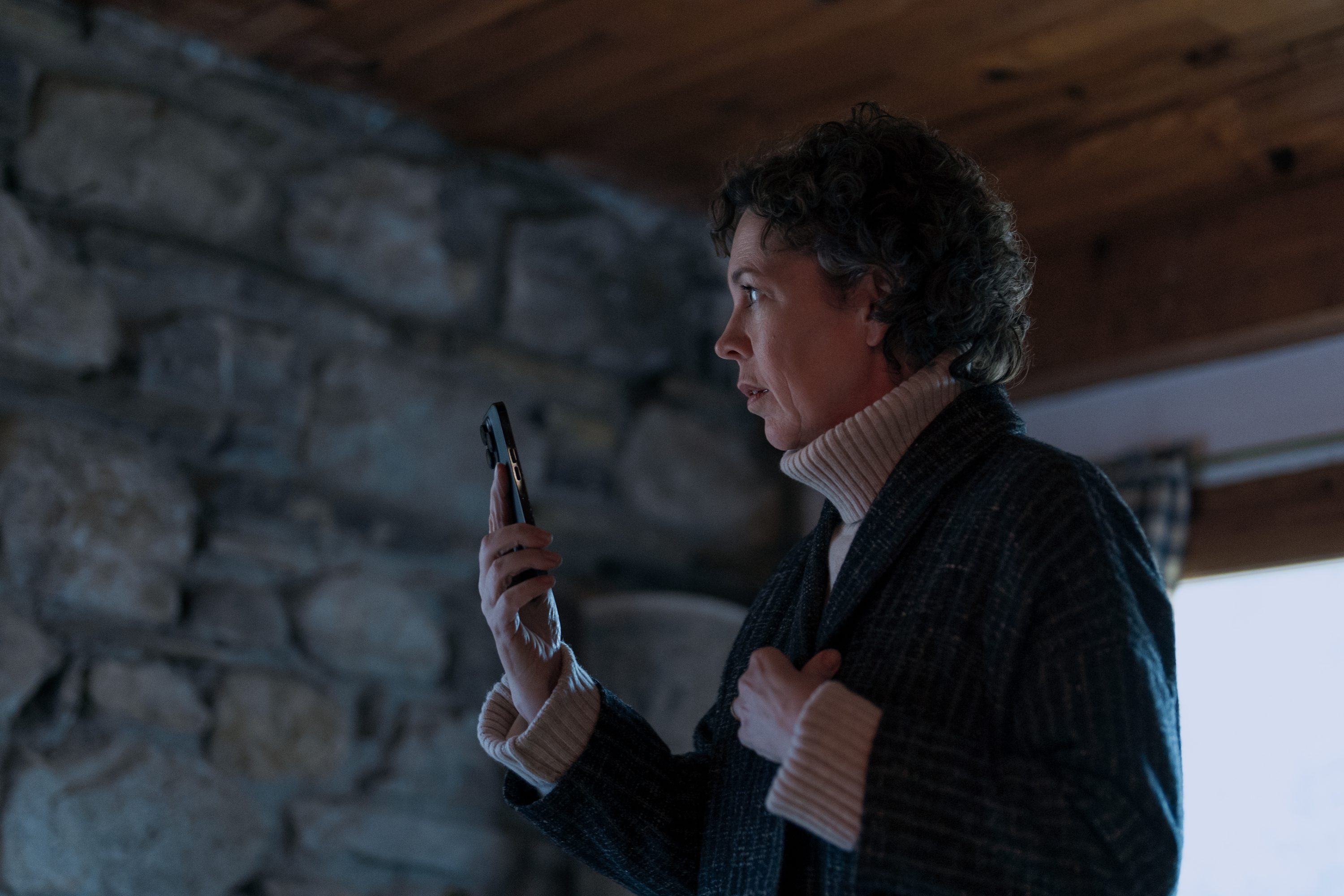
You and David have both made it clear that you see The Night Manager as a trilogy, so there is only one chapter left of this story. By the end of the season two finale, Pine is not only in serious physical peril, but he also does not yet know that Angela (Olivia Colman) is dead. How do you think Angela’s death will affect Pine, considering that so much of the second half of the season stemmed from him being mad at her for lying to him about Roper’s death?
It completely isolates him. He is alone. Anybody who ever cared about him is gone. Both his parents and all those agent runners in London are gone. Le Carré used to profess that the relationship [between MI6 agent runners and MI6 agents] was so intimate as to be almost maternal or paternal. Angela’s gone. Rex is gone. [Pine’s quiet surveillance unit] “The Night Owls” are gone. Sally’s still out there, but I would imagine he’s a marked man. I don’t think the security service run by Mayra Cavendish is a safe haven for him. So where do we go from here? He is a man alone, a man cut adrift, a man completely abandoned. He’s a man with a memory of his experiences, his pain, his mission and his loss — all alone. And, dramatically, that’s an extraordinary place to leave someone.
***
The first two seasons of The Night Manager are now streaming on Prime Video. Read THR’s finale postmortem with writer David Farr.
HiCelebNews online magazine publishes interesting content every day in the TV section of the entertainment category. Follow us to read the latest news.