UTA London’s Global Comedy Touring Guru Bjorn Wentlandt Talks Int’l Growth and Disrupting a Changing Business

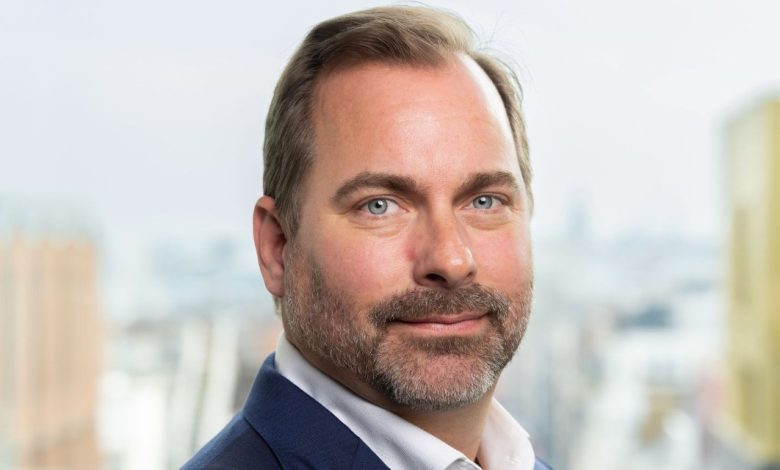
The comedy space has changed rapidly in the age of streaming, TikTok, and other technological innovations, opening more opportunities for more talents’ voices to be heard around the globe. One key industry player in the space, who has focused on taking more comedians around the world, is comedy touring agent Bjorn Wentlandt, who joined UTA as an agent in its comedy touring division in London in 2018. His mandate: to expand global talent representation and look for opportunities in new markets for the agency’s talent roster.
The touring whizz came to the firm after seven years at U.K. company Avalon and previous U.S. work as a manager at MacDonald-Murray Management, where he helped develop the careers of such clients as Ron White and Jim Gaffigan, as well as his time as Live Nation’s comedy touring director, promoting shows for comics including Kathy Griffin, George Carlin and Zach Galifianakis, and such festivals as Dave Chappelle’s Block Party.




Wentlandt got to work at UTA London, which has a dedicated touring arm in the British capital, and now, international touring for international talent is as big or bigger than touring for U.S.-based clients internationally.
His work also fits UTA’s doubling down on London as its international hub, which has a growing sports and a burgeoning U.K. creators business, along with work focused on music, talent, brands, news, books, and writers.
Wentlandt talked to The Hollywood Reporter about UTA’s global comedy touring business, the opportunities in the digital age, and where all the growth has been coming from.
“When I joined UTA, the business was predominantly focused on servicing North American clients on the international circuit,” he explains. “But that element and the international talent touring element have now flipped,” meaning international touring for international talent is now as big or bigger than international touring of U.S. clients.
Wentlandt sees the global proliferation of comedy tracking with his career. “I can remember conversations with an artist like Chris Rock, who felt, ‘I could never tour the U.K., because they don’t know me as a stand-up; they only think of me as an actor’.” When he first moved from the U.S. to the U.K., “it was in part to start exporting British comics around the world,” he recalls. Similarly, John Oliver was interested in performing outside of North America, including in Asia.
“The economics were tough,” Wentlandt explains. “The local offices of the big promoters and agencies loved the idea, but neither could produce the offer. So, I really started to notice that there was an opportunity that neither the agency side nor the buyer side had figured out, especially when you left the U.K. and hit Australia. Everything between that was a bit of the Wild West. I felt I’ve been around long enough that I can affect change and set up a business where a performer can tour in Shanghai with the same confidence and nuance as in Seattle.”
When Wentlandt started as an agent at UTA London, “we probably had around 20-40 U.S. clients who regularly worked internationally,” he highlights. “The roster is now much bigger, [and everyone wants to embark on international tours]. But one of my first mandates was to up their service levels and start increasing reliability and trusted partners and build out the infrastructure of the business to promote these people. And we had an eye on signing U.K. talent for a best-in-class import-export business and figure out where else in the world they could go.”
The industry hadn’t caught up with the rise of YouTube and Netflix, “and all of these global platforms that were democratizing English-language content and building audiences,” he argues.
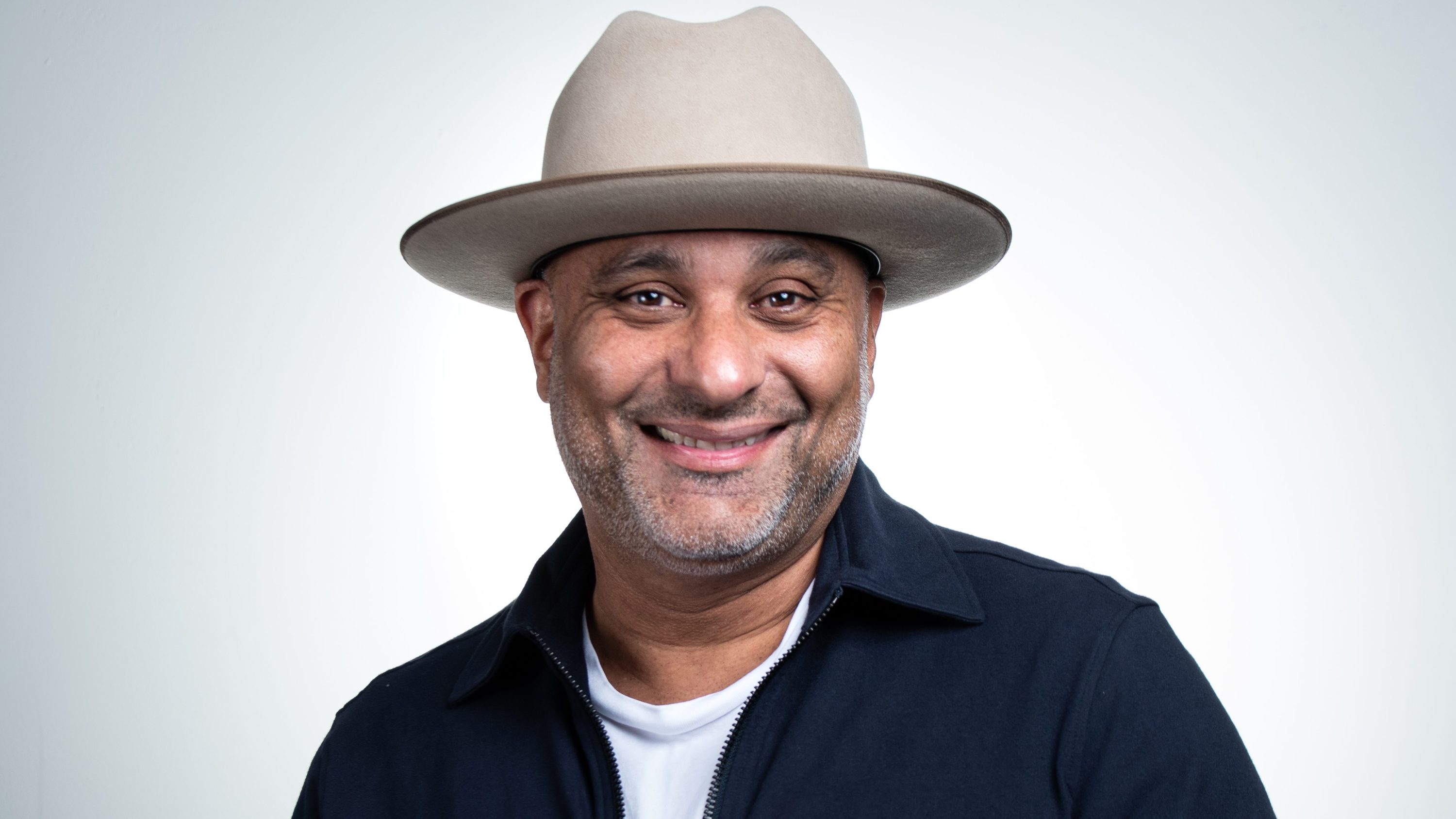
One of the first clients who signed when he came to UTA was Canadian superstar Russell Peters, who had been making a reputation for himself. “He’s the OG of international touring,” says Wentlandt, who had already worked with the performer during his time at Live Nation. “He was touring internationally and trying to figure it out long before anyone else in the industry really did. And it became this story of: we can do this right.”
Wentlandt’s chorus to American comedy managers and other industry players became that there was work and money to be made in London, Europe and, increasingly, beyond, including in Asia. “Initially, I would literally just go to promoters in Asia, get an offer, unsought by a manager, and have to put it in front of them and say, ‘Look, here is this sum of money for the opportunities to go do Tokyo and Taiwan and so on.’ We were breaking new ground and setting records for attendance in these markets for comedy, because people hadn’t really come through.”
UTA’s London comedy talent roster and international touring business have gone from strength to strength ever since. His team is responsible for more than 1,000 international shows a year now, and it has seen traditional models change. “That number of shows has not changed that much in recent years, but what’s happened is that their value has gone up, meaning what our clients are earning,” he emphasizes. “The sizes of shows are increasing.”
And the needs and demands of clients have evolved. “What we’re finding is that we’ve got a story of disruption,” Wentlandt tells THR. “Here in the U.K., the traditional model of the 360-degree management style is a bit outdated, and I think the TV world has gotten more difficult, and that’s put a lot of pressure on those people to deliver.”
How did the 360-degree approach work? “I am a talent and have one person at an agency who does my TV, they do my live events, they all my other stuff,” explains the veteran. “But these agents usually didn’t really specialize in the live aspect. We operate based on the U.S. agency model of hyper specialists in our lane. So, if you come on board as a U.K. client with UTA, you get the same skill set and the same leveraging that we’re doing in the U.S with the likes of Matt Rife and these U.S. superstars that are going around, playing everywhere, and we have that deal making information and contact base that we can bring to an artist like Vittorio Angelone.”

The comedian was nominated for the best newcomer honor at the 2022 Edinburgh Comedy Awards. “Vittorio is one of the most exciting voices. He’s an Italian-Irish comedian who grew up in Belfast,” notes Wentlandt. “He had a traditional agent setup here, and said, ‘It’s just not what I need.’ So, he went for this bespoke model of representation, where he came to us for live.” The comic later added film and television writing representation, via Debi Allen at UTA’s Curtis Brown, to the mix.
“We start seeing these collaborations across areas,” Wentlandt tells THR. “It’s very much a bespoke system, which is contrary to the general soup-to-nuts representation. That is interesting to the artist because everybody can give them the special attention they want.”
Among recent UTA comedy talent signings has been English comedian Simon Brodkin. He will add to what has now become the bigger part of Wentlandt’s business.
“We’ve hit the pivot point where [internationally] our U.S. business was eclipsed by our non-U.S. business, and that’s really exciting,” the agent tells THR. “That’s what I came to do.”
In fact, growth has been so fast that he has found himself finding hiring a challenge. “I can’t recruit from anywhere because there’s no one for me to steal because what we do is so different,” Wentlandt explains. “So, we have invested in an internship program to fuel the business.”
Via Wentlandt’s London team, about which folks say it handles anything East of New York and West of L.A., UTA also represents several of the biggest Indian comedians. “We wanted to first service American talent, then sign people in the U.K., and then sign the world,” the UTA expert explains. Among the Indian stars is Zakir Khan, who performs in Hindi. “When we started working with him, Hindi comedy wasn’t featured in major venues,” Wentlandt recalls. “We put him into the Royal Albert Hall, and he sold it out. This summer, we did Madison Square Garden, and [two shows] at the Scotiabank Arena in Toronto,” which seats up to 13,000. His previous time in Toronto, the comic had played three shows at Meridian Hall for a total of 9,000 tickets.

Meanwhile, Max Amini, who has been rapidly growing his social media fanbase globally, made history for UTA as the first Iranian-American artist to headline Madison Square Garden and sell out the Kia Forum in L.A. “We did three shows in Sydney last time,” shares Wentlandt. “Do we do five next time? Or do we go to an arena? It’s about those sorts of questions. And he now not only does his show in English but in some markets, he’ll go in and also do a show in Farsi.”
Given the rise of streaming and AI, is there any risk for the live comedy business? “I think comedy is always going to thrive live, because it’s one of these unique things where it really is greater than the sum of its parts,” Wentlandt tells THR. “When you’re in the live room, you can feel the tension building. It’s about that experience with all the tricks we put in a comedy show: it’s dark, you always face forward, we brightly light the performer. We generally pack you in pretty close. You’ll find it’s generally colder. We want something quite focused and cool, so that tension can build in the audience that can then be released. And there’s nothing like it.”
HiCelebNews online magazine publishes interesting content every day in the celebrity section of the entertainment category. Follow us to read the latest news.